Wednesday’s spinach has a deadline. The bag of basmati rice sitting in the cupboard doesn’t.
That small difference explains why some grocery baskets work beautifully and others leave you wondering what to cook by Thursday.
Rice can wait. Dried lentils are usually patient, provided they’re stored correctly. Fresh coriander, spinach and certain other vegetables need attention much sooner. Buy all three without thinking about how they’ll come together, and you may end up with plenty of food but very few complete meals.
A better approach is to give different ingredients different jobs.
For households exploring Asian grocery delivery Crawley Luton, building a useful basket starts with three questions: What will form the base of the meals? What will make those meals satisfying? And which fresh ingredients need to be used first?
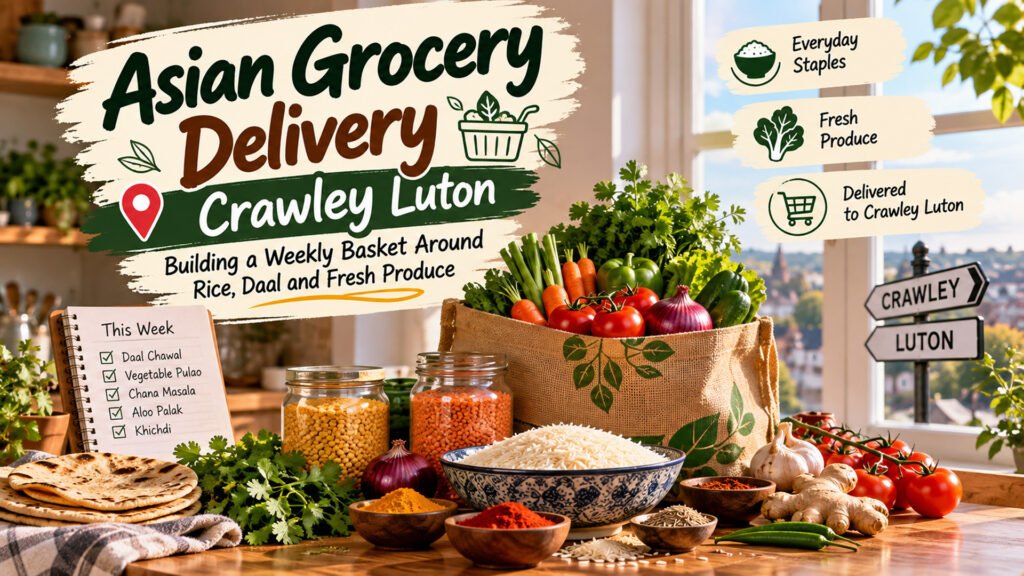
Rice, daal and vegetables provide a surprisingly good starting point. With a few supporting ingredients, they can take you from a comforting bowl of daal chawal to a fragrant vegetable pulao, a warming khichdi or a properly seasoned sabzi.
The secret isn’t buying everything. It’s understanding what belongs together.
Think of Your Grocery Basket as a Collection of Meals
Imagine putting basmati rice, red lentils, spinach, potatoes, onions, tomatoes, yoghurt and fresh coriander into a basket.
Individually, they’re ordinary ingredients.
Together, they open up several possibilities.
You could prepare masoor daal with rice, spinach and potato curry with chapati, vegetable pulao with raita, or a gentle rice-and-lentil khichdi.
The ingredients overlap, but the dishes don’t have to taste alike.
That’s the distinction between buying groceries and building a useful collection of ingredients.
Begin with Three Food Groups
For many South Asian households, it helps to think about the basket in three parts.
The foundation: Rice, atta or another staple that forms the main part of a meal.
The substance: Lentils, chickpeas, beans, suitable meat or other ingredients that make the dish more filling.
The fresh character: Vegetables, herbs, tomatoes, chillies and other produce that influence flavour and texture.
This isn’t a strict nutritional formula or a compulsory shopping list. It’s a practical way to notice whether the ingredients you’ve chosen can actually become the meals you want.
For example, rice and lentils may provide the basis for dinner, but an onion, some spices and fresh coriander can make the result feel far more complete.
Rice Comes First, but the Recipe Decides Which Rice
Rice is one of the most adaptable ingredients in South Asian cooking, although different varieties produce different results.
For a vegetable pulao, you may want fragrant grains that remain separate after cooking.
For a softer rice-and-lentil dish, that same fluffy texture may not be the priority.
Understanding the intended dish helps you select rice more confidently.
Why Basmati Works Across Several Meals
Basmati is particularly popular for its aroma and long grains.
It can be served plain alongside daal, seasoned for pulao or used in layered rice dishes.
However, cooking technique matters.
Washing, soaking where appropriate, measuring water and controlling heat all influence the finished texture. Follow the instructions for the specific rice you’re using rather than assuming every variety cooks identically.
If you’re comparing varieties or pack sizes, IShopDesi’s guide to basmati rice online Luton provides further reading on choosing rice for everyday cooking.
Don’t Confuse a Weekly Basket with a Weekly Rice Purchase
A household may eat rice several times during the week without needing to buy a new bag every seven days.
Dry staples and fresh produce operate on different purchasing schedules.
The important question is how much rice you actually use over time.
A larger pack may suit regular rice eaters who have suitable storage. A smaller pack may make more sense for someone who cooks it occasionally.
For an individual meal, a starting estimate of around 60–75g of uncooked rice per adult may be useful, although appetite, recipe and accompanying dishes will affect the amount.
Use that estimate to understand consumption, not as a fixed rule.
Daal: The Ingredient That Changes the Character of Dinner
There’s a world of difference between a bowl of smooth masoor daal and a firmer preparation made with chana daal.
Both are lentil dishes, but their textures and cooking requirements aren’t identical.
That matters when choosing what to put in your basket.
Masoor Daal for a Softer, Quicker Dish
Red split lentils generally cook relatively quickly and soften into a smooth consistency.
They’re useful for comforting everyday daal, especially when finished with a simple tempering of cumin, garlic or other preferred seasonings.
Pair them with steamed rice and you have a familiar meal that doesn’t require an elaborate ingredient list.
Moong Daal for a Different Texture
Moong daal comes in different forms, including split and whole varieties.
Split moong can be used in lighter lentil preparations and certain khichdi recipes, while whole moong requires different cooking considerations.
Checking the product description matters because moong daal doesn’t always refer to the same form.
Chana Daal When You Want More Bite
Chana daal generally takes longer to cook than red split lentils and can retain a firmer texture.
It’s useful in dishes where the lentils should remain more distinct rather than dissolving into a smooth sauce.
If you’re deciding which varieties suit your recipes, the IShopDesi guide to daal online Luton explores familiar lentil choices in more detail.
Should You Buy Several Varieties?
Only if you’ll use them.
Two well-chosen lentils may give a household more useful variety than five packets bought without a particular dish in mind.
For example, masoor daal and chana daal provide noticeably different cooking possibilities.
You can always explore additional varieties as your recipes change.
Fresh Produce Has Its Own Timetable
This is where grocery planning becomes less about recipes and more about timing.
A bag of rice can remain useful for a long period when stored correctly. Fresh spinach and coriander are considerably less forgiving.
So, instead of asking only which vegetables you enjoy, consider when you expect to cook them.
Use Delicate Produce While It’s at Its Best
Fresh herbs and leafy greens can lose quality relatively quickly.
If you plan to make palak, a coriander chutney or a dish that relies on fresh leaves, consider preparing it earlier in the week.
Check the condition of the produce when it arrives and follow suitable storage guidance.
Freshness, packaging and storage conditions all influence how long individual items remain usable.
Keep Longer-Lasting Vegetables for Later Meals
Potatoes, onions and carrots can offer more flexibility, although their storage requirements differ.
They can be useful for dishes prepared later in the week when delicate greens have already been used.
Don’t assume that every vegetable belongs in the fridge. Follow appropriate guidance for the particular produce.
For shoppers considering fresh vegetables online Luton, it helps to think about both recipe suitability and how quickly each ingredient will be needed.
Buy Fresh Herbs for a Purpose
A bunch of coriander might be intended for one curry, but it could also flavour chutney, raita or a salad.
That doesn’t mean you must use it in everything.
It means recognising possible uses before buying more than you’re likely to need.
Fresh ingredients are at their best when they have a place in the cooking plan, not when they’re purchased simply because they look appealing.
Five Different Meals from One Connected Basket
Let’s put the idea into practice.
Imagine a household has chosen rice, masoor daal, a small quantity of moong daal, potatoes, spinach, onions, tomatoes, chickpeas, yoghurt, coriander and familiar spices.
With atta and cooking oil already available, those ingredients can support several distinct meals.
These examples aren’t intended as a fixed Monday-to-Friday timetable. They’re ways to see how the same groceries can work together.
Meal One: Masoor Daal with Steamed Basmati Rice
Start with red lentils cooked until soft.
Prepare a simple tempering using your preferred spices, perhaps cumin and garlic, then serve the daal alongside steamed rice.
Fresh coriander can add a final aromatic touch.
The appeal of this meal lies in its simplicity. It doesn’t need a long list of additions to feel complete.
Meal Two: Vegetable Pulao with Cucumber Raita
The following meal can use rice in a completely different way.
Instead of serving it plain, cook it with suitable vegetables, whole spices and carefully measured liquid.
Pair it with yoghurt-based raita, using cucumber if you’ve included it in your fresh produce selection.
The rice is familiar, but the seasoning and preparation change the eating experience.
Meal Three: Chana Masala with Chapati
Chickpeas, onions, tomatoes and spices can become a rich chana masala.
Serve it with homemade chapati or another suitable accompaniment.
If chapati is part of your regular cooking, choosing the right flour quantity matters. IShopDesi’s article on atta flour online Luton offers additional guidance on flour shopping.
This meal also gives you an opportunity to use tomatoes and onions purchased for other dishes.
Meal Four: Aloo Palak with Rice or Roti
Spinach and potatoes are a useful combination, particularly when prepared with a well-balanced masala.
The potatoes provide substance, while the spinach contributes its distinctive flavour and texture.
Because spinach is a more delicate ingredient, this may be a dish worth preparing earlier rather than leaving it until the end of the week.
For more inspiration beyond this combination, IShopDesi’s collection of easy sabzi ideas explores vegetable-based home cooking.
Meal Five: A Gentle Khichdi
Rice and suitable lentils can be cooked together to create khichdi.
The exact consistency varies by recipe and personal preference. Some people enjoy it soft and comforting; others prefer more distinct grains.
A small amount of seasoning and an appropriate accompaniment can complete the meal.
It’s a useful example of how two familiar dry ingredients can produce something quite different from daal served with separate rice.
How the Ingredients Connect
| Ingredient | Where it can be used |
| Basmati rice | Daal chawal, vegetable pulao, khichdi |
| Lentils | Everyday daal, khichdi |
| Onions | Pulao, chana masala, vegetable dishes |
| Tomatoes | Chana masala, selected curry bases |
| Potatoes | Aloo palak, vegetable dishes |
| Yoghurt | Raita, suitable accompaniments |
| Coriander | Daal garnish, chutney, curry finishing |
The benefit is variety without requiring an entirely separate collection of ingredients for every meal.
What Happens When an Ingredient Isn’t Available?
Even a carefully considered basket may need adjustments.
Perhaps the spinach you wanted isn’t listed, your preferred lentil variety is unavailable, or the fresh coriander doesn’t look suitable when the order arrives.
A sensible substitution can help, but not every ingredient has a direct replacement.
Replacing a Vegetable
If spinach isn’t available, you could prepare a different vegetable dish rather than trying to make a traditional palak recipe without its defining ingredient.
Potatoes with cauliflower, for example, produce a different dish but can still suit a similar meal arrangement.
The goal is to preserve the meal’s usefulness, not pretend the substitute will taste identical.
Changing the Daal
Replacing red split lentils with chana daal will affect both cooking time and texture.
That may be perfectly acceptable for some dishes, but it won’t produce the same result.
Check the requirements of the alternative lentil and adjust the recipe accordingly.
Fresh Herbs Aren’t Always Optional
Fresh coriander may be a garnish in one dish and a central ingredient in another.
Leaving it out of a simple daal might have a relatively small effect.
Leaving it out of coriander chutney changes the recipe much more substantially.
Understanding the role of an ingredient makes substitutions easier to judge.
A Quick Basket Check Before You Order
Rather than working through a long shopping checklist, look at your selected ingredients as a group.
Ask whether they support the meals you have in mind.
For example, a basket containing rice, lentils and vegetables might still need yoghurt, oil or spices, depending on what’s already at home.
Consider these five questions:
- Can I identify several meals from the ingredients I’ve selected?
- Which fresh items need to be cooked first?
- Am I buying a suitable quantity for the people eating?
- Do I already have the necessary spices and cooking basics?
- Have I checked the storage requirements for any chilled or frozen products?
This simple review can reveal missing ingredients before checkout.
It can also highlight unnecessary duplicates.
The aim isn’t to make grocery shopping complicated. It’s to avoid discovering that a nearly complete meal is missing one essential component.
Ordering Asian Groceries in Crawley, Luton
Online grocery listings can be useful when you’re comparing varieties, quantities and ingredients.
However, photographs alone don’t always tell you enough.
A rice listing may differ in variety or pack weight. Lentils may be whole or split. Fresh vegetables may be sold by weight, pack or individual unit.
Reading the product information helps you understand what you’re selecting.
Check Product Details Carefully
For dry groceries, review the stated variety, quantity and any relevant preparation instructions.
For fresh produce, check the available description and pack information.
Where dietary requirements apply, review the ingredients and other information provided by the seller.
Don’t assume that products with similar names are identical.
Consider Storage Before Delivery
Fresh, chilled, frozen and shelf-stable products need different handling.
If you’re ordering perishable items, make sure you can receive them and store them appropriately.
Follow the packaging instructions and relevant food-safety guidance.
Confirm Delivery Availability
Before ordering groceries for a Crawley address, check the current postcode coverage, delivery arrangements and any applicable conditions.
Stock and product selections can change, so it’s worth reviewing the available listings rather than relying on an earlier shopping experience.
Exploring a Weekly Grocery Basket with IShopDesi
IShopDesi provides an online platform where customers can explore available Pakistani, Indian, Bangladeshi and other South Asian grocery products.
For a Crawley household, the useful starting point is the food you want to prepare.
If rice features in several meals, compare the available varieties and pack sizes.
If daal is on the menu, check whether the selected lentil matches the recipe.
If you’re preparing vegetable dishes, think about which fresh ingredients you’ll use first and which can wait.
You can also explore IShopDesi’s guide to South Asian grocery essentials for a broader understanding of familiar cooking ingredients.
When shopping online, always review current product information, availability and delivery eligibility for your address.
A basket becomes more useful when every product has a clear purpose in the meals you’re preparing.
Frequently Asked Questions
What should I include in a basic Asian grocery basket?
Rice, lentils, suitable vegetables, onions, tomatoes, cooking oil and commonly used spices can provide a practical starting point. Adjust the selection to match your preferred dishes and household needs.
Which rice is best for everyday South Asian cooking?
Basmati is a popular choice for steamed rice, pulao and many other dishes. The most suitable variety depends on the texture and preparation required by your recipe.
What is the difference between masoor, moong and chana daal?
They differ in texture, cooking behaviour and common culinary uses. Red split masoor generally softens quickly, while chana daal typically takes longer and can retain a firmer texture. Moong is available in different forms.
How can I make fresh vegetables last through the week?
Choose quantities you can realistically use, store each vegetable appropriately and consider cooking delicate produce earlier. Follow the storage guidance for the specific product.
Can the same ingredients be used for different South Asian meals?
Yes. Rice, lentils, onions, tomatoes and spices can support several dishes when prepared differently. The combinations should reflect the recipes you actually enjoy.
How much rice and daal should I buy for a week?
That depends on household size, portion preferences and how frequently you cook them. Estimate likely consumption before choosing pack sizes, rather than assuming a large pack is always better value.
Are frozen vegetables useful for South Asian cooking?
They can be suitable for many cooked dishes, depending on the vegetable and recipe. Follow the product’s preparation and storage instructions.
Can I order Asian groceries online in Crawley, Luton?
You can explore online platforms such as IShopDesi and check current delivery eligibility for your Crawley postcode. Product availability and delivery conditions should be confirmed before placing an order.
Conclusion: Let the Ingredients Lead to the Next Meal
A useful grocery basket doesn’t have to predict every dinner perfectly.
It simply needs enough connection between its ingredients to give you sensible choices.
Rice can accompany daal one day and become pulao another. Lentils can be cooked separately or combined with rice. Fresh vegetables can bring variety, provided they’re chosen and used with their condition and storage needs in mind.
That’s a more practical way to think about a week’s groceries: not as a long list of products, but as the beginnings of several meals.
For Crawley households exploring IShopDesi, the same idea can guide how rice, daal, fresh produce and other South Asian ingredients are selected online.
And when the ingredients fit together, deciding what to cook becomes a much more interesting question than wondering what’s missing.