
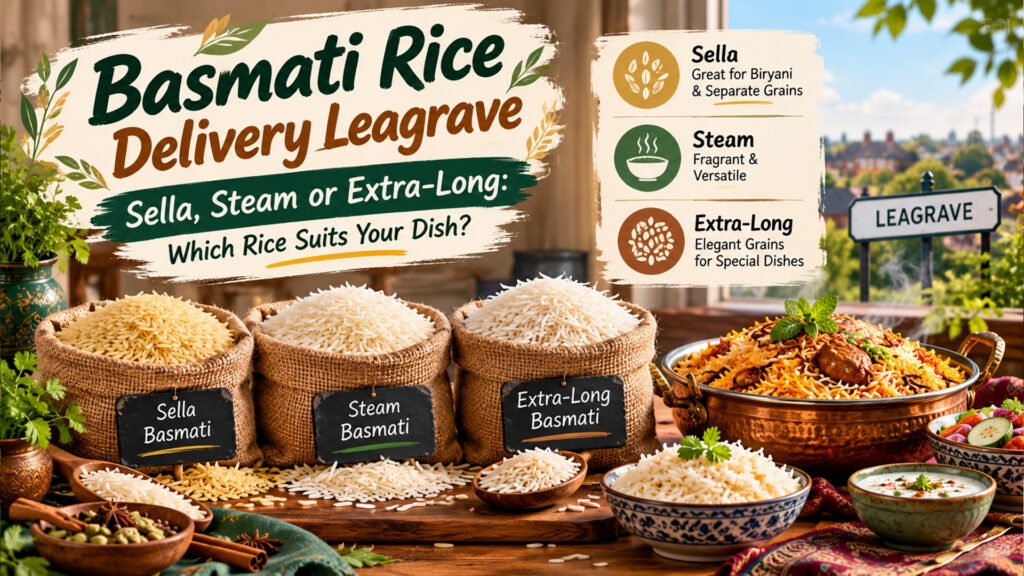
Three packets of basmati rice. Three different labels. One surprisingly difficult decision.
The first says Golden Sella. The second is marked Steam Basmati. The third promises Extra-Long Grains.
If you poured a little rice from each packet onto separate plates, you might struggle to explain why one should be chosen over another. The grains look similar, the packaging photographs are tempting, and every brand seems to promise beautifully cooked rice.
The differences become more interesting when the rice meets boiling water.
One product may remain noticeably firm, another may soften more readily, and a third may produce particularly attractive, elongated grains when cooked correctly.
For households considering basmati rice delivery Leagrave, understanding those differences is more useful than choosing a packet because it looks impressive.
The right rice depends on what you’re cooking, the texture you enjoy and the instructions supplied with the product.
And before comparing brands, there’s one important misunderstanding worth clearing up.
Sella, Steam and Extra-Long Don’t Describe the Same Thing
Rice packaging can make these three terms look like competing varieties.
They aren’t necessarily.
Sella describes a particular type of processing. Steam is a term used for rice products that may involve specific steaming or processing methods, depending on the manufacturer. Extra-Long describes grain characteristics rather than one universal processing technique.
That means a rice product can carry more than one of these descriptions.
What Is Sella Basmati Rice?
Sella is commonly used to describe parboiled rice.
During parboiling, the rice undergoes a controlled treatment involving water and heat while still in its husk, before subsequent drying and milling.
This process changes certain characteristics of the grain.
Compared with some non-parboiled products, Sella rice can have a firmer texture and may behave differently during cooking.
It is often chosen for dishes where maintaining distinct grains is particularly important.
However, the precise result depends on the rice variety, processing and cooking method.
What Does Steam Basmati Mean?
The word Steam can be confusing because manufacturers don’t always explain their processing terminology in the same way.
Steam-labelled rice is commonly marketed as a particular processed basmati product, but the label alone doesn’t establish that it has undergone the same treatment as Sella rice.
It’s worth checking the manufacturer’s description and cooking instructions.
Two packets using similar terminology may still require different preparation.
What Does Extra-Long Basmati Mean?
Extra-Long refers to grain length or the grain’s elongation characteristics.
It doesn’t automatically tell you whether the rice has been parboiled, steam-processed or aged.
Long grains can look particularly appealing in dishes where presentation matters, such as biryani.
But appearance is only one part of quality.
Aromatic character, texture, grain integrity and suitability for the recipe matter too.
A Quick Guide to Rice Labels
| Label | What it generally tells you | What it doesn’t guarantee |
|---|---|---|
| Sella | The rice has undergone parboiling | That it suits every recipe |
| Steam | A manufacturer-specific processing description | That it is identical to Sella |
| Extra-Long | Grain length or elongation characteristics | Better flavour or cooking performance |
| Aged | The rice has been stored under particular ageing conditions | A particular texture without proper cooking |
The most useful lesson is simple: read the product details rather than treating these labels as a quality ranking.
Sella Basmati: Why Some Cooks Prefer Firmer Grains
Picture a large pot of biryani being prepared for a family gathering.
The rice will be cooked, drained or otherwise prepared according to the recipe, combined with seasoned meat or vegetables, and finished using a method that brings the ingredients together.
Throughout that process, the grains need to retain an appealing texture.
This is one reason some cooks prefer Sella rice.
How Parboiling Affects Cooking
Parboiling changes the structure of the rice grain.
As a result, certain Sella products may tolerate particular cooking methods differently from untreated basmati.
That doesn’t make them impossible to overcook.
It simply means their behaviour may be different enough to require a change in your usual technique.
When choosing Sella basmati rice UK, pay attention to the manufacturer’s recommended soaking and cooking method.
A recipe developed using one rice product may need adjustment when you switch to another.
Why Does My Sella Rice Still Feel Firm?
If the grains remain harder than expected, the rice may need more cooking time or a different preparation method.
The amount of water, soaking period, heat and age of the rice can all influence the result.
Avoid assuming that every Sella product needs one fixed soaking time.
Start with the instructions on the packet, then make small adjustments based on your preferred texture.
Is Sella Always Best for Biryani?
Not necessarily.
Some biryani recipes work very well with suitable non-parboiled basmati.
The choice depends on the cooking method, the rice’s characteristics and personal preference.
If you enjoy a firmer, more distinct grain, certain Sella products may appeal to you.
If you prefer a softer texture, another type may be more suitable.
Steam Basmati: Look Beyond the Name
Steam-labelled basmati often appeals to shoppers looking for fragrant, separate grains.
However, the term isn’t a substitute for useful product information.
Why Two Steam Rice Products May Cook Differently
Imagine preparing two different brands using exactly the same water measurement and cooking time.
One finishes beautifully. The other is slightly undercooked.
That doesn’t automatically mean the second product is inferior.
It may simply need a different preparation method.
Grain characteristics, processing, moisture content and cooking equipment can all affect the outcome.
When comparing Steam basmati rice online UK, look for clear information about the product and follow its specific cooking guidance.
Can You Use Steam-Labelled Rice for Pulao?
Suitable steam-labelled basmati products can work well for pulao, depending on their cooking characteristics.
For vegetable pulao, the goal is usually fragrant rice with grains that remain reasonably separate while absorbing the flavours of the dish.
Accurate liquid measurement matters because the rice cooks alongside other ingredients.
Vegetables may also release moisture during cooking.
Using too much liquid can change the final texture, regardless of how attractive the uncooked grains appear.
The Water Ratio Isn’t Universal
A familiar rice-to-water ratio may work reliably with your usual brand.
Change the rice, however, and that ratio may no longer produce the same result.
Soaking, pot size, lid fit, heat level and cooking method all make a difference.
Treat the first attempt with a new rice product as an opportunity to learn its behaviour.
Once you find a method that works, keep a note of it.
Extra-Long Basmati: Beautiful Grains, but What About Flavour?
Long, elegant rice grains can make a biryani look especially inviting.
There’s something satisfying about lifting the lid and seeing separate grains rather than a compact, sticky mass.
Still, longer doesn’t automatically mean better.
Grain Length Is Only One Characteristic
A packet of extra-long grain basmati rice may be attractive because of its appearance.
But consider the rice’s aroma, cooking behaviour and finished texture as well.
Some products may elongate noticeably during cooking, while others may differ in how they retain their shape.
The label alone doesn’t provide a complete picture.
What Is Aged Basmati Rice?
Aged basmati has been stored for a period under controlled conditions.
Ageing can influence moisture characteristics and cooking behaviour, although results vary between products.
It’s another reason two bags of basmati may perform differently.
Aged rice is not automatically the correct choice for every dish, and the term shouldn’t replace checking the product’s specifications.
Is Extra-Long Rice Worth Using Every Day?
Absolutely, if you enjoy it.
There’s no rule saying longer grains should be reserved for special occasions.
However, if your household mainly prepares softer rice dishes, extra-long appearance may not be your most important buying consideration.
Choose the characteristics you appreciate on the plate, not simply the ones emphasised on the packaging.
Match the Rice to the Dish, Not the Other Way Around
A good rice choice begins with the finished meal.
Biryani, pulao, daal chawal and khichdi don’t all demand the same texture.
Understanding those differences makes shopping more purposeful.
Biryani: Separate Grains That Can Handle the Recipe
Biryani is particularly sensitive to rice preparation.
In many recipes, the rice is partially cooked before being layered with meat, vegetables or masala.
The final cooking stage then brings the ingredients together.
If the rice is already too soft before layering, the finished dish may lose the grain separation you’re aiming for.
Certain Sella products and suitable non-parboiled basmati varieties can both work.
The important part is adjusting the preparation to the rice and recipe.
For more on the ingredients and cooking stages involved, read IShopDesi’s guide on how to cook biryani with authentic ingredients.
Vegetable Pulao: Aroma and Balance
Pulao is often less forgiving of inaccurate water measurements because the rice cooks with other ingredients.
The amount of moisture released by vegetables can influence the result.
Choose rice that suits the texture you prefer, and follow a recipe designed for that style of cooking.
Daal Chawal: Comfort Over Presentation
When rice is served with daal, personal preference becomes especially important.
Some people enjoy light, separate grains that absorb the lentil sauce.
Others prefer a softer texture.
The longest possible grain isn’t necessarily the deciding factor.
A rice product that consistently cooks the way your household enjoys may be the most practical choice.
IShopDesi’s article on rice dishes from daal chawal to biryani explores how familiar rice-based meals can vary.
Fried Rice: Texture Starts Before the Wok
For fried rice, grains that remain separate are generally useful.
Rice that has been cooked with excessive water may become too soft for the intended result.
If preparing rice in advance, cool it promptly and refrigerate it safely. Follow UK Food Standards Agency guidance for storage and reheating; rice should not be left sitting at room temperature for extended periods.
Khichdi: Softer Rice Can Be an Advantage
Khichdi is a useful reminder that fluffy, separate grains aren’t always the goal.
Many versions are deliberately soft, allowing rice and lentils to come together.
A premium extra-long product may work, but its appearance offers little advantage if the recipe calls for a softer consistency.
Quick Dish Selection Guide
| Dish | Desired result | Rice consideration |
|---|---|---|
| Chicken or lamb biryani | Distinct grains that suit layered cooking | Suitable Sella or non-parboiled basmati |
| Vegetable pulao | Fragrant rice with controlled moisture | Rice with predictable cooking behaviour |
| Daal chawal | Preferred everyday texture | Familiar basmati variety |
| Fried rice | Separate, properly cooked grains | Rice that can be cooked and cooled safely |
| Khichdi | Softer rice-and-lentil consistency | Variety suited to the recipe’s texture |
Try This Simple Rice Comparison at Home
If you’ve ever wondered whether two rice products really cook differently, there’s a straightforward way to find out.
You don’t need specialist equipment.
You just need two rice samples, a little patience and a willingness to pay attention to the results.
Step 1: Measure Equal Quantities
Take the same uncooked weight from each product.
Using equal amounts makes it easier to compare the finished rice.
Step 2: Follow the Instructions for Each Product
This is important.
A fair comparison doesn’t necessarily mean forcing both products through identical soaking and cooking times.
If their recommended preparation differs, follow the instructions for each.
You’re comparing the results they can produce when cooked appropriately.
Step 3: Examine the Cooked Grains
Look at the rice before adding sauces or heavy seasoning.
Consider:
- Grain separation: Do the grains remain distinct?
- Texture: Are they tender, firm or softer than expected?
- Aroma: How noticeable is the rice’s natural fragrance?
- Appearance: Have the grains elongated attractively?
- Consistency: Are the grains cooked evenly?
Step 4: Taste Without a Rich Curry
Strong spices can hide subtle differences.
Taste a little plain rice first.
Then consider how the texture might work alongside the dishes you normally prepare.
Step 5: Keep the Result in Mind
You may discover that one product suits biryani while another works better for your everyday meals.
That’s more useful information than simply deciding which packet looks more premium.
Five Rice Problems That Often Have Simple Explanations
Rice can be frustrating because small changes sometimes produce noticeably different results.
Before blaming the product, consider the cooking method.
1. The Centre of the Grain Is Still Hard
Possible cause: Insufficient cooking time, inadequate liquid or a preparation method unsuitable for the rice.
What to try: Review the manufacturer’s instructions and adjust the cooking process carefully.
2. The Grains Keep Breaking
Possible cause: Excessive stirring, rough handling or overcooking.
What to try: Handle the rice gently and avoid unnecessary agitation during cooking.
3. The Rice Turns Sticky
Possible cause: Excess water, excess surface starch or a cooking method that produces a softer result.
What to try: Measure liquid accurately and follow the rinsing guidance appropriate to the product.
4. The Biryani Becomes Too Soft During Dum
Possible cause: The rice may have been cooked too far before the final layering stage.
What to try: Follow the recipe’s guidance for the initial rice-cooking stage and account for the moisture in the other ingredients.
5. The Rice Looks Impressive but Lacks Aroma
Possible cause: Grain length and fragrance are different characteristics. Product variety, age, processing and storage can all influence the eating experience.
What to try: Compare products based on flavour and cooking results rather than grain length alone.
Buying Basmati Rice Online in Leagrave: What Deserves Your Attention?
Once you understand the labels, comparing rice products becomes much easier.
The aim is to find a suitable match for your cooking habits.
Read the Full Product Description
Check whether the listing identifies the rice as Sella, Steam, aged or another type.
Look for grain information, pack weight and cooking instructions where available.
If the description is unclear, don’t assume that the packaging photograph answers every question.
Think About How Often You Cook Rice
A household preparing rice most evenings may have different requirements from someone who cooks biryani occasionally.
Larger packs may suit frequent use when suitable storage is available.
Smaller quantities may be more practical when trying an unfamiliar variety.
If you want to buy basmati rice online Luton, comparing product details against your usual recipes can help narrow the choices.
Store Opened Rice Properly
Keep dry rice in suitable conditions, away from moisture, pests and contamination.
Use an appropriate container where needed and follow the packaging instructions.
Check the best-before date and storage guidance rather than assuming every rice product has identical requirements.
Check Delivery Information
For a Leagrave address, review current postcode eligibility, available products and applicable delivery conditions before ordering.
Stock, pack sizes and service arrangements may change.
Exploring Rice and Cooking Ingredients Through IShopDesi
A rice purchase often leads naturally to questions about the dish you’re planning.
For biryani, you may need whole spices, yoghurt, herbs and suitable meat or vegetables.
For pulao, your shopping choices might include onions, cumin, vegetables and other ingredients used in your preferred recipe.
For daal chawal, the rice selection may be accompanied by lentils and familiar seasonings.
IShopDesi provides an online platform where customers can explore available South Asian grocery products, including rice and related cooking essentials.
If you’re preparing rice-based dishes with traditional seasonings, the IShopDesi article on Indian spices in Leagrave offers useful ideas for understanding common spices.
For a wider perspective on selecting rice products, you can also explore its guide to buying basmati rice online in the UK.
Before making a purchase, check the current listing, product characteristics and delivery arrangements.
The best selection is the one that matches how you intend to cook.
Frequently Asked Questions
What is the difference between Sella and Steam basmati rice?
Sella commonly refers to parboiled rice. Steam is a label used for certain processed rice products, but its exact meaning may vary by manufacturer. Check the product description rather than assuming the two are identical.
Is Sella basmati suitable for biryani?
Yes. Many cooks use Sella rice for biryani because certain products can produce distinct grains when prepared correctly. The ideal choice still depends on the recipe and preferred texture.
Is Extra-Long basmati better than regular basmati?
Not automatically. Extra-Long describes grain characteristics, while aroma, texture and cooking performance also influence quality and suitability.
Can Extra-Long basmati also be Sella rice?
Yes. Grain length and processing describe different characteristics, so a product may be both extra-long and parboiled.
Which basmati rice is best for everyday cooking?
The best option depends on your usual meals and texture preferences. A rice product that works reliably for your cooking style may be more useful than one chosen only for appearance.
Why does my basmati rice become sticky?
Possible reasons include excessive water, surface starch, overcooking or a cooking method that produces a softer texture. Review the instructions for your particular product.
Does aged basmati cook differently?
Ageing can affect moisture characteristics and cooking behaviour. The exact result varies, so the manufacturer’s preparation guidance remains important.
Should all basmati rice be soaked before cooking?
No single soaking rule applies to every product. Follow the packet instructions and the requirements of the recipe.
How should I store an opened bag of basmati rice?
Keep it in a dry, suitable storage area, protected from moisture and pests. Use an appropriate container and follow any specific packaging guidance.
Can I order basmati rice online in Leagrave, Luton?
You can explore online grocery platforms such as IShopDesi and review available rice products. Confirm current delivery eligibility for your Leagrave postcode before placing an order.
Conclusion: The Best Rice Is the One That Suits Your Cooking
The three packets from the beginning of this guide might all produce excellent meals.
But they won’t necessarily produce the same meal in the same way.
Sella tells you something about processing. Steam requires a closer look at the manufacturer’s description. Extra-Long draws attention to the grain itself.
None of those labels should be treated as a universal promise of superior rice.
What matters is how the product behaves when prepared correctly and whether the result suits the dish you’re making.
A beautifully layered biryani, a fragrant pulao and a comforting bowl of daal chawal each place different demands on rice.
Understanding those demands gives you a better reason to choose one packet over another.
For Leagrave households exploring available options through IShopDesi, that knowledge can turn a confusing collection of labels into a more informed cooking decision.
After all, the real test of basmati rice isn’t how impressive the grains look through the packaging. It’s what happens when dinner reaches the table.