The first few weeks in a new home have a way of exposing small problems.
You know where the frying pan belongs. The plates are unpacked, the kettle works, and the kitchen finally feels organised.
Then you decide to make a simple daal.
There is no cumin.
The next evening, you prepare chicken curry but discover the cooking oil is almost finished. By the weekend, someone wants fresh chapatis, and the bag of atta you thought you had purchased is nowhere to be found.
None of these missing ingredients seems particularly important on its own. Together, however, they can make everyday cooking unnecessarily difficult.
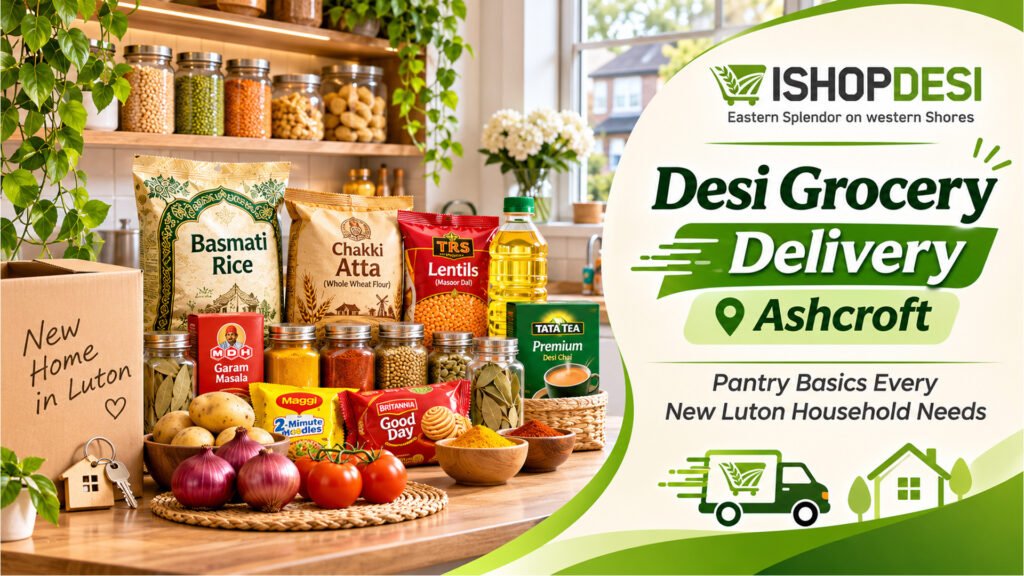
For households exploring desi grocery delivery Ashcroft, setting up a practical pantry is less about filling every cupboard and more about creating a reliable foundation for familiar meals.
A useful Desi kitchen doesn’t need dozens of spices, multiple rice varieties or oversized bags of every staple.
It needs the right ingredients, sensible quantities and a simple system for replacing products before they run out.
This guide explains how new households in Ashcroft, Luton, can establish those essentials gradually without turning the first grocery order into an expensive collection of products they may rarely use.
The First Rule of a Desi Pantry: Buy in Stages
Moving into a new home often encourages people to purchase everything at once.
That approach may be appropriate for certain household essentials, but groceries are different.
Food has storage requirements, date information and varying rates of consumption.
Buying a large quantity of something before you understand how frequently it will be used can create unnecessary expense.
A staged approach is more practical.
Stage One: The Ingredients You Need Immediately
Start with products used in ordinary meals.
Depending on your household’s preferences, these might include:
- One familiar rice variety
- Suitable atta flour
- One or two commonly used lentils
- Basic cooking oil
- A manageable selection of spices
- Salt and other frequently used seasonings
These products provide a useful starting point.
You don’t need every variety on the supermarket shelf.
Stage Two: Ingredients for More Specific Dishes
Once the everyday essentials are available, consider products needed for occasional recipes.
Examples may include speciality rice, particular spice blends, besan, semolina or dried chickpeas.
These ingredients are valuable when they have a clear purpose.
They don’t necessarily belong in every new household’s first order.
Stage Three: Products Worth Keeping in Larger Quantities
After several weeks, you’ll have a clearer idea of what your household uses regularly.
That is a better time to consider larger packs.
Rice, atta and selected pulses may be worth purchasing in greater quantities when consumption and storage arrangements justify it.
For further reading, IShopDesi’s guide to Desi kitchen essentials for Sundon Park households explores other practical ways to organise everyday ingredients.
The Essential Pantry Checklist for a New Household
The following table is a starting point rather than a compulsory shopping list.
| Pantry category | Products to consider | Priority |
|---|---|---|
| Rice | Familiar basmati or preferred rice variety | Core staple where regularly eaten |
| Flour | Suitable atta | Essential for frequent chapati cooking |
| Lentils | Masoor, moong or preferred daal | Useful protein and meal ingredient |
| Cooking fat | Suitable cooking oil | Everyday preparation |
| Basic spices | Turmeric, cumin, coriander, chilli | According to recipes |
| Whole spices | Cinnamon, cardamom, cloves | Recipe-specific |
| Other dry goods | Chickpeas, besan, semolina | Based on cooking habits |
| Condiments | Preferred sauces, pickles or chutneys | Optional |
| Backup ingredients | Selected canned or frozen products | Based on household needs |
The purpose of this list is to help distinguish products that support routine cooking from those purchased for particular dishes.
An effective pantry should reflect what people actually eat.
Rice: Choose One Dependable Variety First
Rice can be an important part of South Asian home cooking.
It appears in everyday meals, accompanies curries and forms the basis of dishes such as pulao and biryani.
However, buying several varieties immediately may be unnecessary.
Begin with a Rice You Know
If your household regularly cooks white basmati, starting with a familiar product can make everyday preparation easier.
Different rice varieties may require different soaking times and water quantities.
Using something familiar reduces guesswork while the household settles into a new routine.
Don’t Confuse Quantity with Value
A larger bag may have a lower price per kilogram.
That doesn’t automatically make it the best purchase.
Consider how much rice you normally cook and whether you have suitable storage space.
For more information, IShopDesi’s guide to buying basmati rice online in the UK explains practical selection considerations.
Keep Rice Accessible but Protected
Choose a suitable dry-storage location.
A clean, food-safe container can help keep rice protected from moisture and pests.
Retain the original product information, particularly cooking instructions and date details.
Atta: An Essential for Some Homes, an Occasional Purchase for Others
Atta is a familiar ingredient in households that regularly prepare chapatis.
But not every family consumes the same amount.
Some households make rotis twice daily. Others prepare them only with selected meals.
This difference should influence the pack size.
Consider Your Chapati Routine
If fresh chapatis are an everyday staple, purchasing a suitable quantity of atta may be practical.
If your household uses ready-made bread more frequently, a smaller bag may make more sense.
Check the Flour Type
Different wheat flour products can behave differently when mixed into dough.
A familiar chapati recipe may need small adjustments when the flour changes.
Don’t assume every product labelled wheat flour is intended for the same preparation.
Store Flour Carefully
Atta should be protected from moisture, pests and contamination.
Choose a clean, suitable container and follow the packaging instructions.
For additional advice, explore IShopDesi’s article on buying atta flour online in Luton.
Daal: Choose Versatility Over Variety at First
Lentils provide a useful foundation for many traditional meals.
However, masoor, moong, chana and mash are not identical.
They differ in texture, preparation requirements and cooking behaviour.
A new pantry doesn’t necessarily need all of them.
Masoor Daal
Red split masoor is commonly used in everyday lentil preparations.
It softens relatively quickly compared with some whole pulses.
It may be a practical starting point for households that enjoy simple daal dishes.
Moong Daal
Moong appears in different forms, including whole green moong and split varieties.
These products have different cooking characteristics.
Choose the form intended for your recipes.
Chana Daal
Chana daal retains more structure than certain quicker-cooking split lentils.
Its preparation requirements differ.
It can be useful for households that regularly prepare dishes featuring this ingredient.
Why One or Two Varieties May Be Enough
If you only cook masoor daal and a selected moong dish, purchasing several other types may not be necessary.
Start with what you know.
Explore additional varieties when a recipe calls for them.
IShopDesi’s guide to daal varieties online Luton explains the differences between common lentils and pulses.
The Basic Spice Shelf: Start Small and Keep It Useful
A new Desi kitchen can feel incomplete without spices.
But a large collection doesn’t automatically produce better meals.
Some products may lose aromatic quality before they are used.
A practical approach starts with frequently needed seasonings.
Ground Coriander
Ground coriander appears in many South Asian recipes.
It contributes a characteristic flavour and works differently from whole coriander seeds.
Choose the form required by the dish.
Turmeric
Turmeric contributes colour and flavour to selected preparations.
A small quantity is often sufficient, depending on the recipe.
More turmeric doesn’t necessarily make a dish better.
Cumin
Whole cumin seeds and ground cumin have different culinary applications.
Whole seeds may be used for tempering, while ground cumin is incorporated differently.
Chilli Powder
Chilli products vary in strength and flavour.
Choose according to your household’s preferences and the recipe.
Garam Masala
Garam masala is a blend rather than one individual spice.
Its ingredients vary between brands.
It can be useful in certain preparations, but it isn’t a replacement for every seasoning.
For more guidance, IShopDesi’s article on Indian spices online Luton discusses familiar spices and their roles in everyday cooking.
The Difference Between Essential and Optional Pantry Products
One of the easiest ways to control grocery spending is to distinguish between products used regularly and those purchased for occasional meals.
This doesn’t mean speciality ingredients are unnecessary.
It means they should be chosen intentionally.
Everyday Essentials
These are products your household uses frequently.
They might include rice, atta, lentils, cooking oil and selected spices.
Recipe-Specific Ingredients
These are products purchased because a particular dish requires them.
Examples include a specialised rice variety, besan, whole saffron or a particular seasoning blend.
Convenience Products
Certain packaged or prepared foods may be useful when time is limited.
However, their value depends on whether they suit the household’s preferences and dietary requirements.
Treat All Three Categories Differently
Everyday essentials may justify regular restocking.
Recipe-specific ingredients are better purchased when needed.
Convenience products should reflect actual use rather than filling every available freezer shelf.
How to Organise a Small Desi Pantry
A pantry doesn’t need to be large to work well.
It needs a system that makes ingredients easy to locate, protects them from damage and helps people identify what is running low.
Group Similar Products
Keep suitable dry pulses together.
Store spices in an organised area.
Place rice and flour where their containers can be accessed safely.
The exact layout depends on available cupboard space.
Use Appropriate Containers
Food-safe containers can help protect ingredients from moisture and pests.
However, different products have different storage requirements.
Follow the original instructions.
Keep Labels Visible
A jar of ground coriander can look similar to other powdered spices.
Labelling helps prevent mistakes.
Include the product name and relevant date information.
Avoid Filling Every Available Space
Overcrowded cupboards can make it difficult to see what you have.
Leave enough room to access products without knocking over containers.
Use Older Suitable Products First
When replacing a pantry item, check what remains in the older package.
Use suitable older products before newer ones, while respecting date and storage guidance.
This helps make stock rotation more manageable.
How to Know When Your Pantry Needs Restocking
A practical pantry depends on more than purchasing products once.
It also needs a simple way of identifying what is running low.
The system doesn’t have to be complicated.
Choose a Minimum Quantity for Regular Staples
If your household uses rice frequently, decide approximately how much you prefer to have available.
The same principle can apply to atta and lentils.
The quantity should reflect consumption and currently available shopping arrangements.
Check Before the Main Grocery Order
A short cupboard check can prevent duplicate purchases.
Look at the actual quantity remaining rather than assuming a familiar container is full.
Pay Attention to Seasonal Changes
Cooking habits may change during Ramadan, family gatherings, holidays or colder months.
A household that makes more rice dishes during a particular period may use staples more quickly.
Adjust the shopping list when necessary.
Don’t Restock Everything Automatically
A half-used spice jar may last considerably longer than a bag of atta.
Each product should be reviewed according to use.
A Practical First-Month Pantry Plan
For a household settling into a property, the following approach can make purchasing more manageable.
| Period | Main focus | Useful action |
|---|---|---|
| Week 1 | Basic cooking supplies | Purchase frequently used staples |
| Week 2 | Identify missing essentials | Note products used in everyday cooking |
| Week 3 | Review actual consumption | Check quantities of rice, flour and daal |
| Week 4 | Adjust future purchases | Consider appropriate pack sizes and storage |
This isn’t a rigid schedule.
It simply allows the household’s real cooking routine to inform future shopping.
Why the First Month Matters
A new household’s grocery habits can be unpredictable.
People may prepare fewer meals than expected while unpacking and settling in.
Later, cooking routines may become more regular.
Buying in stages allows the pantry to develop around those changes.
Common Mistakes New Households Make When Buying Desi Groceries
Mistake One: Buying Every Spice Immediately
A full collection may look useful, but some products can remain unused for months.
Better approach: Purchase seasonings required by familiar recipes first.
Mistake Two: Choosing Large Packs Without Checking Storage
Bulk purchases can be inconvenient in smaller kitchens.
Better approach: Compare consumption and available space before buying.
Mistake Three: Confusing Similar Ingredients
Atta, besan and other flours have different uses.
Likewise, whole and split lentils may require different preparation.
Better approach: Check exact product descriptions.
Mistake Four: Forgetting About Date Information
Dry groceries still have shelf-life considerations.
Better approach: Retain labels and follow storage guidance.
Mistake Five: Replacing Products Before Checking Existing Stock
Buying another bag of rice when a full one is already hidden in the cupboard creates unnecessary duplication.
Better approach: Inspect the pantry before placing an order.
Why Pantry Planning Can Make Online Grocery Shopping More Practical
Online grocery shopping may allow customers to compare product varieties and pack sizes before purchasing.
That can be useful for households still establishing their preferred ingredients.
However, the benefits depend on product information and the retailer’s current offerings.
For people researching South Asian groceries online Ashcroft, a suitable ordering process should support informed decisions about quantity, product type and storage requirements.
Check the Full Product Title
A product photograph may not clearly identify the exact flour, rice or lentil variety.
Read the complete description.
Review Pack Weights
Compare available quantities with expected use.
A larger product isn’t automatically better value.
Check Dietary Information
Packaged groceries may contain allergens or other ingredients that matter to individual dietary requirements.
Review the relevant labels.
Confirm Delivery Eligibility
Before ordering, verify whether the retailer currently serves the specific Ashcroft postcode.
Check applicable charges and any minimum order requirements.
Consider the Complete Basket
A useful order should reflect the household’s current needs.
It doesn’t need to include every category on the website.
For more information on typical shopping options, explore IShopDesi’s guide to Asian grocery pantry essentials in Luton.
Keeping Fresh and Frozen Foods Separate from Pantry Staples
Not everything purchased for a Desi kitchen belongs in a dry cupboard.
Fresh vegetables, chilled dairy, raw meat and frozen foods require different handling.
That distinction matters when creating a complete grocery system.
Fresh Produce
Onions, tomatoes, spinach and other ingredients may be used frequently, but their storage requirements differ.
Choose quantities that can be used appropriately.
Chilled Dairy
Products such as yoghurt and paneer need suitable refrigeration.
Follow the manufacturer’s storage instructions.
Halal Meat
Raw meat requires careful temperature control and separation from ready-to-eat foods.
Review available halal sourcing information when purchasing.
Frozen Products
Frozen foods should be stored according to their packaging requirements.
A household may keep selected products for convenience, but freezer capacity should be considered.
For related guidance, IShopDesi’s article on frozen halal food delivery discusses practical freezer planning.
The broader lesson is that a well-organised kitchen needs different storage areas for different food categories.
How IShopDesi Fits into Grocery Shopping in Ashcroft
For households considering Desi groceries delivery Luton, online shopping can provide another way to explore familiar South Asian ingredients.
IShopDesi offers an online grocery platform where customers can browse available pantry products and other food categories.
This may include relevant rice, flour, pulses, spices and additional cooking essentials, subject to current product listings.
Its guide to Desi supermarket shopping online in Luton discusses familiar grocery categories.
For additional household planning ideas, IShopDesi’s article on grocery delivery and weekly organisation in Wigmore provides a related perspective.
Customers should confirm current availability, product information, applicable charges and delivery eligibility before ordering.
The goal is not to fill a new kitchen as quickly as possible.
It is to build a pantry that remains useful after the excitement of moving in has passed.
Frequently Asked Questions
What are the basic groceries needed for a new Desi kitchen?
Common starting points include a familiar rice variety, atta, selected lentils, cooking oil and spices used in regular recipes. Exact requirements depend on household preferences.
Should I buy a large rice bag when moving into a new home?
Only when the quantity suits expected consumption and available storage. Smaller bags may be more practical while a household establishes its routine.
Which daal should I keep in the pantry?
Masoor, moong and chana are familiar choices, but they have different cooking characteristics. Begin with varieties used in your regular meals.
Do I need every type of Indian or Pakistani spice?
No. Start with seasonings needed for familiar dishes and add speciality products when recipes require them.
How should atta flour be stored?
Follow the product’s instructions and keep it appropriately protected from moisture, pests and contamination.
What is the difference between atta and besan?
Atta is typically wheat flour used for preparations such as chapatis. Besan is gram flour used in dishes including pakoras and selected sweets.
How can I prevent duplicate grocery purchases?
Check current cupboard stock before ordering and keep frequently used ingredients organised and labelled.
Is buying Desi groceries in bulk always cheaper?
Not necessarily. Compare price per unit alongside storage, expected consumption and the total purchase cost.
Can I include halal meat and frozen foods in the same grocery order?
Some retailers offer multiple food categories, but availability and delivery arrangements vary. Chilled and frozen products require suitable temperature control.
Can I order Desi groceries online in Ashcroft, Luton?
You can explore retailers such as IShopDesi. Confirm current product availability and delivery eligibility for your specific Ashcroft postcode before purchasing.
Conclusion: A Reliable Pantry Is Built Gradually
A new kitchen doesn’t need to contain every ingredient used across South Asian cuisine.
It needs the staples that make everyday cooking possible.
For one household, those might be basmati rice, masoor daal, atta and a small selection of seasonings.
For another, the priorities may be different.
The most useful approach is to begin with familiar ingredients, observe how quickly they’re consumed and adjust quantities over time.
Good storage, clear labels and a straightforward restocking routine can make those purchases more effective.
For Ashcroft households, online grocery shopping can provide another way to compare products and manage supplies when suitable delivery arrangements are available.
A dependable pantry is not defined by the number of products it contains.
It is defined by how confidently you can use what is already there.