The most frustrating discovery during festive cooking is often a missing ingredient.
The cardamom is finished just as the dessert mixture begins to simmer. The rice is ready for washing, but there isn’t enough for the number of guests expected. Or the samosa filling has been prepared, only for someone to realise there’s no suitable pastry.
These are ordinary kitchen problems. During Diwali, however, they can feel considerably more inconvenient.
Preparing festive food involves several moving parts. Traditional sweets may require careful timing, savoury snacks can demand last-minute attention, and a family meal might include dishes with completely different cooking methods.
The answer isn’t to purchase everything that looks festive.
It is to build a shopping list around what will actually be served.
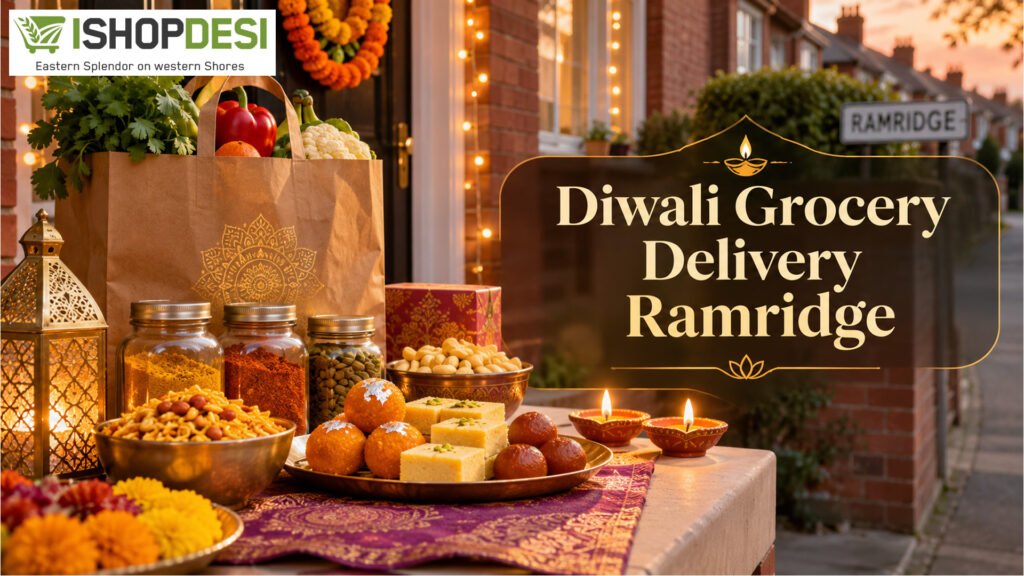
For households exploring Diwali grocery delivery Ramridge, this guide offers a practical way to organise festive ingredients, choose appropriate quantities and prepare a varied Diwali menu without turning the kitchen into a production line.
Rather than treating the celebration as one enormous cooking task, we’ll divide it into manageable parts.
Before the Shopping List: Decide What Kind of Diwali Gathering You’re Hosting
Not every Diwali celebration requires a large family dinner.
Some households invite relatives for an afternoon visit with tea and sweets. Others prepare a full evening meal. Many simply enjoy a few traditional dishes with the people at home.
Different celebrations call for different ingredients.
A Small Family Celebration
For an intimate gathering, one special savoury dish and a homemade or prepared sweet may be enough.
You could choose a familiar vegetable curry, a suitable rice dish and a modest mithai selection.
The aim is to make the occasion enjoyable rather than create several days of unnecessary leftovers.
An Afternoon Visit
If relatives or friends are coming for tea, the menu might centre on savoury snacks, sweets and drinks.
Samosas, pakoras and a small selection of mithai can offer variety without requiring an elaborate main meal.
A Larger Evening Gathering
A fuller menu may include a rice preparation, vegetable dishes, lentils, bread and desserts.
This requires additional coordination, especially when several foods need the hob or oven at the same time.
The useful question isn’t how many dishes you can prepare. It’s how many dishes your guests will genuinely enjoy.
The Complete Diwali Grocery Checklist
Once the menu is chosen, organise ingredients by their role rather than writing one long, unstructured list.
The table below is a flexible reference. You won’t need every product for every celebration.
| Category | Ingredients to consider | Typical purpose |
|---|---|---|
| Rice and grains | Basmati rice, recipe-specific rice varieties | Pulao, festive rice dishes |
| Flour and baking ingredients | Atta, besan, semolina, recipe-specific flour | Rotis, pakoras, ladoo and other dishes |
| Lentils and pulses | Chana daal, moong, chickpeas | Daal, savoury preparations |
| Fresh produce | Potatoes, onions, tomatoes, coriander, ginger | Curries, snacks and accompaniments |
| Whole spices | Cardamom, cinnamon, cloves, cumin | Aromatic rice and selected sweets |
| Ground spices | Turmeric, coriander, chilli, suitable blends | Savoury seasoning |
| Sweet ingredients | Sugar, ghee, dairy products, coconut | Recipe-dependent mithai |
| Nuts and dried fruits | Almonds, cashews, pistachios, raisins | Desserts, garnishes and serving |
| Snacks | Samosas, namkeen, biscuits | Tea-time gatherings |
| Drinks | Tea, milk, suitable traditional beverages | Guest refreshments |
Use this as a checking tool, not as a compulsory purchase list.
If your menu contains no homemade sweets, you may not need several speciality dessert ingredients.
If you’re serving a rice-based meal, there may be no reason to purchase multiple flour varieties.
The Mithai Ingredients: Know What You’re Making Before You Buy
Traditional Indian sweets can require very different ingredients.
A recipe for besan ladoo has little in common with the preparation of gulab jamun, despite both appearing on festive tables.
That is why selecting the sweet comes before selecting its ingredients.
Besan Ladoo: Gram Flour and Careful Roasting
Besan ladoo commonly uses gram flour, ghee, sugar and selected flavourings.
Some versions include nuts or cardamom.
The roasting stage is particularly important because it helps develop the flavour of the gram flour.
Rushing this step can affect the finished result.
When preparing ladoo, follow a reliable recipe and purchase the type of gram flour it specifies.
Kaju Katli: A Cashew-Based Sweet
Kaju katli is typically made with cashews and sugar.
The texture depends on careful preparation and moisture control.
Cashews are tree nuts, so ingredient handling and allergen information are important when serving guests.
If you are purchasing prepared sweets rather than making them, IShopDesi’s guide to Desi sweets delivery in Luton discusses traditional sweet-shopping considerations.
Semolina and Coconut Sweets
Semolina and coconut appear in different regional sweet recipes.
Their preparation requirements vary.
Some use milk, while others rely on different liquids or fats.
Check the recipe before choosing the product, particularly where fine and coarse semolina are concerned.
Milk-Based Desserts
Certain festive sweets and puddings use milk or milk-derived ingredients.
These products require appropriate food handling.
Keep refrigerated ingredients chilled and follow safe preparation and storage guidance.
A useful rule: Choose one homemade sweet you can prepare confidently before attempting several unfamiliar recipes for a large gathering.
Aromatic Spices for Diwali Cooking
Festive dishes often depend on fragrance as much as flavour.
Cardamom in a sweet preparation, cinnamon in aromatic rice or cumin tempered for a savoury dish can contribute a recognisable character.
But spices should be selected according to the recipe.
Whole Cardamom and Ground Cardamom
Both are used in South Asian cooking, but they behave differently.
Whole pods may be infused into certain preparations, while ground cardamom disperses more readily.
The correct choice depends on the dish.
Cinnamon and Cloves for Festive Rice
Whole cinnamon and cloves appear in various pulao and rice preparations.
Their aroma can become quite strong, so use recipe-appropriate quantities.
Remove large whole spices before serving where appropriate, or alert guests that they may be present.
Cumin, Coriander and Turmeric for Savoury Dishes
These seasonings appear in many vegetable and lentil preparations.
However, a curry, pakora mixture and rice dish may use them in different proportions.
For further guidance, IShopDesi’s article on Indian spices online Luton explains how familiar seasonings fit into home cooking.
Prepared Masala Blends
Garam masala and other blends can be useful in particular recipes.
Their ingredients differ between manufacturers.
Check the label and don’t assume one blend can replace every individual spice in a recipe.
For additional details, explore the guide to Pakistani spices online UK.
Planning the Savoury Diwali Menu
Sweets are memorable, but savoury dishes often provide the foundation of a family meal.
The menu can be simple or elaborate depending on household traditions.
It is important to recognise that Diwali food preferences vary across regions and families.
There isn’t one compulsory Diwali meal.
A Fragrant Vegetable Pulao
A vegetable pulao can make an appealing centrepiece for a vegetarian meal.
Depending on the recipe, it may include rice, vegetables, whole spices and selected aromatics.
The rice variety affects cooking time and texture.
For shoppers comparing varieties, IShopDesi’s article on basmati rice online Luton offers useful information.
Aloo Gobi or Another Vegetable Sabzi
Aloo gobi combines potatoes and cauliflower.
The two vegetables have different cooking characteristics, so the preparation method should account for their size and texture.
Other vegetable dishes may be equally suitable, depending on the menu.
For practical vegetable preparation ideas, see the guide to easy sabzi dishes with fresh vegetables.
Daal for a More Complete Meal
A lentil dish can complement rice, bread and vegetables.
Masoor, moong and chana daal behave differently when cooked.
Choose the variety intended for the recipe.
The IShopDesi guide to daal varieties online Luton provides more detail about their characteristics.
Samosas and Pakoras
Samosas and pakoras can work well for tea-time visits or as savoury additions to a larger spread.
They require different preparation methods.
Some frozen samosas need thorough cooking, while prepared products may have different reheating instructions.
Follow the manufacturer’s directions.
A Festive Menu That Doesn’t Require Five Hours at the Hob
Consider a straightforward family menu:
- Vegetable pulao
- Aloo gobi
- Moong daal
- Samosas with suitable chutney
- A modest mithai selection
The dishes provide contrasting textures and flavours.
But preparing them all at once would still create unnecessary pressure.
The better approach is to decide which tasks can be completed earlier and which need attention shortly before serving.
For example, dry ingredients can be measured in advance.
Suitable vegetables may be prepared earlier and stored correctly.
A chilled dessert can sometimes be made ahead according to its recipe and food-safety requirements.
Hot fried snacks, on the other hand, may be more enjoyable when prepared closer to serving.
A Practical Diwali Cooking Timeline
Preparing several dishes becomes easier when you organise the work around their cooking requirements.
Two or Three Days Before the Celebration
Confirm the menu and expected number of guests.
Check the cupboard for ingredients already available.
Review the recipes and identify products that are missing.
If shopping online, verify available delivery arrangements rather than assuming a particular date or slot.
The Day Before
Prepare appropriate ingredients ahead when the recipes allow it.
You might measure dry spices, organise suitable kitchen equipment or prepare a dessert intended for advance refrigeration.
Store perishable ingredients correctly.
Avoid leaving prepared foods at room temperature for extended periods.
On the Day
Begin with recipes that require longer cooking or resting times.
Prepare other dishes in an order that suits the available hob, oven and preparation space.
Leave suitable finishing tasks and temperature-sensitive foods until closer to serving.
Before Guests Arrive
Arrange serving dishes and utensils.
Check that hot and cold foods are being held safely.
Keep allergen information available for guests where relevant.
A good preparation timeline should leave some time to enjoy the celebration rather than spending the entire gathering in the kitchen.
Dry Fruits and Nuts: Choosing Quantities with Care
Almonds, cashews, pistachios and raisins can appear in different festive preparations.
Some are used in mithai, while others serve as garnishes or standalone snacks.
These uses require different quantities.
Buying Nuts for a Recipe
If a recipe requires ground cashews, purchasing whole nuts may create an additional preparation step.
Similarly, chopped pistachios and whole pistachios may not be interchangeable in a particular garnish.
Choose the appropriate form.
Buying Dry Fruits for Guests
A serving assortment should reflect the number of people attending and their preferences.
Avoid buying large quantities merely because a product is presented as festive.
Allergens Matter
Tree nuts are important allergens.
Keep ingredient information available and take care with cross-contact during food preparation.
Do not assume a sweet is nut-free because nuts are not visible.
When considering Diwali dry fruits online UK, review pack weights, ingredients and storage guidance before purchasing.
How Much Festive Food Should You Prepare?
It is easy to overestimate quantities when several dishes are being served.
A guest who eats samosas, pulao, daal, vegetables and mithai is unlikely to require a full main-course portion of every item.
That doesn’t mean portions should be arbitrarily reduced.
Instead, think about the complete menu.
Count the Expected Diners
Start with the people you reasonably expect to attend.
Consider children and adults separately when the recipes or serving requirements call for it.
Distinguish Main Dishes from Accompaniments
A vegetable pulao intended as the main dish requires different planning from rice served as a small side.
The same applies to samosas served as a starter versus a substantial snack meal.
Follow Recipe Yields
Use recipes that provide appropriate serving information.
Scale them carefully rather than guessing at the amount of each ingredient.
Consider Storage After the Gathering
If you expect leftovers, make sure they can be cooled and stored safely.
Rice requires particular attention because inappropriate cooling and storage can allow Bacillus cereus bacteria to cause food poisoning.
Follow current UK food-safety advice for cooked rice and other leftovers.
Preparing an excessive amount of food is not automatically a sign of good hospitality.
Combining Homemade Food with Convenient Options
There is no requirement to prepare every festive item from scratch.
Some households enjoy making one special family recipe while purchasing other suitable foods.
That can be a practical approach when time, equipment or cooking experience is limited.
Prepared Mithai
A suitable assortment may complement homemade desserts.
Check allergens, ingredients and storage instructions.
Frozen Savoury Snacks
Some frozen samosas and other prepared foods can reduce preparation tasks.
However, frozen does not necessarily mean fully cooked.
Follow the product instructions.
For more information on managing suitable frozen products, IShopDesi’s guide to frozen halal food delivery provides additional reading.
Ready-to-Eat Products
Certain packaged products may require minimal preparation.
Others need reheating.
For broader meal-planning considerations, explore IShopDesi’s article on ready-to-eat foods online Luton.
Choose products that match your menu rather than adding convenient foods simply because they are available.
Shopping for Diwali Groceries Online in Ramridge, Luton
For Ramridge households interested in Indian festive groceries online Luton, an online grocery platform can provide another way to review ingredients across several product categories.
But product selection should follow the planned menu.
A festive order may include rice, flour, pulses, spices, nuts, sweets and suitable fresh ingredients.
Not every household needs all these categories.
Check the Exact Product
A packet labelled flour may contain atta, besan or another ingredient.
These have different culinary uses.
Likewise, whole cardamom pods and ground cardamom may require different preparation.
Read the full product description.
Check Pack Sizes and Ingredients
Compare quantities with recipe requirements.
For packaged sweets and snacks, review allergen and dietary information.
Confirm Current Stock
Festive product availability can change.
Avoid assuming a particular sweet, ingredient or gift pack will be available.
Review Delivery Eligibility
Before placing an order, confirm that the retailer serves your specific Ramridge postcode.
Check current delivery options, applicable charges and any minimum order requirements.
IShopDesi provides an online platform for exploring available South Asian grocery and food categories.
Its guide to Indian grocery delivery in Luton offers further information about ingredients used in traditional cooking.
Shoppers can also explore the article on online halal grocery basket planning in Luton for practical ordering considerations.
A festive grocery order should be built around what you intend to prepare, not simply around the products promoted for the occasion.
Five Diwali Grocery Mistakes Worth Avoiding
Mistake One: Shopping Before Finalising the Menu
This can lead to buying ingredients that don’t belong to any planned dish.
Better approach: Choose recipes before creating the purchase list.
Mistake Two: Confusing Similar Ingredients
Besan, atta and semolina have different characteristics.
Better approach: Check the exact flour or grain required.
Mistake Three: Preparing Too Many Perishable Sweets
Fresh dairy-based desserts may have specific storage requirements.
Better approach: Choose realistic quantities and follow appropriate food-safety guidance.
Mistake Four: Overlooking Guests’ Dietary Needs
Festive foods may contain nuts, milk, wheat or other allergens.
Better approach: Check ingredient information and ask about important dietary restrictions.
Mistake Five: Relying on an Unconfirmed Delivery Date
Busy festive periods can affect availability and delivery arrangements.
Better approach: Confirm the retailer’s current information before finalising your cooking schedule.
Frequently Asked Questions
What groceries are commonly needed for Diwali cooking?
Requirements vary by household and menu. Common examples include rice, flour, lentils, spices, vegetables, nuts, sweets and ingredients for selected festive dishes.
Which flour is used for besan ladoo?
Besan ladoo is traditionally prepared using gram flour. Follow a suitable recipe for the correct ingredients and method.
Which spices are useful for Diwali sweets?
Cardamom and saffron appear in certain sweet preparations, while other recipes use different flavourings.
Can I prepare Diwali food in advance?
Some dishes and ingredients can be prepared ahead. Follow recipe-specific instructions and appropriate storage guidance, particularly for perishable foods.
What savoury snacks can be served during Diwali?
Samosas, pakoras and other suitable snacks may be served, depending on family traditions and preferences.
Is it necessary to make every Diwali sweet at home?
No. Some households combine homemade dishes with suitable prepared sweets. The choice depends on preferences, time and dietary needs.
How do I choose ingredients for guests with allergies?
Check the labels and recipes carefully. Ask guests about relevant restrictions and take precautions against allergen cross-contact.
How should leftover festive food be stored?
Follow current UK food-safety guidance. Cool suitable foods promptly, refrigerate appropriately and take particular care with cooked rice and dairy-based dishes.
Can I order Diwali groceries online in Ramridge, Luton?
You can explore online South Asian grocery platforms such as IShopDesi. Confirm current products and delivery eligibility for your specific postcode before ordering.
How can I avoid buying too many festive groceries?
Finalise the menu, check existing ingredients, use recipe serving guidance and purchase quantities suited to the expected gathering.
Conclusion: A Festive Kitchen Works Best with a Clear Plan
A Diwali meal doesn’t become more meaningful simply because the table contains more dishes.
Its appeal often comes from familiar flavours, carefully prepared favourites and the pleasure of sharing food with people who matter.
That might mean a fragrant pulao, a family recipe for ladoo, fresh vegetable dishes or a thoughtfully chosen selection of sweets.
The ingredients will differ between households, but the preparation principles remain useful.
Know what you’re cooking. Check what you already have. Choose suitable quantities and organise the work around the time available.
For Ramridge residents, online grocery shopping can offer another way to explore festive ingredients when suitable products and delivery options are available.
The purpose of planning isn’t to make Diwali feel like an ordinary task.
It’s to make enough room in the day for the celebration itself.