The most important instruction in a chicken recipe is sometimes the one that receives the least attention: “Add 750g of chicken.”
But what kind of chicken?
A boneless breast, a skin-on thigh and a bone-in drumstick might all weigh roughly the same, yet they behave very differently once heat enters the picture. One cooks quickly and needs careful timing. Another stays tender during longer cooking. A third brings its own character to a slow-simmered curry.
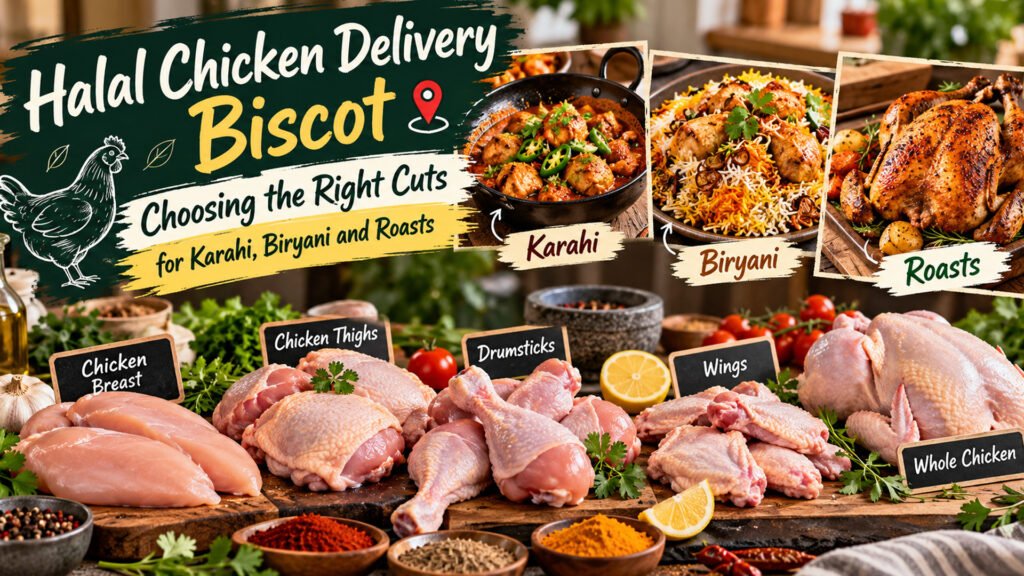
That difference matters when you’re making dishes as varied as Pakistani chicken karahi, layered biryani and an oven-roasted Sunday dinner.
For households exploring Halal Chicken Delivery Biscot, understanding chicken cuts can make choosing the right product considerably easier. Instead of treating every pack of chicken as interchangeable, you can match the meat to the way you actually intend to cook it.
And once you know what to look for, a surprising number of common kitchen disappointments become easier to avoid.
Why the Cut of Chicken Matters More Than You Might Think
Chicken is often discussed as though it were a single ingredient. In reality, its different cuts have distinct textures, fat levels and cooking requirements.
Breast meat is relatively lean. It cooks quickly, making it useful for dishes where the chicken spends only a short time over the heat. However, prolonged cooking can leave it dry.
Thigh meat contains more fat and connective tissue. It generally tolerates longer cooking better and can remain pleasantly tender in richly flavoured sauces.
Drumsticks are particularly suited to dishes where the meat cooks on the bone. They work well in many curries, oven preparations and rice dishes.
Whole chicken offers a different advantage: you get several cuts in one purchase, each with its own characteristics.
The right choice depends less on which cut is considered the best and more on what the recipe asks the chicken to do.
Chicken Karahi: Choose a Cut That Can Handle the Masala
A proper chicken karahi is more than chicken sitting in a tomato sauce.
The masala develops as moisture reduces, tomatoes soften and spices become concentrated. Depending on the recipe, the chicken may spend a considerable amount of time cooking in this mixture.
That makes cut selection important.
Why Bone-In Chicken Works Well in Traditional Karahi
Medium-sized bone-in chicken pieces are a familiar choice in Pakistani karahi cooking.
They can include thighs, drumsticks and other portions from a whole chicken.
The bones influence the way the meat is prepared and served, while the mixture of cuts creates variety in texture.
Dark meat is particularly useful when the recipe requires the masala to reduce around the chicken.
For home cooks comparing the best chicken cuts for karahi, bone-in mixed portions are a sensible starting point for a traditional preparation.
Can You Make Karahi with Boneless Chicken?
Certainly.
Boneless chicken thigh is an excellent option when you want easier serving without giving up the richer texture associated with dark meat.
Chicken breast also works, especially for a quicker karahi.
The mistake is treating boneless breast exactly like bone-in chicken.
If you cook breast pieces for the same length of time as larger bone-in portions, they may become dry before the masala reaches your preferred consistency.
A better approach is to develop the tomato and spice mixture first, then add the breast pieces at a stage that allows them to cook thoroughly without spending unnecessary time over the heat.
Why Cutting Chicken Too Small Can Backfire
Tiny chicken pieces cook quickly, but they can also lose moisture rapidly.
For karahi, reasonably even, medium-sized portions are often easier to manage.
They give you more control over the final texture and reduce the risk of some pieces becoming dry while others are still cooking.
Biryani Chicken: Think Beyond the First Cooking Stage
Biryani creates a different challenge because the chicken and rice often undergo separate preparation before coming together.
In many home-style versions, the chicken is cooked in masala before the partially boiled rice is layered over it.
The assembled dish then spends additional time steaming on dum.
That final stage matters.
Why Thighs and Drumsticks Are Popular Choices
Bone-in thighs and drumsticks are well suited to many chicken biryani recipes.
Their texture works with the spiced masala, and they can tolerate the additional heating involved in a layered rice preparation.
Boneless thigh is another useful option, particularly when the biryani will be served to guests who prefer not to deal with bones.
Breast can also be used, but the cooking method should be adjusted to prevent unnecessary moisture loss.
For a closer look at rice, spices and layering, IShopDesi’s guide to chicken cuts for biryani can be read alongside its broader biryani ingredient guidance.
The Problem with Uneven Chicken Pieces
Imagine a biryani containing several small boneless pieces and a few unusually large bone-in portions.
The smaller pieces may finish cooking considerably sooner.
Meanwhile, the larger portions need more time.
This makes timing difficult, particularly when the rice is already approaching its ideal texture.
Choosing reasonably consistent pieces helps you manage the cooking process.
For recipes that use mixed cuts, check the larger portions carefully and follow the recipe’s instructions for cooking the chicken before layering.
Should Chicken Be Fully Cooked Before Dum?
That depends on the biryani method.
In recipes using cooked chicken masala, the chicken should already be thoroughly cooked before the rice is added.
Other traditional preparations use raw marinated meat beneath partially cooked rice and require a carefully controlled cooking process.
For everyday home cooking, a method using fully cooked chicken masala can be easier to manage.
Whichever method you follow, poultry must be thoroughly cooked. A food thermometer is useful for checking that the thickest part reaches 75°C, avoiding contact with bone when taking the reading.
Roasting Chicken: The Oven Changes the Rules
Karahi surrounds chicken with a moist masala. Biryani combines cooking and steaming.
Roasting, however, exposes the meat to dry oven heat.
This changes what you need from the cut.
Whole Chicken or Individual Portions?
A whole roast chicken can make an attractive centrepiece for a family meal.
It also provides both breast and leg meat, allowing diners to choose their preferred portions.
The challenge is that different parts of the bird cook at different rates.
Chicken breast can become dry while the thicker leg portions are still reaching the required temperature.
Individual pieces offer more flexibility.
You can roast thighs, drumsticks or breast portions separately and adjust the cooking time according to their size.
Why Thighs Are Often More Forgiving
Chicken thighs are useful when roasting with a spice rub, yoghurt marinade or a mixture of herbs and seasonings.
Their higher fat content generally makes them more tolerant of cooking than lean breast meat.
They are particularly suitable for recipes where you want a well-browned exterior and tender meat underneath.
If you’re choosing halal chicken for roasting, consider whether the meal calls for a whole bird, skin-on thighs, drumsticks or leaner portions.
The answer should come from the dish you want to serve, not simply the size of the pack.
Skin-On or Skinless?
Skin-on chicken can develop a crisp, browned surface during roasting.
Skinless portions may suit recipes where the seasoning is applied directly to the meat or where a different finished texture is preferred.
Neither option is automatically better.
For a traditional roast with crisp skin, skin-on portions are useful. For a heavily marinated oven dish, skinless chicken may be entirely appropriate.
Chicken Cut Comparison: Which One Belongs in Your Recipe?
| Chicken cut | Particularly useful for | What to watch |
| Bone-in mixed pieces | Karahi, curries, biryani | Different cuts may need different cooking times |
| Boneless thigh | Quick karahi, boneless biryani, oven dishes | Pieces should be reasonably even |
| Chicken breast | Quick curries, stir-fries, grilled dishes | Lean meat can dry out |
| Drumsticks | Biryani, roasting, spiced oven chicken | Thick portions need thorough cooking |
| Whole chicken | Family roasts, mixed-cut curry preparation | Different parts cook at different rates |
| Wings | Oven-baked snacks and appetisers | Less edible meat per portion |
This comparison isn’t intended to limit your cooking.
A good cook can adapt many cuts to different dishes.
The point is to understand what adjustments may be necessary.
What Does “Curry Cut” Actually Mean?
The phrase appears frequently in South Asian meat shopping, but it doesn’t always describe an identical product.
Curry-cut chicken generally refers to chicken divided into pieces suitable for curry preparation.
However, the size, number and combination of pieces can vary between sellers.
One pack might contain relatively small bone-in portions. Another may have larger pieces that need more cooking time.
Why the Listed Weight Doesn’t Tell the Whole Story
A kilogram of bone-in chicken is not equivalent to a kilogram of boneless chicken breast in terms of edible meat.
Bones account for part of the weight.
Skin may also be included, depending on the product.
This matters when planning quantities for dishes where you want a particular amount of meat per serving.
If a recipe specifies boneless chicken but you’re purchasing bone-in portions, don’t assume that the same weight will provide the same quantity of edible meat.
Questions Worth Asking Before Ordering
Instead of relying on the product name alone, look for answers to a few practical questions:
- Is the chicken bone-in or boneless?
- Does the pack contain mixed cuts or a specific portion?
- Are the pieces skin-on or skinless?
- Is the weight for the complete product, including bones?
- Is the chicken supplied fresh or frozen?
- Does the listing explain how the chicken has been prepared?
Not every product description will answer all these questions.
Where important information is missing, check with the seller before making assumptions.
Fresh or Frozen Chicken: Choose According to Your Cooking Plans
Fresh and frozen chicken can both be suitable for karahi, biryani and roasting when handled correctly.
The distinction is often about storage, preparation and timing rather than one being universally better.
Frozen chicken is useful when you want to keep ingredients available for a later meal.
Fresh chicken may be preferable when you intend to cook shortly after purchase and want to avoid defrosting.
The key is following appropriate food-safety guidance.
How to Defrost Chicken Safely
If the product requires defrosting, follow the packaging instructions.
Defrosting in the refrigerator is a practical method. Keep the chicken in a suitable container on the bottom shelf so juices cannot drip onto other foods.
Allow sufficient time for larger portions to thaw.
Avoid leaving raw chicken at room temperature for extended periods.
Do not wash raw chicken, as splashing water can spread bacteria around the sink and nearby surfaces.
Wash hands, utensils and preparation areas thoroughly after handling it.
Once cooked, check that the chicken is thoroughly done, particularly around the thickest parts.
Three Chicken Problems That Often Begin with the Wrong Cut
Sometimes a recipe doesn’t need more seasoning or a different cooking pot.
It needs a better match between the ingredient and the method.
Problem 1: The Karahi Masala Is Excellent, but the Chicken Is Dry
This often happens when lean chicken spends too long over high heat.
Try this instead: Use boneless thigh for a more forgiving texture, or prepare the masala first and add breast pieces later.
Avoid extending the cooking time simply because you want a thicker sauce.
Problem 2: The Biryani Rice Is Ready, but the Chicken Isn’t
Large, uneven chicken portions can complicate timing.
Try this instead: Choose appropriately sized pieces and make sure the chicken reaches the required stage of cooking before layering, according to your recipe.
Do not rely on the dum stage to correct poorly prepared chicken in a cooked-masala biryani.
Problem 3: The Roast Looks Perfect Outside but Isn’t Cooked Inside
Browning tells you something about the surface, not necessarily the centre.
Try this instead: Use a food thermometer and check the thickest part of the chicken.
For a whole bird, check appropriate thick areas without touching the bone.
A golden exterior should never be treated as proof that the chicken is safe to eat.
Choosing Halal Chicken Online in Biscot
Once you know which cut suits your meal, the online shopping decision becomes much more specific.
If you’re planning a traditional karahi, you might look for medium-sized bone-in pieces.
For a boneless biryani, thigh meat may be worth considering.
For roasting, the decision could be between a whole bird and individual portions.
When looking to buy halal chicken online Biscot, pay attention to the seller’s product descriptions, halal information, preparation details and delivery conditions.
Where halal certification or sourcing is important to you, check the information supplied by the seller rather than assuming that every product has identical documentation.
It’s also sensible to confirm whether the service delivers to your Biscot postcode and how chilled or frozen products are handled.
These details help you make an informed decision without relying on assumptions about a product.
How IShopDesi Can Help with Recipe-Based Chicken Shopping
IShopDesi provides an online platform where customers can explore available halal and South Asian grocery products.
A useful way to browse is to begin with your intended dish.
For karahi, identify whether you need mixed bone-in pieces or boneless chicken.
For biryani, consider the size and type of portions your recipe requires.
For roasting, decide whether you want a whole chicken or individual cuts.
Then compare the available product listings and check the relevant preparation and storage information.
Product ranges, stock and delivery eligibility can change, so it’s important to review current details before placing an order.
Choosing this way keeps the recipe at the centre of the decision rather than treating every chicken product as interchangeable.
Frequently Asked Questions
Which chicken cut is best for Pakistani karahi?
Medium-sized bone-in mixed pieces are commonly used for traditional Pakistani karahi. Boneless thigh is also a good option, especially for a quicker preparation.
Is bone-in chicken better than boneless chicken for biryani?
Both can work. Bone-in thighs and drumsticks are popular in traditional preparations, while boneless thigh can be convenient for serving. The recipe and cooking method should guide your choice.
Can I use chicken breast for karahi?
Yes. Chicken breast is suitable for a quicker karahi, but it can become dry if cooked for too long. Develop the masala first and avoid unnecessary prolonged cooking.
Are chicken thighs suitable for oven roasting?
Yes. Thighs are particularly useful for roasting because their fat content helps them retain moisture. They also work well with many spice rubs and marinades.
How much bone-in chicken should I buy for four people?
Approximately 800g–1kg of bone-in chicken may be a reasonable starting point for four adults, depending on appetite, the cuts involved and the accompanying dishes. Adjust quantities to suit your household.
What does curry-cut chicken mean?
It usually means chicken divided into pieces intended for curry preparation. Exact portion sizes and included cuts can vary, so check the seller’s description.
Can frozen chicken be used for biryani?
Yes. Frozen chicken can be used when stored, defrosted and cooked according to the product instructions. Ensure the chicken is thoroughly cooked before serving.
What should I check before ordering halal chicken in Biscot?
Check the cut, weight, bone and skin information, fresh or frozen status, halal details provided by the seller and delivery availability for your postcode.
Conclusion: The Cut Should Work with the Cooking Method
A chicken thigh and a chicken breast might look like straightforward alternatives on a shopping page, but they can produce noticeably different results in the kitchen.
Karahi rewards an understanding of how chicken responds to a reducing masala. Biryani demands attention to portion size and cooking stages. Roasting introduces its own challenges, particularly when different parts of the bird are exposed to oven heat.
None of these dishes requires an expensive or unusual cut.
What matters is knowing why you’re choosing it.
For Biscot home cooks, that knowledge can make it easier to compare available chicken products through IShopDesi and select portions that suit the meal ahead.
The spices give a dish its personality. Choosing the right chicken helps that personality come through.