Ordering meat online sounds simple until you actually try it for the first time. Which butcher will prepare your order? Will the cuts look the way you expect? Is your street even covered? These are the questions that stop a lot of Luton households from switching away from their usual Saturday trip to the local shop.
This guide answers those questions directly, one at a time, so that placing your first order feels less like a guess and more like a decision you’re confident about.
Is Your Area Even Covered?
Before anything else, coverage is the detail that decides whether the rest of this guide is useful to you at all.
Halal meat delivery in Luton isn’t a single blanket service — it works through a network of local butchers, each serving specific postcodes around them. A shop near Bury Park might deliver quickly to nearby streets but take longer to reach Stopsley, simply because distance and rider availability shift from one part of town to another.
Checking Coverage Without Guessing
The most reliable way to find out is to enter your postcode directly on the ordering platform rather than assuming based on which part of Luton you live in. Coverage maps get updated as new butchers join, so an area that wasn’t served a few months ago might be live today.
What to Do If Your Street Isn’t Listed Yet
If your exact road doesn’t show up, try checking again after a few days, or contact the platform directly — new delivery zones are added regularly as more local shops come on board. In the meantime, browsing local halal butchers in Luton can help you identify shops close enough for a quick pickup instead.
Three Things Worth Checking Before You Place an Order
Once you’ve confirmed coverage, a handful of details separate a smooth first order from a frustrating one.
How to Confirm a Butcher’s Halal Standards
Not every seller communicates this the same way, so look for clear labelling on the butcher’s profile, mentions of their slaughter method, and whether they operate a dedicated halal-only counter. A shop that’s upfront about these details — rather than burying them in fine print — is usually one that takes the distinction seriously.
Understanding Delivery Slots
Meat delivery works differently from typical grocery orders because the butcher prepares each cut fresh rather than pulling it from a shelf. That means the time slot you select isn’t just a delivery window — it’s roughly when your order gets cut and packed too. Choosing a slot a couple of hours ahead of when you actually need the meat usually leaves enough buffer for busy days.
Minimum Order Value and Delivery Charges
Most local butchers set a minimum spend to keep delivery economical, and this can vary from one shop to another depending on how far they’re delivering. It’s worth checking this figure before adding items to your basket, especially if you’re only after a single cut, since combining your meat order with a few pantry staples can sometimes get you past the threshold without extra cost.
Choosing the Right Cut – Without the Guesswork
A lot of first-time confusion isn’t about the delivery process at all — it’s about knowing what to actually order.
For Everyday Cooking
Households making quick weekday meals usually lean on chicken and minced beef, both of which adapt easily to whatever’s already in the fridge. If you’re stocking up for the week, a batch of mince pairs well with the ideas covered in how to make keema with halal minced beef, which walks through turning a simple pack into several different meals.
For Weekends and Guests
When the occasion calls for something heartier, mutton and whole chicken cuts tend to be the default choice. A full halal mutton delivery in Luton order works well for slow-cooked weekend dishes, while a halal whole chicken delivery in Luton suits roasts, biryani, or anything that needs the bird prepared as one piece rather than pre-cut.
Curry Cuts vs Grill Cuts
The same animal can be cut in very different ways depending on what you’re cooking. Bone-in pieces with more marbling hold up well in slow-simmered curries, while leaner, evenly-sized pieces are better suited to grilling or frying, where uneven thickness can mean some parts overcook before others are done.
From Order to Doorstep – What Actually Happens
A common hesitation is whether meat ordered online can genuinely match what you’d pick out in person. The short answer lies in how the process is structured.
What Happens After You Hit “Order”
Your request goes straight to the butcher rather than sitting in a warehouse queue. The cut is prepared specifically for your order, weighed, and packed close to your chosen delivery time — not pulled from pre-packed stock made hours earlier.
Packaging and Handling
Reputable services use sealed, leak-proof packaging designed to keep meat at a safe temperature during the short trip from shop to door. Riders handling halal orders are typically briefed on keeping these separate from any non-halal deliveries they might be carrying in the same run, which matters for households who take that separation seriously.
Questions First-Time Customers Usually Ask
What if the meat doesn’t arrive fresh?
Any legitimate service will have a straightforward way to flag this — usually through the app or a quick call — and most will offer a replacement or refund rather than leaving you to sort it out yourself.
Can I ask for a custom cut?
Many local butchers accommodate specific requests, like boneless pieces or a particular thickness, though this depends on the individual shop rather than being guaranteed platform-wide. Checking the item description or messaging the butcher directly usually clears this up.
How does payment and refund handling work?
Payment is typically processed at checkout the same way as any other online order, with refunds issued back to the original payment method if something goes wrong with your delivery.
Delivery vs a Trip to the Butcher — What Actually Changes
The meat itself doesn’t change — the same local butcher, the same halal standards. What shifts is the time you’d otherwise spend parking, queuing, and carrying bags home, particularly on days when that’s simply not realistic. For someone managing a full-time job or looking after young children, that saved hour matters more than it might seem on paper. The trade-off is that you lose the ability to point at a specific piece and ask for it — though most platforms let you get close with cut-size and weight preferences.
What Luton Households Usually Order Alongside Their Meat
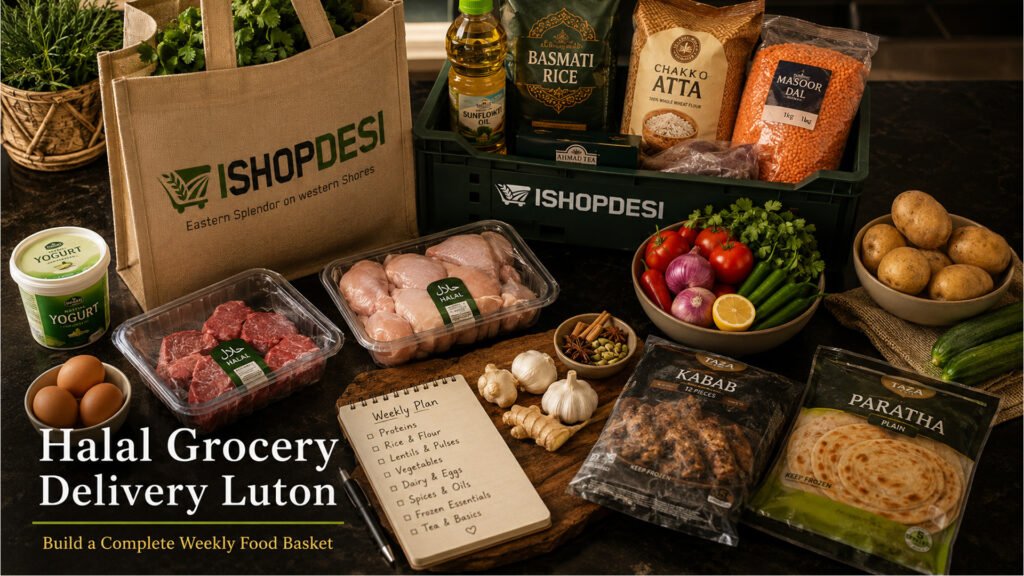
Meat rarely arrives alone in most baskets. Families often build out their order with rice, spices, and daily essentials at the same time, turning one delivery into a full weekly food basket rather than a single-item errand. Pairing your meat order this way also makes it easier to clear any minimum spend threshold without buying more meat than you actually need that week.
A Quick Checklist Before Your First Order
- Confirm your postcode is within an active delivery zone
- Check the butcher’s halal labelling and slaughter details
- Pick a delivery slot with a reasonable buffer, not the earliest one available
- Know the minimum order value before you start adding items
- Decide between everyday cuts and weekend cuts based on what you’re actually cooking
- Save the platform’s contact option in case anything needs flagging after delivery
Once these boxes are ticked, ordering halal meat online in Luton stops being a leap of faith and starts working the way your usual butcher trip always did — just without the drive.
To place your first order, visit: www.ishopdesi.co.uk