
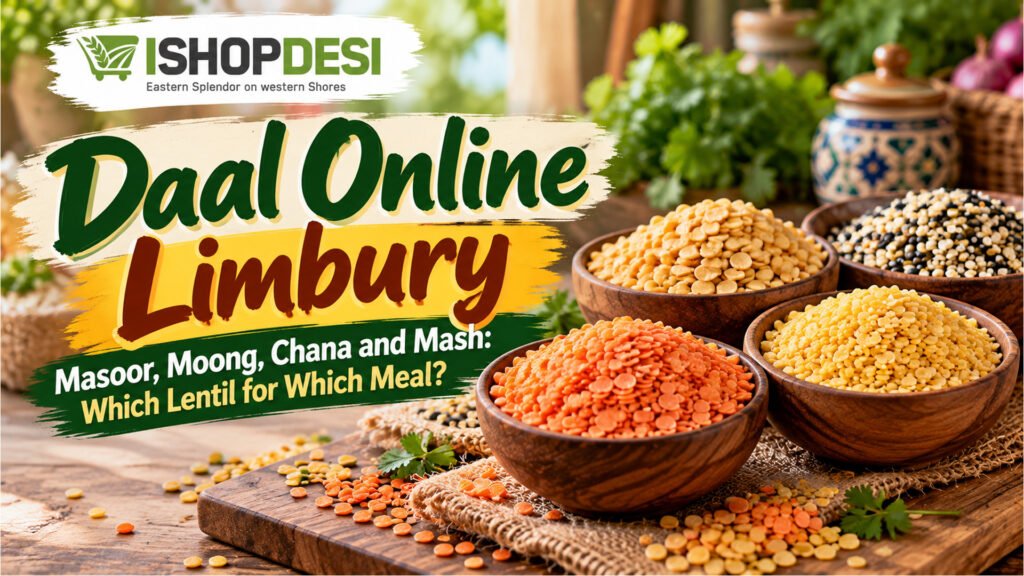
A spoonful of masoor daal should not feel exactly like a spoonful of chana daal.
One can become soft and creamy with relatively little cooking. The other may retain a pleasant bite even after simmering for considerably longer.
Then there’s moong, which can be wonderfully gentle in a simple meal, and mash, whose distinctive texture makes it a favourite for certain traditional preparations.
These differences explain why swapping one daal for another doesn’t always produce the result you expected.
You might follow a familiar recipe perfectly, use the correct spices and still end up with a dish that’s too thick, too soft or surprisingly firm.
The problem isn’t necessarily your cooking.
It may simply be the lentil you chose.
For households exploring daal online Limbury, understanding the individual characteristics of masoor, moong, chana and mash can make shopping and cooking much more straightforward.
This guide explains what makes each variety different, which meals suit them and how to avoid common mistakes before the pot even reaches the stove.
Four Types of Daal, Four Different Cooking Experiences
Daal is often treated as one broad category, but the ingredients sold under that name can differ considerably.
Some are split lentils. Others are split pulses from different plants.
They vary in colour, size, cooking requirements and the texture they produce.
This matters because texture is an important part of traditional South Asian cooking.
A smooth, comforting daal served with rice offers a different experience from a drier lentil preparation eaten with roti.
Here’s a quick comparison.
| Daal variety | Common form | Typical texture when cooked | Suitable meal ideas |
|---|---|---|---|
| Masoor | Red split lentils | Soft, often creamy | Daal soup, daal chawal, simple curries |
| Moong | Yellow split or whole green moong | Soft or more structured, depending on type | Khichdi, light daal, vegetable combinations |
| Chana | Split Bengal gram | Firmer, with a distinct bite | Chana daal curry, dry-style daal, selected traditional dishes |
| Mash | Split and skinned black gram, also called urad | Dense or creamy, depending on preparation | Mash daal, tarka dishes, selected regional recipes |
These descriptions are useful starting points rather than fixed rules.
Soaking, water quantity and cooking technique can change the finished texture.
Masoor Daal: When You Want Something Soft and Comforting
Masoor is often a practical choice for cooks who enjoy a smooth lentil dish.
Red split masoor cooks relatively quickly compared with many larger pulses.
As it softens, the individual pieces can lose their shape and create a naturally thicker consistency.
This makes it suitable for recipes where a creamy texture is desirable.
Which Meals Suit Masoor?
Masoor works well in a simple daal served with steamed rice.
It can also be used in certain soups and vegetable-based preparations.
A typical South Asian preparation may include turmeric, onions, garlic, tomatoes and a final tempering of spices.
The specific combination varies between households.
Some prefer a thin, pourable consistency. Others cook the lentils until they form a thicker mixture.
Neither approach is inherently wrong.
The important thing is knowing which result you’re trying to achieve.
Why Does Masoor Sometimes Become Too Thick?
Masoor absorbs water as it cooks and continues to thicken as it cools.
If you begin with too little liquid, the mixture may become much denser than expected.
To avoid this, follow an appropriate recipe and monitor the consistency.
Add suitable liquid gradually when necessary, allowing the daal to return to a simmer.
Avoid adding large quantities of water at once, as this can dilute the flavour.
A Simple Meal Pairing
Masoor daal with basmati rice and a fresh cucumber salad can make a satisfying everyday meal.
The soft lentils complement the rice, while the salad introduces a contrasting texture.
If you’re comparing rice options for traditional dishes, IShopDesi’s guide to basmati rice online Luton provides additional information.
Best choice when: You want a softer daal that doesn’t depend on individual lentils retaining their shape.
Moong Daal: One Name, Several Different Possibilities
Moong deserves particular attention because the name can refer to different forms of the same pulse.
Yellow split moong and whole green moong do not behave identically.
The yellow split version generally softens more readily, while whole green moong retains its outer skin and often requires different preparation.
Understanding the distinction helps avoid confusion when following recipes.
Yellow Moong for a Gentle Daal
Yellow split moong is commonly used in relatively simple lentil preparations.
It can be cooked with turmeric, ginger and other suitable seasonings.
The finished texture may be soft and smooth, depending on the water quantity and cooking method.
Some households prefer a lighter preparation, while others use a pronounced tarka for additional flavour.
Whole Green Moong for More Structure
Whole green moong retains its skin.
It generally requires different cooking considerations from the split yellow variety.
Depending on preparation, the beans can remain more distinct in the finished dish.
Whole moong can be used in curries and other recipes where that texture is desirable.
Why Moong Is Popular in Khichdi
Khichdi combines rice and pulses in a preparation that varies across South Asian regions.
Yellow moong is used in many familiar versions.
The ingredients cook together, creating a consistency that can range from relatively separate grains to something much softer.
The final texture depends on the rice, lentils, liquid and cooking method.
If you’re trying khichdi for the first time, use a recipe that specifies the exact type of moong rather than assuming whole and split versions can be exchanged without adjustments.
Best choice when: You want a versatile pulse for lighter daal preparations, khichdi or recipes suited to the particular moong variety.
Chana Daal: The Variety That Likes to Keep Its Shape
Chana daal offers a noticeably different cooking experience.
It is made from split Bengal gram and has a firmer structure than red split masoor.
That makes it particularly appealing in recipes where individual pieces should remain recognisable.
Why Chana Takes Longer to Cook
Chana daal is relatively dense.
It generally requires more cooking time than red split lentils, although the exact duration depends on its age, size, soaking and cooking method.
Some recipes recommend soaking before cooking.
Others may use a pressure cooker to achieve the desired tenderness.
Follow the method intended for the product and recipe.
The Difference Between Tender and Mushy
A good chana daal dish doesn’t always require the lentils to break down completely.
For some preparations, the desired result is tender pieces that retain a little structure.
For others, a softer finish may be appropriate.
The key is checking the texture as cooking progresses rather than relying exclusively on a fixed time.
What Should You Serve with Chana Daal?
Chana daal can work well with roti, chapati or rice, depending on the consistency of the finished dish.
A thicker version may be particularly enjoyable with freshly prepared flatbread.
The flavour can be developed using onions, tomatoes, ginger, garlic and suitable spices.
For a broader comparison of traditional daal products, see IShopDesi’s guide to daal varieties online Luton.
Best choice when: You prefer a firmer lentil texture or a dish where the individual pieces remain noticeable.
Mash Daal: Understanding Its Distinctive Texture
Mash daal is another ingredient that deserves more attention than it usually receives.
In many Pakistani cooking contexts, mash refers to split and skinned urad, or black gram.
Despite the name, it isn’t the same pulse as masoor or moong.
Its texture and cooking characteristics are different.
Why Mash Feels Different from Other Daal
Mash can develop a substantial texture during cooking.
Depending on the recipe, it may produce a thick, creamy preparation or a dish with more distinct pieces.
Some traditional mash daal recipes use relatively little free liquid, creating a preparation that is thicker than an ordinary lentil soup.
The Importance of the Cooking Method
Mash daal can respond differently to soaking and simmering than red split lentils.
Some cooks soak it before preparation to encourage more even cooking.
The appropriate method depends on the product and recipe.
Overcooking a dish intended to retain some texture may produce a result that feels too soft.
Conversely, stopping too early can leave the daal unpleasantly firm.
Which Meals Suit Mash?
Mash daal is commonly prepared with ginger, garlic, onions, chillies and selected spices.
A thicker version can be served with roti or naan.
Other preparations may include a tarka or different combinations of seasonings.
Because recipes vary considerably, choose one that specifies the form of mash you’re using.
Best choice when: You enjoy a richer-textured daal or a traditional preparation built around urad’s distinctive characteristics.
Which Daal Should You Choose for Your Favourite Meal?
The simplest way to decide is to begin with the texture you want.
Do you prefer a soft consistency that blends easily with rice?
Would you rather have a thicker dish that can be scooped up with roti?
Or are you looking for a pulse that works alongside rice in khichdi?
Here are some useful starting points.
| Planned meal | Daal to consider | Why it may work |
|---|---|---|
| Soft daal with rice | Masoor | Breaks down into a creamy texture |
| Yellow moong khichdi | Split moong | Suits many rice-and-pulse preparations |
| Thick daal with roti | Chana | Can retain a pleasant bite |
| Traditional mash tarka | Mash | Offers its own characteristic texture |
| Whole-pulse curry | Whole green moong | Retains more structure than split moong |
These are not strict rules.
Regional recipes and personal preferences may call for different varieties.
The important thing is understanding how the selected pulse behaves.
Why Two People Can Cook the Same Daal and Get Different Results
Even when the same variety is used, the finished dish may differ.
Water quantity, cooking time, soaking and the age of the dried product can all influence the texture.
Water Changes More Than Consistency
Liquid determines whether the daal becomes thick, loose or soup-like.
But it also affects how ingredients cook together.
Adding too much liquid at the beginning can make a recipe difficult to reduce without additional cooking.
Using too little may cause sticking or uneven cooking.
Follow a suitable recipe and adjust carefully as needed.
Soaking Isn’t Necessary for Every Variety
Some pulses benefit from soaking, particularly when they are larger or denser.
Others, such as red split masoor, are frequently cooked without a lengthy soak.
Always check the recipe and product guidance.
Soaking does not replace the need for thorough cooking.
The Age of Dried Pulses Can Matter
Dried pulses stored for extended periods may sometimes take longer to soften.
Storage conditions can also influence quality.
This is another reason to choose sensible pack sizes and keep products in suitable conditions.
Acidic Ingredients Can Affect Softening
In some pulse preparations, ingredients such as tomatoes or other acidic components may influence how quickly the pulses soften.
This effect depends on the recipe and cooking conditions.
If your daal remains firm unexpectedly, review the cooking sequence and recipe rather than simply adding more heat.
The Tarka Question: When Should You Add the Spices?
A beautifully cooked daal can still taste incomplete if its seasoning hasn’t been developed properly.
For many South Asian preparations, tarka or tempering provides a distinctive finishing element.
This often involves heating suitable spices and aromatics in oil or ghee, then adding the mixture to the cooked daal.
However, the exact technique varies by recipe.
Whole Cumin and Ground Cumin Are Not Interchangeable in Every Method
Whole cumin seeds may be tempered in hot fat to release their aroma.
Ground cumin is often incorporated differently.
If a recipe calls for whole seeds, replacing them with powder without adjusting the method may change the result.
Garlic Needs Attention
Garlic can develop pleasant flavour when cooked appropriately.
Left over excessive heat, it may become bitter.
Prepare the ingredients before beginning the tarka so that you can work without unnecessary delays.
Don’t Assume Every Daal Needs Heavy Seasoning
A gentle moong preparation may benefit from a simpler approach.
A more substantial mash or chana dish may suit a different combination of flavours.
For readers exploring South Asian seasoning combinations, IShopDesi’s article on Pakistani spices online UK offers useful background.
The goal is to complement the lentils rather than overwhelm their natural flavour.
Five Common Daal Problems and What They Might Mean
Daal can be forgiving, but certain problems appear repeatedly.
Problem One: The Daal Won’t Soften
Possible reasons include the variety, inadequate cooking time, storage age or recipe method.
What to try: Check the exact pulse type and continue cooking appropriately, ensuring there is sufficient liquid.
Problem Two: The Daal Has Become Too Thick
The pulses may have absorbed more water than expected.
What to try: Add suitable liquid gradually and reassess the consistency.
Problem Three: The Daal Is Too Watery
The recipe may contain more liquid than required.
What to try: Reduce carefully if appropriate, without unnecessarily overcooking the lentils.
Problem Four: The Daal Tastes Flat
The dish may need an adjustment to seasoning or another element of the recipe.
What to try: Taste before adding ingredients, and make small changes rather than increasing every spice.
Problem Five: The Texture Isn’t What You Expected
You may have used a different pulse variety or form from the one specified.
What to try: Check whether the recipe calls for split, whole, skinned or unskinned pulses.
Learning to identify the cause is more useful than treating every cooking problem as a reason to add extra masala.
How to Choose Daal for a Small or Large Household
Buying lentils doesn’t need to be complicated.
A household that prepares daal several times a week may benefit from a different pack size than someone who cooks it occasionally.
The main considerations are consumption, storage and recipe preference.
Begin with Two Varieties You Actually Enjoy
If you’re new to cooking lentils, selecting every available variety can make learning unnecessarily difficult.
You might begin with masoor for soft preparations and chana for a firmer texture.
Once you’re comfortable with those, try moong or mash.
This approach encourages experimentation without creating a collection of forgotten packets.
Consider the Quantity You’ll Use
Lentils expand as they cook, so dry weight doesn’t equal cooked weight.
Consult your chosen recipe when estimating portions.
A small pack may provide several meals depending on the variety and serving size.
Store Dry Daal Appropriately
Keep dried pulses in a suitable cool, dry place.
Protect opened packets from moisture and pests, using food-safe containers where appropriate.
Retain the product details and date information.
If you notice signs of contamination, spoilage or unsuitable storage conditions, do not use the product.
How IShopDesi Fits into Daal Shopping in Limbury
For households exploring buy lentils online Limbury, the most useful product details are the variety, form, pack size and intended cooking use.
A packet labelled moong may contain whole green moong or yellow split moong.
Mash and masoor have distinct characteristics.
Chana daal shouldn’t be confused with whole chickpeas.
Reading the description carefully helps ensure the product matches the recipe.
Compare the Details Before Ordering
When reviewing online daal products, check:
- The exact pulse variety
- Whether it is whole or split
- Whether the outer skin is present
- Pack weight
- Storage instructions
- Any relevant dietary or allergen information
IShopDesi provides an online platform for exploring available South Asian grocery products.
Customers can also consider ingredients that complement lentil dishes, including rice, spices and fresh vegetables.
For local cooking inspiration, its guide to fresh vegetables online in Limbury explains how vegetables can be used in familiar South Asian meals.
If you’re looking at South Asian grocery delivery Limbury, confirm current product availability, applicable charges and postcode eligibility before placing an order.
Selecting the right lentil is more valuable than buying several varieties that don’t suit the meals you intend to prepare.
Frequently Asked Questions
Which daal cooks the fastest?
Red split masoor and yellow split moong often cook relatively quickly compared with larger or denser pulses. Cooking times depend on the product and method.
Is masoor daal the same as moong daal?
No. They come from different pulses and have distinct textures and cooking characteristics.
Which daal is best for khichdi?
Yellow split moong is commonly used in many khichdi recipes, although regional preparations vary.
Should chana daal be soaked before cooking?
Some recipes recommend soaking chana daal, while others use different methods. Follow a recipe suited to the product and cooking equipment.
What is mash daal called in English?
Mash commonly refers to urad, or black gram. In many Pakistani recipes, mash daal means split and skinned urad.
Which daal works best with roti?
Chana and mash are popular choices for thicker preparations served with roti. Other varieties can also work depending on the recipe.
Why does daal become thicker after cooling?
Cooked pulses continue absorbing liquid, and their starch contributes to thickening. The effect varies by variety and preparation.
Can I mix different lentil varieties?
Yes, some recipes deliberately combine pulses. Choose an appropriate recipe because different varieties may need different cooking times.
How should dried lentils be stored?
Follow the packaging instructions and keep them in suitable dry storage, protected from moisture and pests.
Can I order daal online in Limbury, Luton?
You can explore online South Asian grocery retailers such as IShopDesi. Confirm current product availability and delivery eligibility for your Limbury postcode before ordering.
Conclusion: Choose the Lentil That Suits the Dish
A soft bowl of masoor, a gentle moong preparation, a firmer chana curry and a richly textured mash daal all offer something different.
That variety is what makes lentil cooking so interesting.
The right choice depends on whether you want a smooth consistency, distinct pieces, a thick curry or a rice-based preparation.
Understanding these differences also makes recipes easier to follow.
You can recognise why a dish needs soaking, why its liquid quantity matters and why the same seasoning method doesn’t suit every variety.
For Limbury households, the starting point is simple: choose the daal according to the meal, not merely the name on the packet.
The more familiar you become with each pulse, the easier it becomes to prepare the texture and flavour you actually enjoy.