A family dinner becomes slightly more complicated when everyone wants something different.
One person is looking forward to chicken curry. Another would prefer daal or a vegetable dish. The children might want chapatis, while someone else is hoping for rice.
The problem isn’t necessarily preparing several meals.
It’s finding a practical way to shop for different preferences without filling the fridge with ingredients that won’t be used.
In many Indian households, vegetarian and non-vegetarian cooking share familiar ingredients. Onions, tomatoes, ginger, garlic, rice, flour and selected spices can support different dishes.
However, meat and vegetarian foods also require separate preparation considerations, particularly where dietary restrictions, cross-contact or food safety matter.
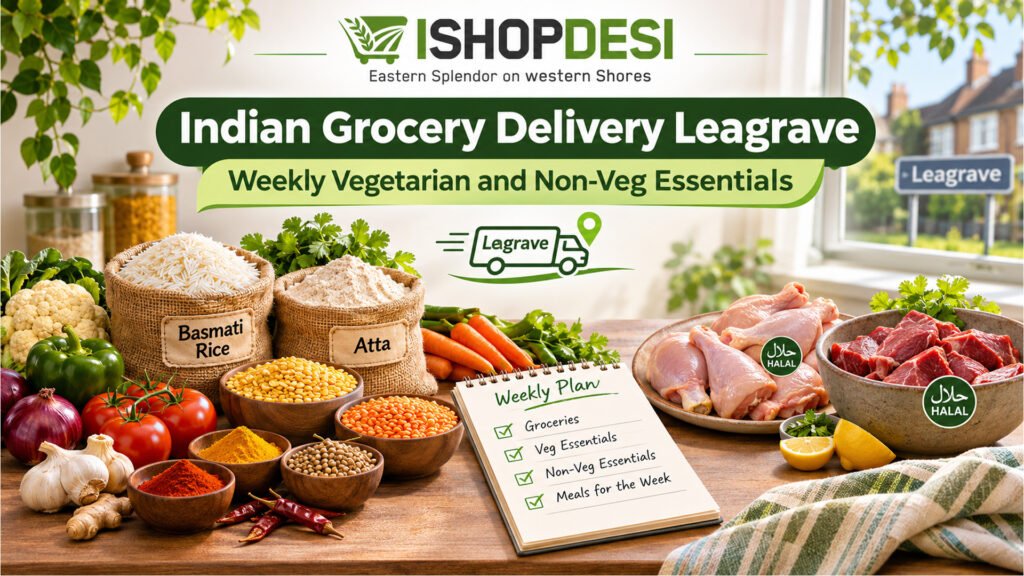
For households exploring Indian grocery delivery Leagrave, organising a weekly basket around both meal preferences can make everyday cooking more manageable.
The key is not purchasing twice as many groceries.
It’s choosing a useful combination of shared staples, suitable vegetarian ingredients and appropriate non-vegetarian products.
This guide explains how Leagrave families can make those decisions, coordinate weekly meals and shop online without unnecessary complexity.
Why Mixed Vegetarian and Non-Veg Households Need a Different Shopping Approach
Not every household follows one eating pattern.
Some families prepare vegetarian meals on particular days.
Others have household members who avoid meat entirely.
There may also be differences in religious practices, food allergies or personal preferences.
A useful grocery order should respect those differences.
Vegetarian and Non-Veg Meals Can Share Ingredients
Rice, atta, tomatoes, onions and many spices appear in both vegetarian and meat-based cooking.
This creates opportunities to choose groceries that support different meals.
For example, a suitable tomato and onion base can feature in separate chicken and chickpea recipes.
However, the recipes should be prepared and handled according to the household’s dietary requirements.
Separate Dishes May Still Be Necessary
A vegetarian family member may not consider vegetables cooked in the same pan as meat acceptable.
Others may have different standards.
The household should agree on how ingredients and equipment will be used.
Meal Planning Should Reflect Real Preferences
There is little value in buying a large packet of paneer if nobody intends to cook it.
Likewise, purchasing several meat varieties isn’t useful when only one non-vegetarian meal is planned.
The menu should guide the shopping basket.
The Three-Part Weekly Grocery Basket
A practical mixed-diet grocery order can be organised into three groups.
1. Shared Everyday Essentials
These ingredients may support both vegetarian and non-vegetarian meals.
Examples include:
- Basmati rice
- Atta flour
- Onions and tomatoes
- Ginger and garlic
- Suitable cooking oil
- Individual spices
- Fresh herbs
Their suitability depends on the recipe and any dietary requirements.
2. Vegetarian Cooking Ingredients
These might include:
- Masoor, moong or chana daal
- Chickpeas and other pulses
- Potatoes, cauliflower and spinach
- Paneer or suitable alternatives
- Additional vegetables
- Other recipe-specific ingredients
3. Non-Veg Cooking Ingredients
Depending on household preferences, these may include:
- Suitable chicken cuts
- Lamb or mutton
- Minced meat
- Fish or seafood
- Eggs
- Other appropriate products
For households requiring halal meat, the relevant sourcing information should be checked.
| Grocery category | Examples | Main shopping consideration |
|---|---|---|
| Shared staples | Rice, atta, spices | Pack sizes and existing stock |
| Vegetarian protein foods | Lentils, chickpeas, paneer | Ingredients and dietary suitability |
| Fresh produce | Tomatoes, onions, spinach | Planned meals and storage |
| Non-veg ingredients | Chicken, lamb, mince | Cut, sourcing and handling |
| Dairy | Yoghurt, milk, paneer | Refrigeration and allergens |
| Convenience foods | Suitable frozen or prepared products | Cooking instructions and ingredients |
A complete basket doesn’t need every category every week.
Choose according to the meals being prepared.
Vegetarian Essentials: More Than Just Vegetables
Vegetarian Indian cooking includes far more than vegetable curries.
Lentils, beans, paneer, grains and other foods appear across different regional cuisines.
Choosing a suitable combination can help create varied meals.
Lentils for Everyday Daal
Masoor, moong and chana are familiar ingredients.
Their textures and cooking requirements differ.
Red split masoor commonly softens relatively quickly, while chana daal usually needs a different preparation method.
Don’t assume all pulses can be used interchangeably.
For more guidance, IShopDesi’s article on daal varieties online Luton explains common options.
Chickpeas for Chana Masala
Chickpeas can provide the foundation for familiar dishes such as chana masala.
Dried and canned chickpeas have different preparation requirements.
Follow the instructions appropriate to the product.
Paneer for Selected Curries
Paneer is commonly used in dishes such as palak paneer and matar paneer.
However, it is a dairy product and may not suit people avoiding milk.
The exact texture and cooking behaviour can vary between products.
Vegetables for Different Recipes
Potatoes, cauliflower, spinach, okra and aubergine appear in a wide range of Indian dishes.
Purchase them according to the recipes and expected storage period.
The aim is to create useful meal options rather than collect several vegetables without a plan.
Non-Veg Essentials: Choose the Correct Meat or Seafood
The term non-veg covers several different food categories.
Chicken, lamb, fish and eggs have different preparation and storage requirements.
The right product depends on the intended dish.
Chicken for Curries and Grilled Dishes
Bone-in chicken may suit certain traditional curries.
Boneless breast or thigh can be used in selected tikka and other preparations.
However, cooking times and textures vary.
For practical buying considerations, IShopDesi’s guide to halal chicken delivery in Luton explains how to evaluate different cuts.
Lamb for Family Meals
Lamb shoulder, chops and curry pieces are different products.
Some cuts are appropriate for slower cooking.
Others suit different methods.
Choose according to the recipe.
Minced Meat for Keema
Minced beef or lamb can be used in selected keema preparations.
Check the meat species, fat content and halal details where relevant.
Minced meat should be cooked thoroughly.
Fish and Seafood
Fish and prawns may provide further variety.
However, different seafood products require different cooking methods.
Customers should also consider shellfish and fish allergies.
Eggs
Eggs appear in various Indian dishes.
They are also an important allergen.
Their use in a household’s vegetarian cooking depends on individual dietary definitions and preferences.
One Weekly Menu with Both Vegetarian and Non-Veg Options
A shared grocery basket works best when the meals are realistic.
There is no need to prepare two elaborate curries every evening.
Instead, families can choose complementary dishes or plan separate vegetarian and meat-based meals across the week.
| Day | Vegetarian option | Non-veg option | Shared ingredients |
|---|---|---|---|
| Monday | Masoor daal | Chicken curry | Rice, onions, spices |
| Tuesday | Aloo gobi | Chicken tikka | Chapati, salad ingredients |
| Wednesday | Chana masala | Keema | Tomatoes, ginger, garlic |
| Thursday | Vegetable pulao | Chicken pulao | Basmati, whole spices |
| Friday | Palak paneer | Lamb curry | Roti, selected aromatics |
| Weekend | Vegetable biryani | Chicken biryani | Rice and some seasonings |
These are illustrative meal ideas, not a requirement to cook both options every day.
Use Shared Accompaniments
Rice or suitable chapatis can sometimes accompany either vegetarian or meat-based dishes.
This may reduce preparation.
Avoid Making One Sauce and Assuming It Suits Everyone
A curry base prepared using meat stock or meat fat may not meet vegetarian requirements.
If sharing a base is planned, prepare it in a manner suitable for everyone before adding ingredients in separate pans.
Keep the Plan Flexible
A family may decide to prepare only a vegetarian meal on Tuesday.
Another evening might involve a single meat-based dish.
The shopping list should reflect actual plans.
Which Spices Work Across Both Meal Types?
Spices can provide some of the greatest flexibility in Indian home cooking.
Cumin, coriander, turmeric, chilli and selected whole spices appear in both vegetarian and non-vegetarian recipes.
However, their use depends on the dish.
Cumin
Whole cumin may be used for tempering.
Ground cumin provides a different preparation option.
Coriander
Ground coriander appears in numerous curry bases.
It can complement vegetables, lentils and meat dishes.
Turmeric
Turmeric contributes colour and flavour.
The amount should follow the recipe.
Garam Masala
Garam masala is a blend whose ingredients vary by manufacturer.
It may feature in different recipes, but it isn’t a universal replacement for individual spices.
Whole Spices
Cardamom, cloves, cinnamon and bay leaves can appear in rice dishes and curries.
Their quantities should be selected carefully.
For related ingredient guidance, explore IShopDesi’s article on Indian spices delivery in Leagrave.
Rice and Atta: Shared Staples That Make Meal Planning Easier
Many Indian households prepare rice, chapatis or both.
These ingredients can support a range of meals without requiring separate staple purchases for vegetarian and non-vegetarian dishes.
Basmati for Everyday Rice
Basmati can accompany daal, vegetable curries and meat dishes.
Choose the variety and preparation method appropriate to the meal.
Rice for Biryani and Pulao
Different varieties and recipes have different cooking requirements.
A rice-centred dish may need more careful liquid measurement than plain boiled rice.
For more detail, IShopDesi’s guide to buying basmati rice online in the UK explains selection and pack-size considerations.
Atta for Chapatis
Atta is commonly used for roti and chapati.
Pack size should reflect household consumption.
A family preparing chapatis frequently may use more flour than one relying mostly on rice.
Check Stock Before Buying Larger Bags
Bulk buying can sometimes reduce the price per kilogram.
But storage capacity and expected use matter.
A larger bag is only practical when the household can store and consume the product appropriately.
Fresh Produce That Supports Multiple Dishes
Fresh vegetables are often the connecting ingredients between vegetarian and non-vegetarian cooking.
However, their role changes between recipes.
Tomatoes
Tomatoes may contribute moisture and acidity to curry bases.
They can also be served fresh in salads.
Onions
Onions are used in numerous Indian preparations.
Their flavour changes depending on whether they are softened, browned or used raw.
Ginger and Garlic
These aromatics appear in many curry recipes.
Their preparation affects flavour.
Spinach
Spinach may feature in palak-based dishes.
It requires appropriate washing, storage and preparation.
Potatoes and Cauliflower
These vegetables are familiar in dishes such as aloo gobi.
Their different cooking characteristics should be considered.
For more ideas, IShopDesi’s guide to fresh vegetables online Luton explains practical produce selection.
How to Handle Vegetarian and Non-Veg Ingredients Safely
Mixed-diet households need to consider both food safety and personal dietary requirements.
Raw meat can carry harmful microorganisms.
It must not contaminate vegetables, cooked foods or other ready-to-eat ingredients.
Keep Raw Meat Separate
Store raw meat in suitable packaging away from ready-to-eat foods.
Prevent meat juices from contacting other products.
Use Clean Equipment
Wash utensils, chopping boards and preparation surfaces appropriately after handling raw meat.
Where household dietary requirements demand it, use separate equipment.
Don’t Wash Raw Chicken
Washing raw chicken can spread bacteria through splashing.
Follow appropriate UK Food Standards Agency guidance.
Prepare Vegetarian Foods Appropriately
Where strict vegetarian separation is required, avoid shared cooking fats, meat stocks or contaminated equipment.
Check Packaged Ingredients
Products described as vegetable-based may still contain dairy, eggs or other ingredients unsuitable for some dietary preferences.
Review labels.
Cook Meat Thoroughly
Follow suitable cooking instructions and food-safety guidance.
Chicken and minced meat require particular attention.
How to Keep the Weekly Grocery Order Within Budget
An order containing ingredients for different meal preferences can become expensive when quantities aren’t considered.
The most useful approach is to compare the complete basket against planned meals.
Don’t Duplicate Shared Staples
If both vegetarian and non-vegetarian dishes use basmati rice, one suitable rice purchase may be enough.
There’s no need to buy separate bags unless specific dietary or recipe requirements justify them.
Compare Pack Sizes
A larger pack may offer a lower unit price.
However, buying excessive quantities can create waste.
Choose Vegetables with Multiple Uses
Tomatoes, onions and certain other ingredients may support several recipes.
But don’t purchase more than can be used safely.
Consider Lentil-Based Meals
Lentils and pulses can provide meal variety.
Compare their prices and nutritional information according to your household’s needs.
Review Delivery Charges
Online grocery shopping should be evaluated using the complete purchase cost.
For related shopping advice, IShopDesi’s guide to Indian grocery delivery in Luton for home cooking discusses common grocery categories.
A Simple Shopping Checklist for Leagrave Families
Before checkout, ask whether the basket supports the meals planned for the week.
| Question | Why it matters |
|---|---|
| Which vegetarian meals are planned? | Identifies lentils, paneer and vegetables |
| Which non-veg meals are planned? | Helps choose appropriate meat cuts |
| Which ingredients are shared? | Reduces duplicate purchases |
| Are dietary restrictions understood? | Supports suitable food choices |
| What is already in the cupboard? | Avoids unnecessary spending |
| Can perishable products be stored safely? | Supports food safety |
| Are product quantities realistic? | Helps limit waste |
| Is delivery available for the postcode? | Confirms the ordering option |
A checklist doesn’t have to become another complicated household task.
Its purpose is to make everyday grocery decisions clearer.
Ordering Indian Groceries Online in Leagrave, Luton
For customers researching buy Indian groceries online Leagrave, online listings can provide a way to compare products before purchasing.
However, product information should be reviewed carefully.
Check Vegetarian Suitability
Not every product that appears meat-free is automatically suitable for every vegetarian diet.
Review ingredients and relevant dietary labels.
Verify Halal Details Where Required
Households purchasing halal meat should check available certification or sourcing information.
Do not rely on the product name alone.
Read Pack Weights
Rice, flour, lentils and meat may be sold in different quantities.
Choose appropriate sizes.
Review Allergens
Paneer, nuts, wheat, eggs and other ingredients may present allergy concerns.
Check Delivery Arrangements
A retailer advertising delivery in Luton may not necessarily cover every address.
Confirm service availability for the exact Leagrave postcode.
Consider Chilled and Frozen Handling
Meat, paneer and selected other products require suitable temperature control.
Check how products will be delivered and received.
How IShopDesi Can Support Vegetarian and Non-Veg Grocery Shopping
IShopDesi provides an online platform where customers can explore South Asian grocery categories and related food essentials.
For Leagrave households, the useful starting point is reviewing the products needed for familiar vegetarian and non-vegetarian meals.
Depending on current listings, shoppers may find relevant rice, lentils, spices, vegetables and meat products.
Exact availability, dietary information and delivery arrangements should be checked before ordering.
For an overview of familiar cooking staples, IShopDesi’s article on Desi supermarket shopping online in Luton explores products commonly used in South Asian kitchens.
Its guide to South Asian grocery essentials provides further context.
A well-planned basket should suit the household’s preferred meals rather than simply include as many categories as possible.
Frequently Asked Questions
Can I order vegetarian and non-veg groceries together in Leagrave?
Some online grocery retailers offer both categories. Check current product availability and delivery eligibility for the specific postcode.
Which Indian vegetarian groceries are useful every week?
Common examples include rice, atta, lentils, chickpeas, vegetables and suitable spices. The exact selection depends on the household’s meals.
What non-veg ingredients are commonly used in Indian cooking?
Chicken, lamb, fish, eggs and other products appear in various recipes. Preferences and dietary requirements differ.
Can vegetarian and chicken curries use the same spices?
Some spices are used in both, but the recipes and preparation techniques may differ.
How can I prevent cross-contamination between raw meat and vegetables?
Keep raw meat separate, clean preparation equipment properly and follow appropriate food-safety guidance.
Is paneer suitable for vegan meals?
No. Traditional paneer is made from milk. Check for suitable alternatives when preparing vegan meals.
Are all vegetable curry sauces vegetarian?
Not necessarily. Some products may contain meat stock or other animal-derived ingredients. Check the label.
Is buying Indian groceries in bulk always cheaper?
No. Compare unit prices, delivery charges, storage capacity and realistic consumption.
How can I plan meals for family members with different preferences?
Choose shared staples where suitable and prepare separate dishes or components according to each person’s dietary needs.
Can I get Indian grocery delivery in Leagrave, Luton?
You can explore online grocery platforms such as IShopDesi. Confirm current stock, prices and postcode eligibility before ordering.
Conclusion: One Grocery Basket Can Support Different Family Preferences
A household doesn’t need completely separate shopping routines simply because some family members prefer vegetarian dishes and others eat meat.
Many familiar Indian ingredients can support both styles of cooking.
Rice, flour, selected spices and vegetables offer flexibility. Lentils, chickpeas and paneer provide options for vegetarian meals, while suitable meat and seafood can support non-vegetarian dishes.
The important part is choosing products according to the actual meals and handling them appropriately.
For Leagrave households, online Indian grocery shopping can provide another way to organise these purchases when suitable products and delivery services are available.
Start with the menu, identify shared ingredients and respect individual dietary requirements.
A thoughtful weekly basket can make cooking for different preferences feel much less complicated.