
You have chopped the onions, washed the lentils and placed a saucepan on the hob. Everything seems ready for your first homemade Indian curry.
Then you open the spice cupboard.
There is a packet of turmeric, an unfamiliar jar of cumin seeds and a large container labelled garam masala. You’re not entirely sure which one goes into the pan first, how much to use or whether you need anything else.
For someone learning Indian cooking, this can be surprisingly frustrating.
Traditional recipes often mention several spices without explaining what each one contributes. Supermarket shelves can make the problem worse, with dozens of colourful packets and blends competing for attention.
Fortunately, a beginner doesn’t need every spice available.
A small collection of carefully chosen ingredients can support familiar dishes such as daal, aloo gobi, chana masala and simple chicken curry.
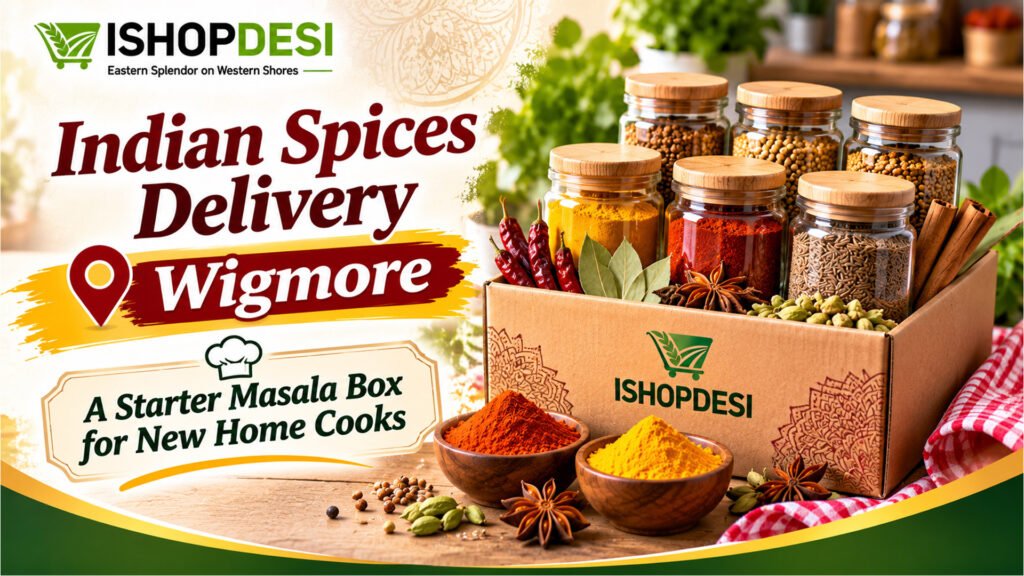
For households exploring Indian spices delivery Wigmore, the useful starting point is building a practical spice collection rather than purchasing a large assortment of unfamiliar products.
This guide explains which spices deserve a place in a beginner’s masala box, how to use them and what to check when buying Indian spices online in Luton.
What Is an Indian Masala Box?
An Indian masala box, often called a masala dabba, is a storage container traditionally used to keep frequently used spices together.
Many versions feature several small compartments inside a larger container.
The exact arrangement varies between households.
Some cooks keep individual ground spices in their masala box. Others include whole seeds or preferred everyday seasonings.
A masala box isn’t a fixed collection of ingredients.
It is a practical way to organise the spices a cook uses regularly.
Why Is a Masala Box Useful for Beginners?
A small box can help new cooks identify their essential ingredients without searching through numerous packets.
It also encourages familiarity with individual spices.
When cumin, coriander and turmeric are easy to recognise, following recipes becomes less confusing.
Do You Need a Traditional Masala Dabba?
Not necessarily.
Suitable individual containers can work perfectly well.
The important considerations are food-safe storage, clear identification and protection from moisture.
How Many Spices Should a Beginner Buy?
Six or seven carefully selected products can provide a useful starting point.
The exact selection depends on the dishes you want to prepare.
Seven Essential Indian Spices for a Beginner’s Masala Box
A practical starter collection should focus on frequently used spices that can support several different recipes.
<escape> </escape>
| Spice | Main contribution | Common beginner uses |
|---|---|---|
| Cumin seeds | Earthy, distinctive aroma | Daal tempering, vegetable dishes |
| Ground coriander | Warm, rounded flavour | Curries, chana masala |
| Turmeric powder | Colour and earthy flavour | Daal, sabzi, curries |
| Red chilli powder | Heat and flavour | Curry bases and selected snacks |
| Garam masala | Blended aromatic seasoning | Selected curries and vegetables |
| Mustard seeds | Pungent flavour when tempered | Certain regional vegetable and lentil dishes |
| Whole cardamom | Fragrant aroma | Rice dishes, chai and selected curries |
These are suggestions rather than a compulsory shopping list.
Different regional Indian cuisines use different combinations.
Someone primarily preparing North Indian curries may prioritise different spices from someone learning South Indian cooking.
For further background, IShopDesi’s guide to Indian spices online in Luton explores familiar everyday seasonings.
1. Cumin Seeds: A Useful First Spice
Cumin is one of the most versatile ingredients in many Indian kitchens.
It is available as whole seeds and ground powder.
Both forms have their uses.
Whole Cumin Seeds
Whole cumin seeds may be heated briefly in suitable oil or another cooking fat during a process commonly called tempering.
This helps develop their aroma.
The method and temperature depend on the recipe.
Ground Cumin
Ground cumin can be mixed into curry bases and other preparations.
It provides a different experience from whole seeds.
Beginner Mistake to Avoid
Do not assume whole cumin and ground cumin behave identically.
They may be used at different stages of cooking.
Follow the quantities and method specified by the recipe.
2. Ground Coriander: A Familiar Curry Ingredient
Ground coriander is another useful seasoning for beginners.
It appears in numerous Indian and Pakistani recipes.
Its flavour is different from fresh coriander leaves.
Ground Coriander vs Fresh Coriander
Ground coriander comes from dried coriander seeds.
Fresh coriander refers to the leaves and stems of the plant.
They have different culinary roles.
Where Is Ground Coriander Used?
It may appear in:
- Vegetable curries
- Chickpea dishes
- Chicken curries
- Selected lentil preparations
- Potato-based recipes
How Much Should You Add?
Start with the quantities recommended by a trusted recipe.
The correct amount depends on the other ingredients and intended flavour.
Adding more doesn’t automatically improve the dish.
3. Turmeric: More Than Just Colour
Turmeric is widely recognised for its yellow colour.
It also contributes an earthy flavour to many savoury dishes.
Common Uses
Turmeric may be included in daal, vegetable curries and selected rice preparations.
However, not every Indian dish requires turmeric.
Ground Turmeric vs Fresh Turmeric
Fresh and dried turmeric have different forms and preparation requirements.
For a basic spice collection, ground turmeric may be the more familiar option.
Avoid Using Excessive Quantities
Too much turmeric can produce an unbalanced flavour.
Follow the recipe.
Does Turmeric Make Food Healthier?
Turmeric is a culinary ingredient, not a substitute for medical treatment.
Health claims should not be assumed from its traditional use.
4. Red Chilli Powder: Choosing Your Preferred Heat
Chilli powder is another ingredient that can confuse beginners.
Different products vary in heat, flavour and colour.
Some are intensely hot.
Others are selected partly for their colouring properties.
Check the Product Description
A chilli powder’s appearance doesn’t reliably indicate how hot it will taste.
Start with a Small Amount
If you’re unfamiliar with a particular chilli powder, follow a mild recipe and adjust cautiously.
Cooking for Children or Guests
Some people prefer very little chilli.
Prepare dishes according to the diners’ preferences.
Chilli Powder vs Chilli Flakes
These products have different textures and culinary applications.
They are not necessarily interchangeable in identical quantities.
5. Garam Masala: Understanding the Blend
Garam masala is a familiar seasoning in Indian and Pakistani kitchens.
Unlike cumin or turmeric, it is not a single spice.
It is a mixture.
The ingredients vary by manufacturer and regional preference.
Common blends may contain selected combinations of cumin, coriander, cardamom, cloves, cinnamon, black pepper or other spices.
When Is Garam Masala Added?
Different recipes add garam masala at different stages.
Some use it during cooking.
Others incorporate it near the end.
Can Garam Masala Replace Every Other Spice?
No.
A prepared blend cannot automatically replace the individual seasonings required by a particular recipe.
Is Every Brand the Same?
No.
Garam masala blends can differ significantly.
Check the ingredients and recommended use.
For more detail, explore IShopDesi’s guide to buying garam masala online in Luton.
6. Mustard Seeds: A Useful Regional Ingredient
Mustard seeds appear in several Indian cooking traditions.
They are often used in tempering for selected vegetable and lentil preparations.
However, their use varies considerably by region and recipe.
Black and Yellow Mustard Seeds
Different varieties have different characteristics.
Use the form recommended by the recipe.
How Are Mustard Seeds Prepared?
Some recipes heat mustard seeds in oil until they begin to pop.
This process requires care because hot oil and popping seeds can cause splashes.
Follow a suitable recipe and use appropriate cookware.
Do Beginners Need Mustard Seeds Immediately?
Not necessarily.
If the recipes you’re learning don’t use them, you can add mustard seeds to your collection later.
A starter masala box should reflect what you actually cook.
7. Cardamom: From Rice Dishes to Masala Chai
Cardamom contributes a distinctive fragrance to selected Indian preparations.
It is especially familiar in aromatic rice dishes, chai and certain desserts.
Green Cardamom
Green cardamom is used in sweet and savoury recipes.
Depending on the preparation, the pods may be lightly crushed or used in another form.
Black Cardamom
Black cardamom has different flavour characteristics.
It is commonly associated with selected savoury preparations.
Can You Substitute One for the Other?
Not automatically.
Green and black cardamom have different flavour profiles.
Whole Pods vs Ground Cardamom
Ground cardamom disperses differently through food and drinks.
Follow the recipe’s preferred form and quantity.
Whole Spices vs Ground Spices: Which Should Beginners Buy?
This is one of the most useful distinctions to understand when learning Indian cooking.
Whole spices and ground spices can provide different flavours and preparation experiences.
| Consideration | Whole spices | Ground spices |
|---|---|---|
| Form | Seeds, pods, bark or other whole parts | Finely ground |
| Preparation | May be tempered or infused | Often mixed into dishes |
| Measuring | Counted or measured according to recipe | Usually measured by volume or weight |
| Storage | Quality depends on conditions and age | Aroma can decline after grinding |
| Common examples | Cumin seeds, cardamom pods, cloves | Turmeric, coriander powder, chilli powder |
Are Whole Spices Always Better?
No.
The appropriate form depends on the recipe.
Some preparations specifically require ground seasonings.
Should You Grind Everything Yourself?
Not necessarily.
Pre-ground spices can be convenient.
A beginner can use them successfully by following suitable recipes.
Should You Buy Both Forms?
Only when recipes regularly require them.
For example, whole cumin seeds and ground cumin can both be useful.
But purchasing every spice twice is unnecessary.
How Do Indian Spices Create Different Flavours?
One of the most interesting parts of Indian cooking is understanding how spices work together.
A single spice can contribute flavour, but the finished dish depends on the complete combination of ingredients.
Tempering
Tempering, often called tadka or tarka, involves heating selected spices in fat according to a recipe.
The technique is commonly used in certain lentil and vegetable preparations.
Cooking a Curry Base
Some curry recipes begin by preparing onions, ginger, garlic and tomatoes.
Ground spices may be incorporated during a particular stage.
Finishing with Aromatic Seasonings
Some recipes use garam masala or fresh herbs towards the end.
However, this is not a universal rule.
Why the Order Matters
Spices react differently to heat and moisture.
Adding a spice too early or heating it excessively may produce an undesirable flavour.
Follow the method rather than adding everything at once.
Three Simple Indian Dishes to Practise with Your Starter Masala Box
A beginner doesn’t need to attempt a complicated restaurant-style curry immediately.
Start with familiar dishes that use a manageable number of ingredients.
Recipe Idea 1: Simple Masoor Daal
Masoor daal is a familiar dish made using red split lentils.
A basic recipe may include:
- Masoor daal
- Turmeric
- Cumin
- Onion
- Garlic
- Suitable cooking oil
- Water
- Salt, according to the recipe
Some variations also use tomatoes, chilli or fresh coriander.
Follow an appropriate recipe for rinsing, cooking and seasoning the lentils.
What you learn: How turmeric contributes colour and how cumin can work in a tempering.
Recipe Idea 2: Aloo Gobi
Aloo gobi combines potatoes and cauliflower.
Different recipes may include:
- Potatoes
- Cauliflower
- Cumin
- Ground coriander
- Turmeric
- Chilli
- Ginger
- Other recipe-specific ingredients
The vegetables require different cooking considerations.
What you learn: How several ground spices can work together in a vegetable dish.
Recipe Idea 3: Chana Masala
Chana masala is a familiar chickpea preparation.
Depending on the recipe, it may contain:
- Cooked chickpeas
- Onions
- Tomatoes
- Ginger and garlic
- Cumin
- Ground coriander
- Garam masala
- Other suitable seasonings
Dried chickpeas require appropriate soaking and cooking, while canned chickpeas have different preparation requirements.
What you learn: How a curry base and spice blend contribute to a complete dish.
For more ingredient ideas, IShopDesi’s guide to Indian grocery delivery in Luton for home cooking explores useful shopping essentials.
A Beginner’s Seven-Day Indian Cooking Practice Plan
Learning one preparation method at a time can make Indian home cooking less intimidating.
The following plan provides a simple progression.
| Day | Cooking focus | Skill to practise |
|---|---|---|
| Monday | Masoor daal | Using turmeric and cumin |
| Tuesday | Aloo gobi | Combining ground spices |
| Wednesday | Plain basmati rice | Following rice instructions |
| Thursday | Chana masala | Preparing a curry base |
| Friday | Simple vegetable curry | Adjusting spice balance |
| Saturday | Suitable chicken curry or another vegetarian dish | Following a complete recipe |
| Sunday | Masala chai | Infusing cardamom and selected spices |
This is a learning framework rather than a prescribed menu.
It can be adjusted according to dietary requirements and available ingredients.
Don’t Try to Master Every Dish at Once
Start with one or two recipes.
Once you understand their techniques, expand gradually.
Keep Notes
You may find that a particular chilli powder is hotter than expected or that a certain recipe suits your tastes.
Recording those observations can help you cook more confidently.
Repeat Familiar Recipes
Preparing the same dish several times can develop cooking skills more effectively than constantly trying unfamiliar recipes.
What Else Belongs in a Beginner’s Indian Grocery Basket?
Spices are only part of the cooking process.
Many traditional dishes also rely on familiar staples and fresh ingredients.
Basmati Rice
Basmati rice can accompany curries, lentils and other dishes.
Choose a product suited to the intended preparation.
Daal and Pulses
Masoor, moong and chana are familiar examples.
Their cooking requirements differ.
Atta Flour
Atta is used for chapatis and selected other flatbreads.
Onions, Tomatoes and Garlic
These ingredients form part of numerous savoury dishes.
Fresh Ginger and Coriander
Fresh aromatics and herbs contribute different flavours from dried spices.
Suitable Cooking Oil
Choose an appropriate cooking oil for the intended method.
For help organising everyday ingredients, IShopDesi’s guide to Desi supermarket shopping in Luton explores familiar grocery categories.
How Much Spice Should a Beginner Buy?
Large spice packets can look economical.
However, ground spices may lose aromatic quality over time.
Buying quantities much larger than a household can use may not offer good value.
Start with Smaller Packs Where Available
Smaller quantities may be practical when trying unfamiliar seasonings.
Prioritise Frequently Used Spices
Cumin, coriander and turmeric may appear regularly in the recipes you prepare.
A speciality spice used once every few months may not need a large pack.
Check the Price Per Gram
Pack sizes can vary between manufacturers.
Compare equivalent products.
Consider Storage Capacity
A spice collection needs suitable space away from excess heat and moisture.
Avoid Buying Every Recipe Masala
Prepared biryani, karahi, nihari and other blends have different uses.
Choose them when a particular recipe requires them.
How to Store Indian Spices Properly
Correct storage helps maintain the quality of a spice collection.
However, storing spices beside a hot hob or in damp conditions can affect them.
Keep Spices Away from Moisture
Moisture can cause clumping and deterioration.
Use suitable dry utensils when measuring.
Limit Heat Exposure
Avoid storing spices in locations exposed to excessive heat.
Protect Against Direct Sunlight
Follow product storage guidance and use appropriate containers.
Keep Containers Clearly Labelled
Turmeric and some chilli products may be visually distinctive, but not all ground spices are easy to identify.
Labels help prevent mistakes.
Retain Product Information
Where spices are transferred into another container, keep relevant ingredient, allergen and date information.
Check Their Condition
If a spice shows signs of contamination, mould or other deterioration, don’t use it.
For further masala-shelf organisation ideas, explore IShopDesi’s article on Indian spices delivery in Leagrave.
Seven Common Mistakes New Indian Home Cooks Make
Mistake 1: Adding Every Spice Available
A large number of spices doesn’t automatically create a better dish.
Better approach: Follow the recipe’s intended combination.
Mistake 2: Confusing Whole and Ground Spices
Different forms behave differently during cooking.
Better approach: Check the exact type required.
Mistake 3: Overusing Chilli Powder
Some chilli products can be very hot.
Better approach: Begin with an appropriate quantity for the recipe.
Mistake 4: Treating Garam Masala as a Universal Seasoning
Garam masala cannot replace every other spice.
Better approach: Use it where the recipe requires it.
Mistake 5: Burning Spices During Tempering
Excessive heat can damage flavour.
Better approach: Follow suitable temperature and timing guidance.
Mistake 6: Buying Too Many Large Packets
Products may remain unused and lose aroma over time.
Better approach: Match pack sizes to realistic consumption.
Mistake 7: Forgetting the Main Ingredients
Spices alone won’t create a complete meal.
Better approach: Review the rice, lentils, vegetables and other ingredients before shopping.
How to Build a Practical Starter Masala Box on a Budget
A beginner’s spice box doesn’t need to be expensive or elaborate.
It should contain useful products.
One approach is to build the collection gradually.
Stage One: Everyday Foundations
Start with:
- Cumin seeds
- Ground coriander
- Turmeric
- A suitable chilli powder
These ingredients can support selected simple recipes.
Stage Two: Additional Aroma
Consider:
- Garam masala
- Green cardamom
- Another spice required by a frequently prepared dish
Stage Three: Recipe-Specific Ingredients
Add other whole spices, mustard seeds or prepared recipe masalas as needed.
The most important principle is to choose products according to actual cooking habits.
Buying Indian Spices Online in Wigmore, Luton
For customers researching buy Indian spices online Wigmore Luton, online grocery listings can provide a convenient way to compare spice formats and pack sizes.
However, shoppers should examine more than the product photograph.
Confirm the Exact Spice
Whole cumin and ground cumin are different products.
Likewise, coriander seeds and ground coriander have different uses.
Review the Pack Weight
Spices may be sold in small sachets, jars or larger bags.
Check Ingredients
Some seasoning products are blends rather than single spices.
Look for Allergen Information
Prepared masalas may contain additional ingredients or carry relevant warnings.
Compare Similar Products
A single spice should not automatically be compared with a blended seasoning.
Check Current Stock
Product availability can change.
Confirm Delivery Eligibility
Delivery coverage should be checked for the specific Wigmore postcode.
For shoppers researching Indian masala delivery Luton, these simple checks can reduce the chance of ordering an unsuitable product.
How IShopDesi Can Support Beginner Indian Home Cooks
IShopDesi provides an online platform for exploring South Asian groceries and traditional cooking ingredients.
For someone beginning Indian cooking in Wigmore, a sensible approach is to start with a small list of familiar seasonings.
Depending on current listings, customers may be able to explore cumin, coriander, turmeric, chilli powder, garam masala and other relevant ingredients.
The exact products, pack sizes and delivery arrangements should be confirmed before purchasing.
IShopDesi’s guide to Pakistani spices online in the UK provides additional information about familiar Desi kitchen spices.
Its article on shopping for Indian groceries online in Luton also offers guidance on combining spices with other everyday ingredients.
A useful first order should support two or three recipes you genuinely want to cook.
You can gradually expand the collection as your confidence grows.
Frequently Asked Questions
Can I order Indian spices online in Wigmore, Luton?
You can explore South Asian grocery retailers such as IShopDesi. Confirm current spice availability and delivery eligibility for your Wigmore postcode.
What are the most important Indian spices for beginners?
Cumin, ground coriander, turmeric, chilli powder and garam masala are useful starting points for many familiar recipes.
Do I need a traditional masala dabba?
No. Suitable individual food-safe containers can also be used to organise spices.
What is the difference between cumin seeds and cumin powder?
Cumin seeds are the whole form, while cumin powder is ground. Recipes may use them differently.
Is garam masala the same as curry powder?
No. Both are seasoning blends, but their ingredients and intended uses vary.
Can I use whole spices instead of ground spices?
Not automatically. Whole and ground spices behave differently. Follow an appropriate recipe.
How should Indian spices be stored?
Follow product instructions and protect spices from moisture, excessive heat and direct sunlight.
Can beginners cook Indian food with only five spices?
Yes. Many straightforward recipes can be prepared using a small selection of seasonings alongside suitable main ingredients.
What is the difference between coriander powder and fresh coriander?
Ground coriander is made from dried seeds, while fresh coriander refers to the leaves and stems. They have different culinary uses.
Should I buy a large Indian spice starter kit?
Only when the products suit your cooking plans. Starting with a few useful spices may be more practical.
Can recipe masala packets replace individual spices?
They can simplify selected recipes but do not automatically replace every spice required by other dishes.
Does IShopDesi deliver Indian spices in Wigmore?
Check the current product listings and delivery eligibility for your exact Wigmore address before ordering.
Conclusion: Start Small and Build Your Indian Spice Collection with Confidence
Learning Indian cooking doesn’t require a cupboard full of expensive spices.
A few carefully selected seasonings can provide the foundation for familiar home-cooked dishes.
Cumin introduces a distinctive aroma. Ground coriander adds flavour to curry bases. Turmeric contributes colour, while chilli allows cooks to adjust heat.
Garam masala and whole cardamom can expand the range of dishes as your confidence grows.
For Wigmore households, online Indian spice shopping can provide another way to explore these ingredients when suitable products and delivery services are available.
Choose two or three recipes to begin with, identify the spices they require and purchase manageable quantities.
As you cook more often, your masala box can grow alongside your skills.
The goal isn’t to own every spice.
It’s to understand the ones you use and enjoy making food with them.