The masala is ready. The onions have turned a beautiful golden brown, the ginger and garlic have lost their raw sharpness, and the kitchen smells exactly as it should.
Yet something isn’t quite right.
The lamb has been cooking for ages, but the pieces still feel firm. You’ve followed the recipe, added the right spices and kept an eye on the sauce. So why isn’t the meat turning out the way you expected?
Sometimes, the answer has less to do with the recipe and more to do with the cut of lamb sitting in the pan.
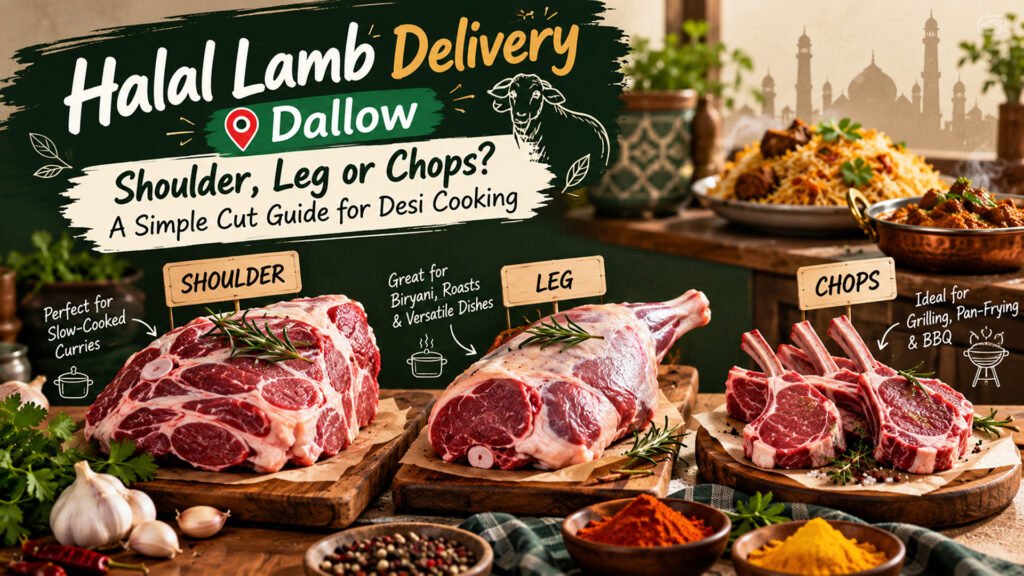
Shoulder, leg and chops may all come from the same animal, but they don’t behave alike when exposed to heat. Each has its own texture, fat distribution and cooking requirements.
For home cooks exploring halal lamb delivery Dallow, understanding these differences can make choosing meat considerably easier.
Rather than picking a cut and hoping it works, you can start with the dish you want to prepare and choose the lamb that suits it.
Shoulder, Leg and Chops: What Actually Makes Them Different?
The easiest way to understand lamb cuts is to consider how much work the muscles do.
Different parts of the animal contain different amounts of connective tissue and fat. These characteristics influence tenderness, cooking time and the methods that produce the best results.
Lamb Shoulder: A Cut That Rewards Patience
Shoulder contains connective tissue that benefits from longer cooking.
When prepared with sufficient moisture and appropriate heat, the collagen in that connective tissue gradually breaks down, helping the meat become tender.
This makes shoulder particularly suitable for braised dishes, slow-cooked curries and recipes where the lamb spends time simmering in a sauce.
It isn’t necessarily the cut to choose when you want dinner ready in a few minutes.
But when the cooking method allows enough time, shoulder can produce a wonderfully satisfying result.
Lamb Leg: Versatile, but Not Indestructible
Leg is commonly associated with roasting, although it can also be diced for selected curries and rice dishes.
It generally has a different balance of lean meat and connective tissue from shoulder.
That means the cooking method matters.
A whole leg joint needs a different approach from small boneless cubes. Similarly, a recipe designed for slow-braised shoulder may not produce the same texture when prepared with lean diced leg.
Leg offers flexibility, provided you match its preparation to the dish.
Lamb Chops: Built for a Different Kind of Cooking
Chops are usually portions cut from areas such as the loin or rib, although chop styles vary.
They’re often well suited to grilling, pan-frying and oven cooking.
Unlike a shoulder curry, which benefits from extended moist heat, many chop recipes depend on controlled cooking that develops colour without unnecessarily drying the meat.
Thickness is particularly important.
A thin chop and a thick chop cannot be expected to cook at the same speed.
Why Lamb Shoulder Works So Well in Slow-Cooked Desi Curries
Think of a traditional lamb curry with onions, tomatoes, warming spices and a sauce that gradually develops as the meat cooks.
This is the sort of preparation where shoulder can be especially useful.
The cooking liquid helps maintain moisture while the connective tissue has time to soften.
Don’t Rush the Tenderness
One common mistake is increasing the heat dramatically when the meat hasn’t softened.
A harder boil doesn’t automatically produce tender lamb faster.
Instead, the sauce may reduce too quickly, leaving you repeatedly adding water while the meat still needs more cooking.
Gentle simmering, adequate moisture and enough time generally make more sense for a shoulder-based curry.
Cooking time will vary with the size of the pieces, the particular cut and the equipment you’re using.
Bone-In or Boneless Shoulder?
Both can work, but they serve slightly different preferences.
Bone-in shoulder pieces are familiar in many South Asian curries. However, part of the pack weight comes from the bones, so portion planning needs to account for that.
Boneless shoulder can be easier to serve and may offer more uniform pieces, depending on how it has been prepared.
If you’re choosing halal lamb shoulder for curry, check the product description for bone content and cutting style before making a decision.
A kilogram of bone-in lamb doesn’t provide the same amount of edible meat as a kilogram of boneless lamb.
Let the Sauce and Meat Finish Together
Another useful technique is to monitor the meat and the masala separately.
If the sauce is thickening before the shoulder becomes tender, you may need to adjust the liquid and heat.
The aim is to avoid a dry, heavily reduced sauce surrounding meat that still needs time.
For a broader look at available lamb-shopping considerations, IShopDesi’s guide to halal lamb delivery Luton provides related information.
Lamb Leg: More Than a Sunday Roast
A leg of lamb can make an impressive centrepiece, but its usefulness doesn’t stop at roasting.
In South Asian cooking, suitable leg portions can be used in spiced preparations, selected curries and rice dishes.
The important distinction is between the cut itself and the way it has been prepared.
Whole Leg and Diced Leg Need Different Treatment
A whole roasting joint has a different cooking requirement from small pieces of lamb.
You cannot simply transfer the timing from one preparation to another.
Diced leg may cook relatively evenly when the pieces are similar in size, but the final texture depends on the recipe, cooking temperature and moisture.
A leaner cut can become dry if cooked excessively without an appropriate method.
Can You Use Lamb Leg for Biryani?
Yes, suitable leg pieces can work in lamb biryani.
However, the meat preparation is particularly important.
In many traditional biryani methods, the lamb is cooked or partially cooked before the rice is layered, depending on the recipe.
The meat needs to reach the correct stage for that method. Otherwise, you risk finishing with beautifully cooked rice and lamb that still requires attention.
When considering lamb leg for biryani, look at whether the product is sold as a whole joint, boneless cubes or another preparation.
The label lamb leg alone doesn’t tell you everything about how it should be cooked.
What About Shoulder for Biryani?
Shoulder can also be suitable, particularly in recipes that allow sufficient time for the meat to soften.
This is why there isn’t one universal answer to the question of which lamb cut makes the best biryani.
The recipe’s method matters as much as the cut.
Lamb Chops Deserve Their Own Cooking Rules
Lamb chops sometimes get treated as though they’re simply smaller pieces of curry meat.
That approach overlooks what makes them appealing.
A well-prepared chop can develop a beautifully browned exterior while retaining a pleasant texture inside.
The trick is choosing a cooking method suited to its thickness and cut.
Pakistani-Style Masala Chops
Ginger, garlic, yoghurt and a carefully balanced spice mixture can work beautifully with lamb chops.
The marinade can contribute flavour and help create an appealing surface during cooking.
However, a strongly flavoured marinade won’t compensate for poor temperature control.
If the pan is too hot, the outside may brown excessively before a thick chop is cooked appropriately.
If the heat is too low, you may struggle to achieve the desired colour.
Pan, Grill or Oven?
Each method has advantages.
Pan-frying gives you direct control and makes it easy to observe browning.
Grilling can produce an appealing exterior and works well when the heat is managed carefully.
Oven cooking may be useful for thicker portions or when preparing several chops together.
The appropriate method depends on the particular chop, its thickness and the result you want.
Why Thickness Changes Everything
Thin chops generally require less cooking time than thick ones.
For consistent results, try to choose pieces of similar thickness when preparing several portions together.
Use a suitable food thermometer and follow current UK food-safety guidance for safe cooking, rather than judging doneness from colour alone.
If you’re exploring halal lamb chops online Luton, the cut style, pack quantity and any available thickness information are worth checking.
For seasoning inspiration, IShopDesi’s guide to Pakistani spices can help you understand the ingredients commonly used in traditional cooking.
Three Desi Dishes, Three Different Lamb Decisions
Let’s make the comparison practical.
Imagine you’re choosing lamb for one of three meals: a slow curry, biryani or spiced chops.
Each dish creates a different set of requirements.
Dish One: A Rich, Slow-Cooked Lamb Curry
Consider: Shoulder.
A moist cooking method gives shoulder’s connective tissue time to soften.
Bone-in or boneless pieces can both be appropriate, depending on your preference.
The key is allowing the lamb to reach the desired tenderness without reducing the sauce too aggressively.
Dish Two: Lamb Biryani for a Family Gathering
Consider: Suitable diced leg or shoulder.
The decision depends on the recipe and how the lamb is cooked before or during the rice preparation.
Uniform pieces can help with more consistent cooking.
Check the recipe before deciding which cut to purchase.
Dish Three: Spiced Lamb Chops
Consider: Chops of suitable thickness.
A flavourful marinade and controlled heat are more relevant here than prolonged simmering.
Avoid treating chops as interchangeable with diced curry meat.
Quick Lamb-Cut Comparison
| Dish | Cut to consider | What matters most |
| Slow lamb curry | Shoulder | Moisture and sufficient cooking time |
| Lamb biryani | Diced leg or shoulder | Meat preparation before rice is finished |
| Masala lamb chops | Rib or loin chops | Thickness and heat control |
| Whole roasted lamb | Suitable leg joint | Joint size and roasting method |
| Braised lamb | Shoulder | Gentle cooking and adequate liquid |
This isn’t a set of rigid rules. Different regional recipes use lamb in different ways.
It’s a starting point for making better decisions.
Five Mistakes That Can Spoil an Otherwise Good Lamb Dish
Sometimes the biggest improvement comes from recognising what went wrong.
Mistake 1: Choosing a Cut Without Considering the Cooking Method
The problem: A recipe requires slow cooking, but the chosen meat is better suited to a different preparation.
A better approach: Read the recipe first and identify whether it needs braising, roasting, grilling or another method.
Mistake 2: Expecting Shoulder to Soften Immediately
The problem: The lamb remains firm, so the heat is increased dramatically.
A better approach: Allow adequate time at an appropriate cooking temperature and maintain enough moisture.
Mistake 3: Using Unevenly Sized Pieces
The problem: Small pieces are ready while larger ones need more cooking.
A better approach: Choose reasonably consistent portions where the recipe benefits from even cooking.
Mistake 4: Letting the Masala Dry Out Too Early
The problem: The sauce has reduced before the lamb reaches the desired tenderness.
A better approach: Monitor the liquid level and adjust the cooking process instead of simply increasing the heat.
Mistake 5: Assuming Browned Meat Is Fully Cooked
The problem: The surface looks ready, but the centre may not have reached a safe temperature.
A better approach: Use a food thermometer where appropriate and follow reliable food-safety instructions.
Good lamb cooking involves more than seasoning. Timing, moisture, cut selection and safe preparation all play a part.
Lamb and Mutton Aren’t the Same Thing
In everyday South Asian conversation, the terms lamb, mutton and sometimes even meat may be used loosely.
But the distinction matters when following a recipe.
Lamb comes from a younger sheep, while mutton refers to meat from an older sheep.
Mutton typically has a more pronounced flavour and may require different cooking considerations.
If a recipe specifically calls for mutton, substituting lamb can change the result.
That doesn’t necessarily make the dish worse, but it may not taste or cook exactly as intended.
For recipes built around older sheep meat, IShopDesi’s article on halal mutton delivery Luton offers a useful related perspective.
What to Check Before Ordering Halal Lamb in Dallow
Once you know which cut suits your recipe, the shopping decision becomes more focused.
Instead of browsing every lamb product, you can concentrate on a few practical details.
Identify the Exact Cut
Check whether the listing specifies shoulder, leg, chops or another cut.
If the description is unclear, seek clarification before purchasing.
Check Bone Content and Preparation
Look for information about whether the lamb is bone-in or boneless, diced or whole, and how it has been portioned.
For chops, the cut style can be particularly relevant.
Understand the Pack Weight
The amount you need depends on the dish, number of servings, bone content and accompanying foods.
Avoid treating all pack weights as equivalent in terms of edible portions.
Review Halal Information
Customers may have particular requirements concerning halal sourcing or certification.
Check the information supplied by the seller and ask questions where necessary.
Don’t assume that every retailer follows identical practices.
Confirm Storage and Delivery Details
Review whether the product is fresh, chilled or frozen and follow the relevant storage instructions.
IShopDesi’s article on how to store halal meat after delivery provides further reading on handling meat once it arrives.
When planning to buy halal lamb online Dallow, also confirm current product availability and delivery eligibility for your address.
Exploring Lamb and Cooking Ingredients Through IShopDesi
Choosing the right cut is easier when you already know what you’re preparing.
For a shoulder curry, you might need onions, tomatoes, ginger, garlic and the spices used in your preferred recipe.
For biryani, the ingredient selection may include suitable rice, whole spices, yoghurt and fresh herbs.
For lamb chops, the focus shifts towards marinade ingredients and the cooking method.
IShopDesi offers an online platform for exploring available halal meat and South Asian grocery products, allowing customers to consider the ingredients needed for a particular dish.
Before ordering, review the current product descriptions, pack sizes, preparation details and delivery conditions.
If you’re uncertain about halal sourcing, cuts or other purchasing considerations, the IShopDesi halal meat buying guide provides additional information.
The most useful purchase is the one that matches the recipe you’re actually going to cook.
Frequently Asked Questions
Which lamb cut is best for Pakistani curry?
Shoulder is often a good choice for slow-cooked Pakistani curries because its connective tissue benefits from moist cooking over time. Other cuts may also work when the recipe and method are adjusted appropriately.
Is lamb shoulder better than lamb leg for slow cooking?
Shoulder is particularly well suited to many slow-cooking methods. Leg can also be prepared in various ways, but the result depends on whether it’s a whole joint, diced meat or another preparation.
Can I use lamb leg for biryani?
Yes. Suitable leg portions can be used in biryani, provided the meat is prepared according to the recipe and reaches the required stage of cooking before the dish is finished.
Are lamb chops suitable for Pakistani-style marinades?
Yes. Lamb chops can be marinated with ingredients such as yoghurt, ginger, garlic and spices. Cooking time and heat should be adjusted to the thickness and type of chop.
What is the difference between lamb shoulder and lamb leg?
Shoulder generally contains more connective tissue suited to extended moist cooking. Leg is often leaner and is commonly used for roasting or diced preparations. Both require an appropriate cooking method.
Should I choose bone-in or boneless lamb for curry?
Either can be suitable. Bone-in pieces are common in traditional curries, while boneless portions may be easier to serve. Remember that bone contributes to the stated pack weight.
Why does lamb sometimes remain tough after cooking?
Possible reasons include choosing a cut that needs more time, using an unsuitable cooking method or allowing the liquid to reduce too quickly. The correct adjustment depends on the cut and recipe.
Can I order halal lamb online in Dallow, Luton?
You can explore online halal meat services, including IShopDesi. Check current lamb listings, delivery coverage for your Dallow postcode and any applicable ordering conditions before purchasing.
Conclusion: Choose the Lamb That Makes Sense for the Dish
A fragrant masala can bring wonderful flavour to a meal, but it can’t make every lamb cut behave in exactly the same way.
Shoulder benefits from patience. Leg offers versatility when prepared appropriately. Chops call for a different approach, where thickness and controlled heat become especially important.
Understanding those distinctions changes how you read recipes and how you select meat.
Instead of wondering whether a particular lamb product will work, you can look at the cooking method and make a more informed choice.
For Dallow households considering the available options through IShopDesi, that knowledge provides a useful starting point.
The spices still matter, of course. But before the first onion goes into the pan, make sure you’ve chosen the lamb the dish deserves.