One piece of lamb can tell you very little about the dinner it will become.
Put it into a karahi, and the aim may be tender meat coated in a concentrated tomato-based masala. Cook it with rice, and the challenge changes: now the lamb needs to work alongside fragrant grains without leaving them undercooked or excessively soft.
Roast the meat instead, and you’re dealing with a completely different set of decisions involving cut, temperature, cooking time and carving.
All three meals can be enjoyable. None should be prepared in exactly the same way.
That difference is worth understanding before buying the meat.
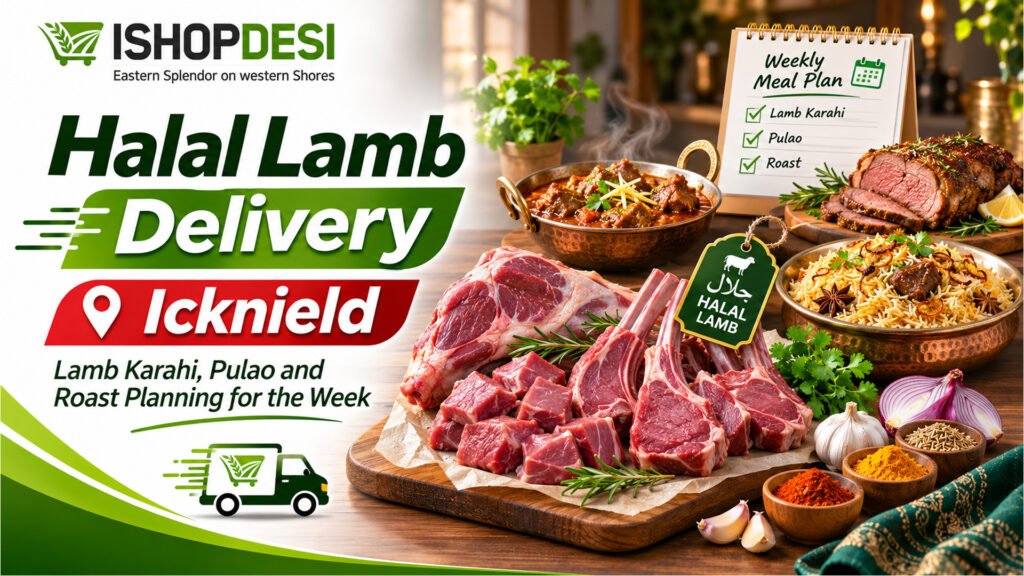
For households exploring halal lamb delivery Icknield, choosing lamb according to the week’s intended dishes can make home cooking more manageable.
Rather than buying one large pack and deciding what to do with it afterwards, consider which meals you want to prepare, how each recipe uses the meat and whether the quantities suit your household.
A thoughtful approach allows you to enjoy different lamb preparations without relying on the same curry several evenings in a row.
Three Lamb Dinners, Three Different Cooking Decisions
Karahi, pulao and roast lamb all involve the same basic ingredient, but their preparation requirements differ considerably.
The cooking method influences which cut to choose, how the meat should be prepared and what other ingredients are needed.
| Dish | Lamb to consider | Cooking priority | Main challenge |
|---|---|---|---|
| Lamb karahi | Suitable bone-in or boneless curry cuts | Developing the masala while tenderising the meat | Avoiding tough lamb or watery gravy |
| Lamb pulao | Lamb pieces appropriate for simmering | Coordinating meat, stock and rice | Getting the rice texture right |
| Roast lamb | Leg, shoulder or another suitable roasting cut | Managing heat and internal temperature | Cooking the cut appropriately |
These are general examples, not universal rules.
Regional recipes differ, and some cuts may require different preparation methods.
The important point is that the recipe should determine the purchase.
Why Buying One Cut for Everything Can Be Frustrating
A shoulder cut containing connective tissue may perform well in a suitable slow-cooked preparation.
A leaner cut intended for quicker cooking may behave differently.
Similarly, a whole roasting joint cannot always be substituted directly into a recipe designed for small curry pieces.
When selecting meat, think beyond the animal species.
The cut, bone content, thickness and intended cooking method all matter.
Lamb Karahi: Getting the Meat and Masala to Work Together
A well-prepared lamb karahi can have a distinctive balance of tender meat, tomatoes, ginger, garlic and selected seasonings.
However, recipes vary.
Some use bone-in pieces, while others call for boneless lamb. Cooking times and gravy consistency also differ.
The challenge is ensuring the meat becomes tender without allowing the masala to lose its intended character.
Choosing Lamb for Karahi
Lamb cuts used for curry should be suitable for the cooking method.
Some shoulder-region pieces can work well in recipes that allow enough time for connective tissue to soften.
Other recipes may specify different cuts.
If you’re purchasing prepared lamb pieces, check whether they are bone-in or boneless.
That distinction affects portioning and cooking.
For more information on lamb selection, IShopDesi’s guide to halal lamb delivery in Luton explores suitable meat and accompanying grocery ingredients.
Why the Tomato Base Matters
Tomatoes contribute moisture, acidity and flavour to many karahi preparations.
But adding more tomatoes does not automatically improve the dish.
A recipe designed for a concentrated masala may require the mixture to reduce to a particular consistency.
Excess liquid can make the finished preparation noticeably different.
Follow the recipe’s cooking stages rather than trying to shorten the process by increasing the heat.
Ginger and Garlic Need Balance
Fresh ginger and garlic are familiar ingredients in South Asian meat dishes.
Their proportions influence the finished flavour.
Some karahi recipes also use sliced ginger as a finishing garnish.
However, strong aromatics can overwhelm a dish when added without considering the recipe.
Choose quantities that suit the preparation and household preferences.
When Is Lamb Karahi Ready?
The gravy’s appearance is not a reliable indicator that the meat has finished cooking.
Check the lamb’s tenderness and follow appropriate cooking guidance.
Lamb cuts containing more connective tissue may need longer cooking than leaner pieces.
Avoid serving meat based only on how the sauce looks.
Lamb Pulao: The Rice Has Its Own Cooking Requirements
Pulao introduces an interesting challenge because the meat and rice need to complement each other.
Unlike a standalone curry, the flavours must work through the cooking liquid and grains.
In many meat pulao recipes, the lamb is cooked to an appropriate stage before rice is added.
This helps prevent situations where the rice becomes overcooked while the meat remains tough.
Choose a Recipe with a Clear Cooking Sequence
Some pulao methods begin by preparing a stock or yakhni.
Others use a different approach.
The cooking liquid may contain onions, whole spices and other aromatics.
Whatever method you follow, the important point is understanding when the rice enters the pot.
Rice and lamb don’t necessarily require the same cooking duration.
Why Basmati Selection Matters
Different basmati varieties can have different soaking and cooking requirements.
White basmati and sella rice, for example, may behave differently.
A recipe developed for one variety may require adjustments when another is used.
IShopDesi’s article on basmati rice online Luton explains useful differences between rice products.
Don’t Treat the Stock Like Ordinary Water
Stock contributes flavour and moisture.
Its quantity affects the final rice texture.
Too much liquid can make the grains excessively soft.
Too little may leave them undercooked.
Follow the recipe’s guidance, accounting for any moisture already present in the meat mixture.
Whole Spices in Pulao
Cardamom, cloves, cinnamon and cumin may appear in different pulao recipes.
These spices can infuse the cooking liquid with aroma.
Their quantities and preparation depend on the dish.
For additional background, IShopDesi’s guide to Pakistani spices online UK explains the role of common South Asian seasonings.
The Secret Is Timing, Not Extra Rice
If the lamb needs more cooking, adding the rice early won’t solve the problem.
It may simply create rice that is ready before the meat.
Choose a suitable recipe, prepare the lamb to the specified stage and then introduce the grains.
That sequence makes the final texture more predictable.
Roast Lamb: A Different Way to Prepare a Family Dinner
Roast lamb offers a welcome change from curry-based meals.
Instead of cooking smaller pieces in a sauce, many roasting recipes use a larger joint.
The method depends heavily on the cut.
Lamb leg and lamb shoulder, for example, have different structures and may require different roasting approaches.
Lamb Leg for a Traditional Roast
Leg is commonly used for roasting.
The appropriate cooking method depends on the joint’s size, bone content and intended finish.
For safe preparation, use a reliable recipe and a food thermometer.
Consider the needs of everyone eating, particularly those who require thoroughly cooked meat.
Lamb Shoulder for Longer Cooking
Shoulder contains connective tissue that can benefit from longer, gentler cooking.
Some recipes aim for meat that becomes very tender and can be pulled apart.
Others use different methods.
A shoulder roast shouldn’t automatically be prepared using the same timing as a leg joint.
Bone-In or Boneless?
Bone-in joints and boneless rolled joints have different characteristics.
The shape and thickness can affect how the meat cooks.
Carving and portioning will also differ.
Choose according to the recipe and how you intend to serve the meat.
Why Resting Matters
Many roast recipes recommend resting the meat appropriately after cooking.
This can improve the eating experience by allowing juices to redistribute.
Resting should still follow safe food-handling guidance.
Do not leave cooked meat at room temperature for extended periods.
Three Ways to Build a Family Meal Around Lamb
Lamb can be served with different accompaniments, depending on the cooking method.
Rather than preparing several elaborate sides, choose foods that complement the main dish.
Dinner One: Lamb Karahi with Roti and Salad
A tomato-based lamb karahi can be served with freshly prepared roti.
A simple cucumber and onion salad may offer a contrasting texture.
The meal doesn’t necessarily require another cooked curry.
For households preparing flatbreads, IShopDesi’s article on buying atta flour online in Luton provides related ingredient information.
Dinner Two: Lamb Pulao with Raita
A fragrant lamb pulao can be paired with plain yoghurt or suitable raita.
The cooling accompaniment may complement the rice and aromatic spices.
Depending on the recipe, a fresh salad can also work well.
Dinner Three: Roast Lamb with Seasonal Vegetables
A roast lamb joint can be served with potatoes, carrots, cauliflower or other suitable vegetables.
The preparation doesn’t have to copy a traditional British roast exactly.
Some families enjoy seasoning the lamb with South Asian spices while keeping the accompaniments relatively simple.
For vegetable ideas, explore IShopDesi’s guide to easy sabzi recipes with fresh vegetables.
The important thing is choosing a meal that suits the time and equipment available.
How to Plan Three Lamb Meals Without Buying Too Much
Preparing several lamb dishes during one week doesn’t mean purchasing a large quantity without a plan.
The correct amount depends on the household, recipe and cut.
Start with the Number of Servings
A family dinner for two adults may require a different quantity from a weekend gathering involving six or seven people.
Use recipe guidance and consider the individual appetites of those attending.
Account for Bone Weight
Bone-in lamb includes weight that isn’t edible meat.
A kilogram of bone-in pieces doesn’t provide the same edible yield as a kilogram of boneless lamb.
This matters when comparing pack sizes.
Consider What Else Will Be Served
A lamb pulao may contain meat and rice within the same dish.
A roast may be accompanied by vegetables and other substantial foods.
The number and type of accompaniments influence serving requirements.
Don’t Plan All Three Meals Automatically
You might enjoy lamb karahi one evening and reserve roast lamb for a weekend gathering.
That doesn’t mean pulao also needs to appear during the same week.
Choose dishes based on actual household preferences.
A flexible menu is more useful than an ambitious plan that creates avoidable leftovers.
A Practical Weekly Lamb Menu
Here is an example of how a household might organise lamb meals while keeping the other days varied.
| Day | Meal idea | Preparation consideration |
|---|---|---|
| Monday | Lamb karahi with roti | Use an appropriate curry cut |
| Tuesday | Vegetable daal with rice | A meat-free alternative |
| Wednesday | Chicken or vegetable dish | Different main ingredient |
| Thursday | Suitable leftovers or another planned meal | Follow safe storage guidance |
| Friday | Lamb pulao with raita | Coordinate meat and rice cooking |
| Saturday | Vegetable-based dinner | Keep variety in the menu |
| Sunday | Roast lamb for a family meal | Choose a suitable joint |
This is an illustrative menu, not a prescribed weekly diet.
It can be adjusted according to household preferences, nutritional needs and available ingredients.
The purpose is to show how lamb dishes can be spaced out rather than prepared repeatedly without planning.
Buying One Large Pack or Several Smaller Cuts?
A larger pack may appear economical, but it isn’t necessarily suitable for multiple recipes.
For example, bone-in curry pieces may work well for karahi.
They might be less appropriate for a recipe that calls for a whole roasting joint.
Likewise, a boneless roast shouldn’t automatically replace small pieces intended for pulao.
When Separate Cuts Make Sense
If the weekly menu includes two distinctly different cooking methods, choosing separate products may be more practical.
The right cut can reduce unnecessary preparation and improve the recipe’s consistency.
When a Larger Pack May Be Useful
A larger quantity of the same cut may suit a household that regularly cooks dishes requiring that product.
However, it must be stored appropriately.
The benefit depends on actual consumption and safe storage capacity.
Compare More Than Price per Kilogram
The cut, bone content and recipe suitability all affect value.
A cheaper product isn’t necessarily the better purchase if it doesn’t suit the intended meal.
Five Lamb-Cooking Problems and What Causes Them
Understanding common mistakes can make lamb cooking less unpredictable.
Problem One: Lamb Karahi Remains Tough
Possible cause: The cut requires longer cooking or the method doesn’t suit the meat.
What to try: Follow a recipe appropriate for the cut and allow sufficient cooking time.
Problem Two: Pulao Rice Becomes Mushy
Possible cause: Excess liquid, unsuitable rice preparation or adding the grains too early.
What to try: Follow the recipe’s soaking and liquid guidance, making sure the lamb reaches the intended stage first.
Problem Three: Roast Lamb Becomes Dry
Possible cause: The cooking method, temperature or duration may not suit the cut.
What to try: Use a suitable roasting method and monitor internal temperature.
Problem Four: Karahi Gravy Is Too Thin
Possible cause: Excess liquid or inadequate reduction.
What to try: Follow the recipe’s sauce-development stages and adjust moisture carefully.
Problem Five: Different Lamb Pieces Cook Unevenly
Possible cause: The pieces vary substantially in thickness or come from cuts with different characteristics.
What to try: Use a consistent product where appropriate and follow recipe-specific cooking guidance.
A successful lamb dish is rarely improved by increasing the heat indiscriminately.
The better solution is usually understanding what the particular cut requires.
Safe Storage Matters When Planning Several Lamb Meals
When ordering meat for more than one dinner, storage becomes part of the cooking plan.
Raw lamb is perishable.
It should be handled according to the packaging instructions and relevant UK food-safety guidance.
Refrigerate Meat Promptly
Check the use-by date and storage instructions.
Store raw meat in appropriate refrigerated conditions, separated from ready-to-eat foods.
Freeze Portions When Suitable
If meat won’t be cooked within its safe refrigerated storage period, freezing may be appropriate.
Follow manufacturer guidance and use suitable freezer-safe packaging.
Label portions clearly.
Thaw Safely
Refrigerator thawing is generally appropriate for many raw meat products.
Avoid leaving meat on the kitchen counter for extended periods.
Handle Cooked Leftovers Properly
Cool and refrigerate suitable leftovers promptly.
Follow current food-safety recommendations for reheating and storage.
For more guidance, IShopDesi’s article on how to store halal meat after delivery explains additional handling considerations.
What Should You Check Before Ordering Halal Lamb Online?
For residents considering buy halal lamb online Icknield, product details can help prevent choosing an unsuitable cut.
A general photograph may not explain the meat’s preparation, bone content or exact weight.
Review the available description carefully.
Confirm the Cut
Look for information identifying shoulder, leg, chops or appropriate curry pieces.
Where details are missing, contact the retailer.
Check Bone-In or Boneless Status
This affects preparation and edible yield.
Choose according to the recipe rather than automatically selecting one format.
Review Halal Information
Households may have particular halal sourcing or certification requirements.
Check the information provided and seek clarification when necessary.
Compare Pack Weights
Consider the intended servings and the other dishes in the meal.
Avoid buying extra without a clear purpose.
Confirm Current Delivery Arrangements
Before ordering, check whether delivery is available to the specific Icknield postcode.
Review applicable charges, minimum order requirements and current product availability.
How IShopDesi Can Support Lamb Meal Planning in Icknield
For households interested in halal lamb online Luton, online product information can help distinguish between cuts and pack sizes.
IShopDesi provides a platform for exploring available South Asian groceries and halal food categories.
Shoppers can consider the meat products required for particular recipes alongside rice, spices, vegetables and other ingredients.
For a broader overview of traditional home-cooking essentials, IShopDesi’s guide to Indian grocery delivery in Luton provides useful context.
Its article on Desi groceries for curries, daal and roti also explores combinations of ingredients used in everyday meals.
Customers should confirm current product availability, halal details and delivery eligibility before purchasing.
The most practical order is one that reflects the dishes you actually intend to cook.
Frequently Asked Questions
Which lamb cut is best for karahi?
Suitable curry cuts, including some shoulder-region pieces, may work well. Choose according to the specific recipe and its cooking method.
Can I use boneless lamb for pulao?
Yes, when using a recipe designed for boneless lamb. Cooking times may differ from bone-in preparations.
Is lamb leg or shoulder better for roasting?
Both can be suitable, but their cooking methods and textures differ. Follow a recipe appropriate for the cut.
Why does lamb karahi sometimes remain tough?
Possible reasons include an unsuitable cut, insufficient cooking time or inappropriate heat management.
How can I stop lamb pulao rice from becoming mushy?
Select suitable rice, follow soaking and liquid guidance, and ensure the lamb reaches the appropriate stage before adding the grains.
Can I prepare several lamb meals from one large pack?
Sometimes, if the cut suits the recipes and the meat can be stored safely. Different cooking methods may require different products.
Should lamb be frozen immediately after delivery?
Freezing may be appropriate when the meat won’t be used within its safe refrigerated storage period. Follow the packaging instructions.
How should raw lamb be thawed?
Follow product and food-safety guidance. Refrigerator thawing is generally appropriate for many products.
What should I check when ordering halal lamb online?
Review the cut, bone content, pack weight, halal sourcing information, storage instructions and current delivery conditions.
Can I order halal lamb online in Icknield, Luton?
You can explore online halal meat retailers such as IShopDesi. Confirm current product availability and postcode eligibility before placing an order.
Conclusion: Different Lamb Dishes Deserve Different Plans
Lamb karahi, pulao and roast lamb may begin with the same ingredient, but they become very different meals.
Karahi depends on the relationship between tender meat and a well-developed masala.
Pulao requires careful coordination between lamb, stock, rice and aromatic spices.
Roasting introduces another set of considerations involving the joint, cooking method and internal temperature.
For Icknield households, choosing suitable lamb becomes easier when these differences are understood before shopping.
Start with the dish. Identify the cut and quantity it requires. Consider the accompaniments and storage arrangements.
A thoughtful plan can help create variety across the week without buying more meat than the household can realistically use.
And when the right ingredients meet the right cooking method, each lamb dish gets the opportunity to develop its own distinctive character.