A weekly meat order can look perfectly reasonable until you start thinking about what to cook.
You’ve bought two packs of chicken, a kilogram of lamb and some minced beef. The fridge looks well stocked, and it feels as though several dinners are already taken care of.
Then Wednesday arrives.
Both chicken packs need attention, the lamb is still waiting for a suitable recipe, and nobody has decided whether the mince should become keema, kebabs or something else.
The problem isn’t necessarily the amount of meat purchased.
It’s that the order was organised around products rather than meals.
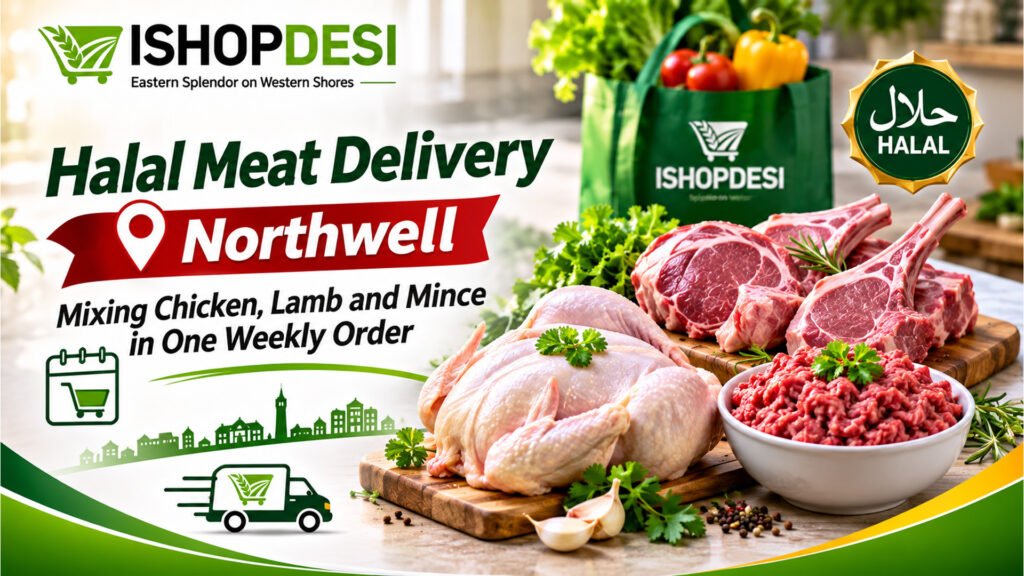
For families exploring halal meat delivery Northwell, combining chicken, lamb and mince in one online order can be practical when each product has a clear purpose.
Different cuts suit different recipes. Their preparation times vary, and their storage requirements must be considered carefully.
A thoughtful order should provide enough variety for the household without creating unnecessary waste, overspending or pressure to cook everything immediately.
This guide explains how Northwell households in Luton can choose suitable halal meat varieties, estimate portions, compare cuts and manage a combined order safely.
Why Mix Chicken, Lamb and Mince in One Meat Order?
Buying several meat varieties together can make sense for households that regularly cook different meals.
Chicken may be used for karahi, curry or oven-based dishes.
Lamb can suit certain slow-cooked recipes, pulao or family meals.
Minced beef or lamb may be prepared as keema, kebabs or other familiar dishes.
However, variety alone doesn’t make an order useful.
The products should match how the household actually cooks.
Different Meat Types Support Different Meals
Chicken, lamb and minced meat have distinct textures and cooking characteristics.
Using several varieties can help a family avoid preparing the same dish repeatedly.
But each product needs an appropriate recipe.
One Order Can Support Several Cooking Styles
A combined basket may include meat for a quick preparation, a slower weekend dish and a family favourite.
That flexibility can be helpful when working hours and household routines vary.
Reviewing Everything Together Can Clarify Quantities
When each product is considered separately, it’s easy to purchase more meat than required.
Looking at the complete order helps reveal whether the quantities are realistic.
Delivery Convenience Depends on the Retailer
Combining products into one online basket may reduce the need for separate purchases.
However, delivery coverage, stock availability, charges and minimum order values must be checked.
A single order isn’t automatically cheaper or faster.
Start with the Meals, Not the Meat Packs
Before choosing the meat, identify the dishes your household is likely to prepare.
A simple plan might include chicken curry, keema and a lamb-based weekend dish.
That immediately gives each meat variety a purpose.
| Planned meal | Meat to consider | Important buying detail |
|---|---|---|
| Chicken karahi | Suitable halal chicken pieces | Bone-in or boneless |
| Chicken tikka | Boneless chicken | Cut and preparation method |
| Lamb pulao | Lamb suited to simmering | Bone content and cooking requirements |
| Keema with peas | Halal minced beef or lamb | Species and fat content |
| Seekh kebabs | Suitable minced meat | Recipe and binding ingredients |
| Slow-cooked lamb curry | Appropriate lamb cut | Time and connective tissue |
This is an illustrative selection.
A household doesn’t need to cook every dish during the same week.
The purpose is to choose meat that suits realistic meals.
Plan Around the Actual Schedule
A longer-cooking lamb dish may be more practical on a day when someone has sufficient preparation time.
A familiar keema recipe may suit a different evening.
However, cooking times vary and shouldn’t be assumed from the dish name alone.
Consider Family Preferences
Not everyone enjoys the same meat cuts.
Some people prefer boneless chicken, while others favour traditional bone-in curry pieces.
Choose according to the diners rather than purchasing varieties that may remain unused.
Chicken: The Flexible Part of a Weekly Order
Chicken is commonly used in Pakistani, Indian and Bangladeshi cooking.
But the cut makes a considerable difference.
Chicken breast, thighs, drumsticks and bone-in curry pieces aren’t interchangeable in every recipe.
Bone-In Chicken for Karahi and Curry
Many traditional chicken curry recipes use bone-in pieces.
The bones influence the preparation and serving experience.
However, the size of the pieces matters.
A recipe intended for small curry cuts may need adjustment when larger pieces are used.
Boneless Chicken Breast
Chicken breast is relatively lean.
It may be suitable for tikka, selected stir-fried preparations or diced chicken dishes.
Prolonged cooking can affect its texture, so choose an appropriate recipe.
Boneless Chicken Thigh
Thigh meat has different fat and texture characteristics from breast.
Some households prefer it for curries and marinades.
Preparation still depends on the recipe and piece size.
Wings and Drumsticks
These can be suitable for various oven-cooked or grilled dishes.
They require thorough cooking, particularly near the bone.
Which Chicken Cut Should You Order?
If the household prepares several curries, a suitable curry-cut product may be useful.
If boneless dishes are more common, the order should reflect that.
Don’t purchase a large mixed chicken pack without checking its contents.
For further guidance, IShopDesi’s article on halal chicken delivery in Luton explains important details to review before ordering.
Lamb: Choose It for the Dish You Actually Want
Lamb is familiar in many traditional South Asian preparations.
It can appear in curries, pulao, roasts and other dishes.
However, different cuts require different cooking methods.
Lamb Shoulder
Shoulder contains connective tissue and can suit certain slower-cooked dishes.
Its preparation depends on whether it is supplied bone-in, boneless or as a joint.
Lamb Leg
Leg may be used in different preparations, including roasting.
The method depends on the size and form of the cut.
Lamb Chops
Chops may suit selected grilled or pan-cooked recipes.
They aren’t necessarily the most economical or practical option for a slow-cooked curry.
Lamb Curry Pieces
Products described as curry cuts can vary between retailers.
Some contain bones, while others may be boneless.
Review the listing carefully.
Why Lamb Requires Thoughtful Planning
Certain lamb dishes need longer preparation than many everyday meals.
If your household doesn’t have time for the intended recipe during the working week, consider whether the product is more suitable for a weekend meal.
For related information, IShopDesi’s guide to halal lamb delivery in Luton explores lamb shopping alongside familiar recipe ingredients.
Mince: One Product, Several Different Meal Possibilities
Minced meat is useful because it can be shaped, seasoned or cooked in several ways.
However, not all mince products are identical.
Minced Beef
Beef mince may be used for keema and other suitable dishes.
Its fat content can influence the cooking result.
Minced Lamb
Lamb mince has different flavour and fat characteristics.
It can be used in selected kebab and curry recipes.
Keema with Peas
Keema matar is a familiar preparation combining minced meat with peas and seasonings.
Recipes vary between households.
The meat should be cooked thoroughly.
Seekh Kebabs
Some seekh kebab recipes use minced meat mixed with herbs, spices and other ingredients.
The mixture and preparation method affect whether the kebabs hold their shape.
Mince for Stuffed Preparations
Certain dishes use cooked and seasoned mince as a filling.
Follow a suitable recipe, especially where additional cooking or reheating is involved.
For further preparation ideas, IShopDesi’s guide to how to make keema with halal minced beef explores this versatile ingredient.
Beef Mince or Lamb Mince: Which Is Better?
Neither is universally better.
The appropriate choice depends on the recipe, flavour preference, fat content and household budget.
| Consideration | Beef mince | Lamb mince |
|---|---|---|
| Flavour | Depends on cut and fat content | Distinctive lamb flavour |
| Fat content | Varies by product | Varies by product |
| Suitable dishes | Keema and other minced-meat recipes | Keema, kebabs and other recipes |
| Cooking | Must be cooked thoroughly | Must be cooked thoroughly |
| Shopping priority | Confirm species and fat percentage | Confirm species and fat percentage |
Always check the exact product description.
A retailer may offer different mince grades or pack weights.
Don’t assume every mince product has the same composition.
How Much Meat Should a Family Order for One Week?
There is no universal quantity that suits every household.
A family of four preparing meat-based dishes twice a week may need less than a similar-sized family eating meat more frequently.
Other protein foods and side dishes also affect portions.
Count the Actual Meat-Based Meals
Instead of estimating a kilogram amount immediately, identify how many meals will use meat.
If the household plans two chicken dishes, one keema and one lamb curry, calculate the ingredients for those recipes.
Follow Recipe Serving Guidance
A recipe can provide a starting point for estimating quantities.
Adjust according to the diners and accompaniments.
Remember Bone-In Meat Has a Different Yield
A kilogram of bone-in chicken contains both meat and bone.
The edible yield differs from a kilogram of boneless chicken.
The same principle applies to lamb.
Consider Who Will Be Eating
Adults, children and people with different appetites may require different portions.
Avoid assuming everyone eats the same quantity.
Don’t Buy Extra Meat Without a Storage Plan
A larger pack may offer a lower unit price.
However, the purchase only makes sense when the household can use or store it safely.
Bone-In vs Boneless Meat: Comparing Practical Value
It is tempting to compare meat products entirely by price per kilogram.
But bone-in and boneless products are not directly equivalent.
Bone-In Products
They include bones that affect the edible portion and may influence how the dish is prepared.
They can be appropriate for traditional curries and certain slow-cooked recipes.
Boneless Products
Boneless meat can be convenient for diced preparations, marinades and recipes where bones are unsuitable.
However, the price per kilogram may differ.
Consider the Complete Recipe
A bone-in curry may use the cooking liquid and other ingredients differently from a boneless preparation.
The intended dish should influence the choice.
Compare What You Will Actually Use
A lower price per kilogram is not always better value when the product contains a different amount of edible meat.
For Northwell families comparing buy halal meat online Luton options, understanding this distinction can support more informed purchasing decisions.
A Practical Weekly Meat Rotation
One way to organise a combined meat order is to assign each variety a different role.
This doesn’t mean dinner must follow a strict schedule.
It simply provides options.
| Day | Example meal | Meat requirement |
|---|---|---|
| Monday | Chicken curry with rice | Suitable chicken pieces |
| Tuesday | Vegetarian daal or sabzi | No meat required |
| Wednesday | Keema with peas | Halal minced meat |
| Thursday | Leftovers or another suitable meal | Depends on safe storage |
| Friday | Lamb pulao or curry | Appropriate lamb cut |
| Weekend | Flexible family meal | Based on remaining safe ingredients |
A rotation can help avoid preparing multiple similar meat dishes on consecutive evenings.
It also allows vegetarian meals to remain part of the week.
Why Meat-Free Meals Can Help
Not every dinner needs chicken, lamb or beef.
Lentils, chickpeas and other suitable foods can contribute variety.
A mixed weekly menu may also make the meat order easier to manage.
For related ingredient ideas, IShopDesi’s article on daal varieties online Luton explores familiar pulses used in South Asian cooking.
How to Organise Chicken, Lamb and Mince After Delivery
A combined order can contain several raw meat products.
These need prompt and appropriate handling.
Different packages may have different dates and storage instructions.
Check the Order Immediately
Confirm that the products match the listing.
Review the meat species, cuts, pack weights and packaging condition.
Follow Storage Instructions
Chilled products should be refrigerated promptly.
Frozen products should be transferred to suitable freezer storage.
Keep Raw Meat Separate
Prevent raw meat juices from contacting ready-to-eat foods.
Use suitable sealed packaging and storage arrangements.
Portion Only When Appropriate
If dividing larger packs, work hygienically and avoid leaving perishable products at room temperature for extended periods.
Label Products Clearly
If meat is repackaged for freezing, suitable labels can identify the contents and relevant dates.
Use the Correct Thawing Method
Where thawing is required, follow product instructions and current food-safety guidance.
Avoid leaving raw meat on a kitchen counter to thaw for long periods.
For detailed advice, IShopDesi’s guide to how to store halal meat after delivery explains practical considerations.
Why a Larger Mixed Meat Order Can Become Wasteful
A basket containing several varieties may look useful.
But purchasing too much creates additional challenges.
The Fridge May Not Have Enough Space
Raw meat requires appropriate temperature control.
Overcrowding can make safe storage more difficult.
Recipes May Change
A planned lamb curry might be postponed.
A family member could decide not to eat meat that evening.
The order should leave room for realistic changes.
Products Have Different Storage Dates
Fresh meat products do not all have identical use-by dates.
Check each package.
Large Packs Can Create Extra Preparation
Portioning and freezing meat requires time, appropriate equipment and hygienic handling.
Lower Unit Prices Don’t Guarantee Savings
A purchase is only good value when the product can be used safely and appropriately.
For households considering weekly halal meat delivery Luton, realistic quantities matter more than simply filling the basket.
Halal Certification and Sourcing: What Should You Check?
Halal suitability is an important part of meat shopping for Muslim households.
However, specific standards and certification preferences may differ.
A product should not be assumed halal solely because it appears on a South Asian grocery website.
Check the Individual Product
Review the available halal certification or sourcing information.
Confirm the Meat Species
Product listings should clearly identify chicken, lamb, beef or another meat.
Ask About Unclear Information
If certification, slaughter methods or other details matter to the household and are not explained, seek clarification.
Avoid Assuming Every Supplier Is Identical
Different products may come from different suppliers.
The available sourcing information may therefore vary.
Consider Prepared Meat Products Separately
Marinated chicken, sausages, kebabs and other prepared products may contain additional ingredients.
Review their complete ingredient information.
For additional guidance, IShopDesi’s article on certified halal meat delivery in Luton explores relevant questions to ask.
Choosing Ingredients to Accompany a Mixed Meat Order
Chicken, lamb and mince are only part of the meal.
Most traditional recipes also require vegetables, spices and suitable accompaniments.
A combined grocery basket can be more useful when these ingredients are considered alongside the meat.
Chicken Curry Ingredients
Depending on the recipe, these may include onions, tomatoes, ginger, garlic and selected spices.
Lamb Pulao Ingredients
A lamb pulao may require basmati rice, whole spices and other recipe-specific products.
Keema Ingredients
Keema dishes may include peas, onions, tomatoes or potatoes.
Accompaniments
Rice, chapatis, salads and suitable yoghurt preparations may complement different meals.
Check Existing Pantry Supplies
There is no reason to purchase another large bag of rice if sufficient stock is already available.
For help with broader ingredient planning, IShopDesi’s article on halal grocery delivery and weekly food baskets in Luton offers related guidance.
What Should You Check Before Ordering Halal Meat Online in Northwell?
For residents researching halal chicken lamb and mince delivery Northwell, a useful online listing should explain what customers are purchasing.
Before checkout, review the following details.
| Buying consideration | What to verify |
|---|---|
| Meat species | Chicken, lamb, beef or another type |
| Cut | Bone-in, boneless, shoulder, breast or other |
| Product form | Whole, diced, minced or prepared |
| Pack weight | Quantity supplied |
| Halal information | Relevant sourcing or certification details |
| Storage status | Fresh, chilled or frozen |
| Preparation requests | Whether custom cutting is available |
| Delivery | Postcode eligibility and available options |
| Total cost | Product prices and applicable delivery charges |
Don’t Assume a Custom Cut Is Available
Some online retailers offer preparation choices.
Others supply fixed pre-packed products.
If a recipe requires specific cutting instructions, confirm whether the retailer can accommodate them.
Check Delivery Arrangements for Perishable Meat
Someone should be available to receive and store meat appropriately.
Do not rely on an unconfirmed delivery time.
Review the Basket Before Paying
Check that the products correspond to the intended dishes.
The final review may reveal that you’ve selected the wrong meat variety or pack size.
How IShopDesi Can Support Northwell Meat Shopping
IShopDesi provides an online grocery platform where customers can explore South Asian food categories and available halal meat products.
For Northwell households, the useful approach is to identify the intended recipes before comparing products.
A weekly basket might include suitable chicken for a curry, lamb for a family meal and minced meat for keema.
The exact products available will depend on current stock and retailer listings.
For a broader shopping perspective, IShopDesi’s guide to halal meat delivery near me in Luton explains considerations when exploring local meat-shopping options.
Before placing an order, confirm the product descriptions, halal information, pack weights, storage conditions, applicable charges and delivery eligibility for the specific Northwell postcode.
A convenient online meat order should help the household make informed purchasing decisions.
It should not encourage buying more meat than the family can realistically prepare and store.
Frequently Asked Questions
Can I order chicken, lamb and minced meat together online in Northwell?
Some online halal meat retailers offer multiple meat categories. Check current product availability and delivery eligibility for your Northwell postcode.
What is the best chicken cut for karahi?
Many recipes use bone-in curry pieces, although boneless versions also exist. Choose according to the intended recipe.
Is lamb shoulder suitable for curry?
Lamb shoulder can suit certain slow-cooked curry preparations. The cooking method depends on the cut and recipe.
Which mince is better for keema: beef or lamb?
Both can be used in suitable recipes. The choice depends on flavour preference, fat content and the intended preparation.
Is bone-in meat cheaper than boneless meat?
Prices vary. Compare the product’s cost, edible yield and suitability rather than relying only on the price per kilogram.
How much halal meat should a family order weekly?
That depends on household size, planned meals, serving portions and available storage. Start with recipe quantities.
How should chicken, lamb and mince be stored after delivery?
Follow each product’s instructions, maintain appropriate refrigeration or freezing and prevent cross-contamination.
Can fresh halal meat be frozen?
Many fresh meat products can be frozen when handled appropriately. Follow packaging instructions and relevant food-safety guidance.
Are all meat products on a Desi grocery website halal?
Not necessarily. Check the individual product’s available halal information.
Can I request specific meat cuts when ordering online?
Some retailers offer preparation options. Confirm availability before relying on custom cutting.
Is a mixed meat order always better value?
No. Value depends on product prices, quantities, delivery charges, usable meat and whether the household can consume or store the products appropriately.
Can I order halal meat for delivery in Northwell, Luton?
You can explore online halal meat retailers such as IShopDesi. Confirm current stock and delivery coverage for the exact postcode before purchasing.
Conclusion: A Useful Meat Order Is Built Around Real Meals
Buying chicken, lamb and mince together can provide variety for a household that enjoys traditional home cooking.
But the benefits depend on how the order is organised.
Chicken should suit the intended curry or grilled preparation. Lamb needs to match the recipe and available cooking time. Mince should be chosen according to the dish, meat species and preferred composition.
Quantities and storage matter just as much.
For Northwell families, online halal meat shopping can offer another way to compare products and organise purchases when suitable stock and delivery services are available.
Start with the meals, review the cuts and choose quantities the household can manage.
A well-planned order isn’t defined by how much meat arrives.
It’s defined by how confidently each product can be used.